


Peak Renewables for Sale: How to Capture and Monetize the Surplus Power of the Future
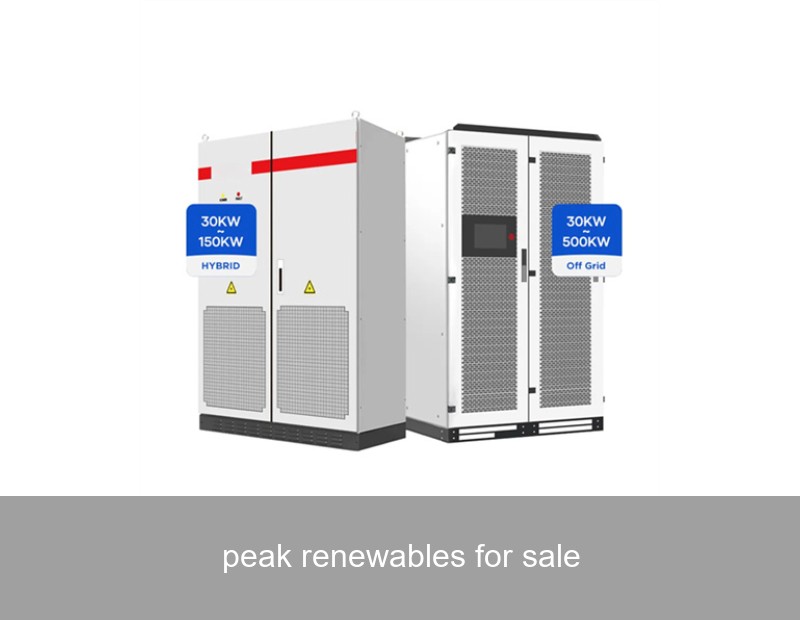
Imagine a sunny afternoon in California or a windy night in the North Sea. Solar panels and wind turbines are humming, generating vast amounts of clean, renewable energy. This is the dream, right? But here’s a twist: this abundance can become a challenge. When production soars beyond immediate demand, we face a phenomenon known as "peak renewables." This surplus power, if not managed, can strain the grid, lead to curtailment (wasting clean energy), and depress market prices. But what if we could flip the script? What if this peak wasn't a problem to solve, but an asset to sell? The concept of "peak renewables for sale" is transforming the energy landscape, turning intermittent abundance into a reliable, profitable resource. And the key to unlocking this value lies in one critical technology: advanced energy storage.
The Peak Renewables Paradox: Abundance Meets Grid Strain
You've likely seen the famous "duck curve" graph from the California Independent System Operator (CAISO). It vividly illustrates the "peak renewables" challenge: a deep midday dip in net load as solar floods the grid, followed by a steep evening ramp as the sun sets and demand spikes. This isn't just a California issue; it's a blueprint for grids across Europe and the U.S. with high renewable penetration.

Image Source: U.S. Department of Energy (public domain)
The paradox is clear: we have more clean energy than ever, yet grid stability can be harder to maintain. Traditional "baseload" power plants struggle to ramp up and down quickly enough to follow these wild swings. The result? Grid operators sometimes have to pay renewable plants to stop generating—a process called curtailment. In 2020 alone, California curtailed over 1.5 million megawatt-hours of solar and wind energy. That's enough to power over 200,000 homes for a year, literally going to waste. This is the untapped inventory of "peak renewables for sale."
From "Peak Renewables" to Profitable Power: The Data Tells the Story
Let's talk numbers, because the financial case is compelling. During periods of peak renewable generation, wholesale electricity prices can plummet, even going negative in some markets. This is great for consumers in the short term but challenging for renewable asset owners and grid economics.
However, by deploying battery energy storage systems (BESS), this dynamic changes entirely. Storage acts as a time machine for electrons. It soaks up cheap, abundant power during the midday solar peak or windy overnight hours. Then, it dispatches that stored energy during high-price periods—typically in the early evening when solar fades, demand is high, and more expensive (and often carbon-intensive) "peaker" plants are called upon.
- Arbitrage: Buying low (during renewable peaks) and selling high (during demand peaks).
- Grid Services: Providing critical services like frequency regulation and voltage support, which are increasingly valuable as the grid modernizes.
- Capacity Markets: Guaranteeing future power availability to the grid for a steady revenue stream.
The value stack is real. A study by the U.S. National Renewable Energy Laboratory (NREL) found that stacking multiple revenue streams can significantly improve the economic viability of storage projects, with some configurations achieving payback periods that attract serious investment.
The Intelligent Engine: How Battery Storage Unlocks Peak Value
It's not just about having a battery; it's about having a smart, integrated system. A simple battery attached to a solar farm is a good start, but to truly maximize the value of "peak renewables for sale," you need intelligence. The system must predict generation peaks, forecast market prices, understand grid needs in real-time, and optimize dispatch decisions—all autonomously.
This is where companies like Highjoule excel. Since 2005, we've been at the forefront of designing and deploying intelligent energy storage solutions. Our systems are built with this precise challenge in mind. The Highjoule HPS Series for commercial and industrial applications isn't just a container of batteries; it's a grid-interactive asset. Its advanced energy management system (EMS) uses sophisticated algorithms to decide the most profitable moment to charge from your solar array or the grid, and the most strategic moment to discharge—whether to power your facility, sell back to the grid, or provide a grid service.
For larger-scale needs, like utility projects or microgrids, our Utility-Scale BESS Platform offers unparalleled scalability and reliability. These systems are engineered to perform under the most demanding conditions, ensuring that when there's a peak of renewable energy available, not a single kilowatt-hour of potential revenue is lost.
Case Study: Capturing California's Solar Peaks for a Stable, Profitable Grid
Let's look at a real-world example that underscores the "peak renewables for sale" model in action. In the heart of California's solar belt, a large solar farm was experiencing significant curtailment. On average, 15% of its potential generation was being wasted during the sunniest hours due to grid congestion and oversupply.
The solution? The farm's owner partnered with a developer to co-locate a 100 MW / 400 MWh battery energy storage system. This system, utilizing technology and architecture principles aligned with Highjoule's own large-scale deployments, was strategically designed for one primary goal: capture the midday solar peak.
| Metric | Before BESS | After BESS Deployment |
|---|---|---|
| Curtailed Solar Energy | ~15% of potential output | Reduced to <3% |
| Additional Revenue Streams | Primarily energy sales only | Energy arbitrage + Frequency Regulation |
| Estimated Annual Revenue Boost | N/A (Baseline) | $8-12 Million |
| Grid Support | Contributed to congestion | Provided evening peak power & stability |
The results were transformative. The battery system effectively "banked" the excess solar generation and sold it back to the grid between 6 PM and 9 PM, when prices were 300-500% higher than during the midday surplus. Furthermore, the system participated in the frequency regulation market, providing a constant, automated service that earned a steady ancillary income. This project is a blueprint for how pairing renewables with smart storage turns a logistical challenge into a commercial and grid-resilience triumph.
Highjoule's Solutions: Your Partner in Monetizing Energy Peaks
At Highjoule, we don't just sell hardware; we deliver comprehensive energy asset optimization. Our approach is tailored to your specific market (be it the complex markets of the EU or the diverse grids of the U.S.) and your unique goals.
- For Commercial & Industrial (C&I) Sites: Our HPS Series integrates seamlessly with your on-site solar. It maximizes self-consumption, protects you from demand charges, and creates a new revenue line by allowing you to participate in demand response programs—essentially selling your stored peak renewables back to the grid when it needs them most.
- For Renewable Project Developers: We provide turnkey BESS solutions that de-risk your project, increase its bankability, and future-proof your investment. By designing storage into your solar or wind farm from the outset, you secure a higher and more predictable revenue profile, making "peak renewables for sale" a core part of your business model.
- For Utilities & Microgrids: Our large-scale platforms offer the robustness and intelligence needed for grid-scale storage. They enable utilities to defer costly infrastructure upgrades, integrate more renewables reliably, and create virtual power plants that aggregate distributed resources to meet peak demand cleanly.

Image Source: Solar Power World Online (Industry Publication)
The Future Market: Trading and Selling Peak Renewables
The evolution is already underway. We're moving towards markets where "peak renewable" energy packets are traded as a commodity of their own. Advanced power purchase agreements (PPAs) now often include storage, guaranteeing not just generation, but dispatchable clean power. Peer-to-peer (P2P) energy trading platforms on blockchain are emerging, allowing a homeowner with a solar-plus-storage system to sell their excess peak power directly to a neighbor.
The expertise of Highjoule is crucial in this new landscape. Our systems' smart EMS is designed to interface with these evolving market mechanisms. Whether it's automatically bidding into a day-ahead market, responding to a grid operator's signal, or optimizing for a complex, multi-tariff structure, the intelligence is built-in. We ensure your storage asset is not just a cost center, but an active, profit-maximizing participant in the new energy economy.
Ready to Turn Your Peak Renewables into a Reliable Revenue Stream?
The era of simply generating renewable energy is giving way to the era of intelligently managing and monetizing it. The surplus power from "peak renewables" is no longer a burden—it's the most exciting new asset class in the energy sector. The question is no longer if you should integrate storage, but how to do it most effectively for your specific context and financial goals.
What is the first step your organization can take to assess the potential of "peak renewables for sale" in your portfolio or community? Could a pilot project with a scalable system like the Highjoule HPS Series be the key to unlocking that value and building your expertise for the future?
 Inquiry
 Online Chat