


Pattern Battery: How Much Does It Really Cost to Master Your Energy Use?
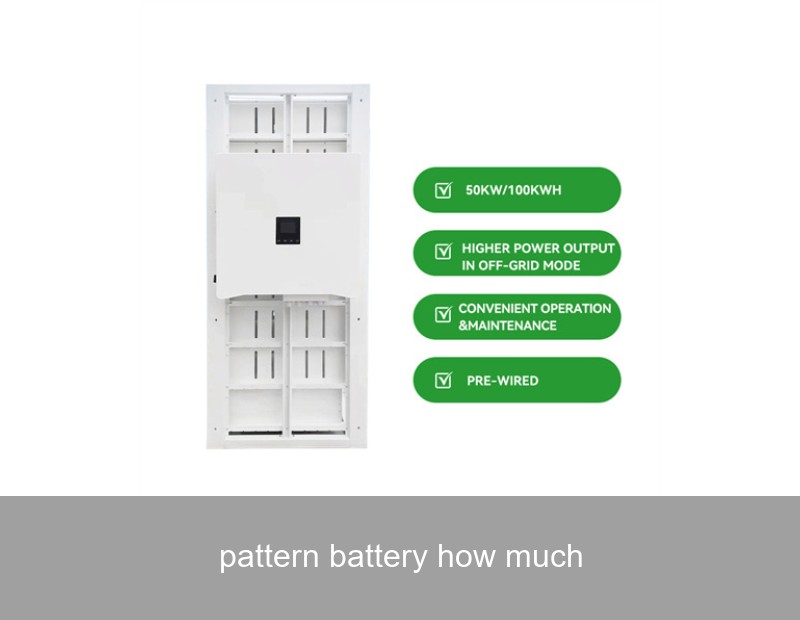
If you're looking into solar batteries or energy storage, you've likely heard the term "pattern battery." But what does it actually mean? And more importantly, how much does a pattern battery system cost? As your energy bills climb and grid reliability becomes a growing concern, understanding your unique energy consumption pattern is the first step toward true power independence. A pattern battery isn't a specific brand; it's a smart system designed to learn and adapt to your daily and seasonal energy rhythms—storing power when it's cheap or abundant (like midday solar peaks) and discharging it when you need it most (during expensive evening rates or outages). Let's unravel the costs and reveal how a tailored approach can transform your energy economics.
The Real Cost Breakdown: How Much is a Pattern Battery System?
Asking "how much for a battery?" is like asking "how much for a car?" The answer depends vastly on capacity, intelligence, and application. For pattern-aware systems, we must look beyond just the battery cells.
- Core Hardware (The Battery Itself): This is typically quoted per kilowatt-hour (kWh) of usable storage. In the US and European markets, you can expect a range of $400 to $800 per kWh for quality lithium-ion phosphate (LFP) battery modules, which are the industry standard for safety and longevity. A typical residential system might be 10-20kWh, putting the hardware cost between $4,000 and $16,000.
- The "Brain": Inverter & Energy Management System (EMS): This is what makes a battery "pattern-aware." A sophisticated inverter and software can add $1,500 to $4,000. This brain analyzes weather forecasts, your historical usage, real-time grid prices, and automatically optimizes charge/discharge cycles.
- Balance of System & Installation: Wiring, electrical panels, safety disconnects, and professional installation are crucial. This can add $2,000 to $5,000+, depending on system complexity and local regulations.
- Potential Soft Costs: Permits, grid interconnection fees, and potential electrical upgrades can add another $500 to $2,000.
Therefore, a fully installed, pattern-intelligent 15kWh battery system in Germany or California might have a total installed cost between $12,000 and $27,000. But this upfront figure is just the starting point. The real question is: what value does it unlock?

To understand the value of managing energy patterns on a larger scale, consider data from the International Renewable Energy Agency (IRENA), which highlights the accelerating deployment of storage to integrate renewables.
From Theory to Practice: A German Bakery's Pattern Battery Success
Let's move from general numbers to a concrete example. Consider a family-run bakery in Bavaria, Germany. Their challenge was a classic pattern problem:
- Pattern: High energy use from 3 AM to 10 AM for ovens and refrigeration, coinciding with high grid tariffs. Their rooftop solar produced peak power from 10 AM to 4 PM, much of which was exported to the grid at a lower feed-in tariff.
- Solution: They installed a 25kWh pattern battery system with advanced energy management software.
- Financial Outcome: The system was programmed to store cheap overnight grid power (and later, midday solar) to cover the expensive morning peak. Within one year:
Metric Before System After System Grid Power Draw During Peak Hours 90% 15% Solar Self-Consumption 35% 85% Annual Energy Cost Savings Baseline €3,200
With an installed cost of €18,500, the simple payback period was under 6 years—well within the system's 10+ year warranty. More importantly, it provided backup power for refrigeration, preventing spoilage during brief grid outages.
The Highjoule Advantage: Smart Systems for Complex Energy Patterns
This is where Highjoule's expertise becomes critical. Since 2005, we've specialized in designing systems that don't just store energy, but actively manage it according to complex, real-world patterns. Our HPS Series (Highjoule PowerStack) for commercial and industrial applications is built around this very principle.
For the bakery, a solution like our HPS-25 would have been ideal. Its integrated Adaptive Pattern Engine (APE)™ software goes beyond simple time-based control. It uses machine learning to refine its dispatch strategy daily, factoring in:
- Day-ahead electricity market prices (crucial in Europe)
- Local weather and solar production forecasts
- Historical load patterns and upcoming production schedules (e.g., a holiday order surge)
- Grid services participation potential (where available)
For residential clients, our HomePower V2 system offers similar intelligence in a sleek, scalable package. Whether you're in sunny Arizona or a cloudier part of the UK, the system learns your household's pattern—when you charge EVs, run air conditioning, or are typically away—and optimizes for both savings and resilience.

Beyond the Price Tag: Maximizing the Value of Your Investment
Focusing solely on the sticker price of a "pattern battery how much" question can be misleading. The true metric is Levelized Cost of Storage (LCOS)—the total cost of owning and operating the system per kWh cycled over its lifetime. A cheaper, dumber battery with poor thermal management might degrade faster, offering far less value. Here’s how to maximize yours:
- Seek Intelligent Software: Ensure the EMS can integrate multiple data streams and update its logic. Highjoule's systems offer over-the-air updates to continuously improve pattern recognition.
- Right-Sizing: A good provider won't just sell you the biggest battery. They'll analyze your past utility bills (with your permission) to model the optimal size for your specific consumption and generation pattern.
- Understand Incentives: In the US, the Investment Tax Credit (ITC) now covers standalone storage. In countries like Italy or the UK, various grants and tax relief exist. These can effectively reduce your net cost by 25-40%.
- Consider Future Needs: Is an EV in your future? Is your area prone to more frequent outages? A modular system, like Highjoule's, allows you to add capacity as your energy pattern evolves.
For deeper insights into grid dynamics and storage value, the National Renewable Energy Laboratory (NREL) provides extensive, public research.
Making Your Decision: Key Questions to Ask
Before you get fixated on a single number, have answers to these questions ready for your provider:
- What is my specific daily and seasonal load pattern? Can you show me the analysis?
- How does the system's software learn and adapt to changing patterns (e.g., a new baby, a home office)?
- What is the expected cycle life and degradation rate under my projected usage pattern?
- Can the system provide seamless backup power for critical circuits during an outage, and how is that managed?
- What is the total installed cost, and what financing or incentive support can you offer?
Choosing a pattern battery is an investment in predictability and control. It's about telling the grid—and your wallet—that you're no longer at the mercy of unpredictable rates and outages.

So, the next step isn't just to search for "pattern battery how much." It's to ask a more powerful question: What unique energy pattern does your home or business need to master, and how can we design a system to make that not just possible, but profitable?
 Inquiry
 Online Chat