


Unlocking More Power: A Comprehensive Guide to the Bifacial Solar Panel (Pannello Fotovoltaico Bifacciale)
If you're looking into solar energy, you've likely heard the buzz about higher efficiency and better returns on investment. But what if the key to unlocking more power wasn't just facing the sun, but also harnessing the light that bounces back from the ground? Enter the bifacial solar panel (pannello fotovoltaico bifacciale), a game-changing technology that's redefining energy yield. Unlike traditional panels, these double-sided modules capture direct sunlight on the front and reflected light on the rear, significantly boosting output. For homeowners and businesses across Europe and the US, this isn't just an upgrade; it's a smarter way to maximize every square meter of rooftop or land. Let's delve into how this innovative technology works and why it might be the perfect centerpiece for your next energy project, especially when paired with intelligent storage solutions.
Table of Contents
- What is a Bifacial Solar Panel?
- The Science Behind the Double-Sided Design
- Key Benefits: More Than Just Extra Watts
- Real-World Impact: A Case Study from Spain
- Optimizing Your Bifacial Installation
- The Critical Link: Pairing Bifacial Panels with Smart Storage
- Is Bifacial Technology Right for Your Project?
What Exactly is a Bifacial Solar Panel?
Imagine a solar panel that doesn't have a traditional opaque backsheet. Instead, its back is made of transparent glass or a dual-glass laminate, allowing light to pass through. This is the essence of a pannello fotovoltaico bifacciale. Both the front and rear surfaces are equipped with photovoltaic cells that generate electricity. While the front captures direct irradiance, the rear actively scavenges albedo light—the sunlight reflected from the ground, surrounding buildings, or other surfaces.
This design isn't entirely new, but recent advancements in cell technology (like PERC, HJT, and TOPCon) and falling manufacturing costs have propelled bifacial modules from niche applications to mainstream viability. They are particularly effective in installations with high ground reflectivity or where panels are mounted elevated, such as on ground-mounted systems, carports, or flat roofs with ballasted racks.
The Science Behind the Double-Sided Design
The performance gain of a bifacial panel, known as the "bifacial gain," is the additional energy yield from the rear side compared to a standard monofacial panel. This gain isn't a fixed number; it's a variable that depends on a carefully orchestrated dance of environmental and installation factors.
- Albedo (Ground Reflectivity): This is the star player. A white gravel roof or a light-colored concrete surface (albedo ~0.5-0.6) can reflect significantly more light than asphalt or grass (albedo ~0.1-0.2). Snow, with an albedo of up to 0.9, creates a phenomenal environment for bifacial panels.
- Mounting Height and Ground Clearance: The higher the panel is raised, the larger the "view factor" for the rear side to capture reflected light. There's a sweet spot between increased gain and the added cost of higher mounting structures.
- Array Configuration: Row spacing and tilt angle are crucial. Too close, and rows will shade each other's rear sides. Optimal spacing allows for ample light reflection to reach the back of the panels throughout the day.
According to field data compiled by the National Renewable Energy Laboratory (NREL), bifacial gain can typically range from 5% to 20% under realistic conditions, with some installations in highly reflective environments reporting gains upwards of 30%.
Key Benefits: More Than Just Extra Watts
Why should you consider bifacial technology? The advantages extend beyond a simple percentage boost.
- Higher Energy Density & Land/Roof Efficiency: Generate more power from the same footprint. This is invaluable for commercial and industrial sites where available space is a limiting factor.
- Better Performance in Diffuse Light: The dual-sided capture makes them more effective on cloudy days or during early morning and late afternoon hours when light is scattered.
- Enhanced Durability: The double-glass construction common in bifacial panels is often more robust, resistant to humidity-induced degradation (potential-induced degradation, or PID), and has a longer potential lifespan with lower degradation rates.
- Improved ROI Over Time: While the upfront cost per panel may be slightly higher, the increased energy yield over the system's 25-30+ year lifetime often leads to a lower Levelized Cost of Energy (LCOE) and a faster payback period.
Real-World Impact: A Case Study from Southern Spain
The theory is compelling, but real data tells the true story. Consider a 500 kWp commercial solar installation commissioned in 2022 in Seville, Spain—a region known for its high irradiance. The project opted for bifacial double-glass panels mounted on single-axis trackers over a surface of light-colored crushed rock.
| Metric | Monofacial Baseline (Estimated) | Bifacial Installation (Actual) | Gain |
|---|---|---|---|
| Annual Energy Yield | 820 MWh | 950 MWh | +130 MWh (+15.8%) |
| Specific Yield (kWh/kWp) | 1,640 kWh/kWp | 1,900 kWh/kWp | +260 kWh/kWp |
| Performance Ratio (PR) | 81% | 86% | +5 percentage points |
This tangible 15.8% increase in generation translates directly to higher revenue from energy sales and greater on-site consumption savings for the business owner. The tracker system further amplified the gain by constantly adjusting the panels' angle to optimize both front and rear irradiation throughout the day. Studies by the IEA PVPS Task 13 have consistently documented such performance advantages in comparable climates.

Image Source: Unsplash (Representative image of a utility-scale bifacial installation)
Optimizing Your Bifacial Installation
To reap the full benefits, a "set and forget" approach won't suffice. Bifacial systems require more nuanced design and simulation. Advanced software tools that model bifacial irradiance, considering local albedo, detailed mounting geometry, and historical weather data, are essential for accurate yield prediction and financial modeling. Partnering with an experienced EPC (Engineering, Procurement, and Construction) provider who understands these nuances is critical to avoid underperformance.
The Critical Link: Pairing Bifacial Panels with Smart Storage
Here's where the story gets even more powerful. Bifacial panels increase generation, but to maximize the value of every extra kilowatt-hour, you need a way to capture and use it intelligently. This is where Highjoule's expertise becomes pivotal.
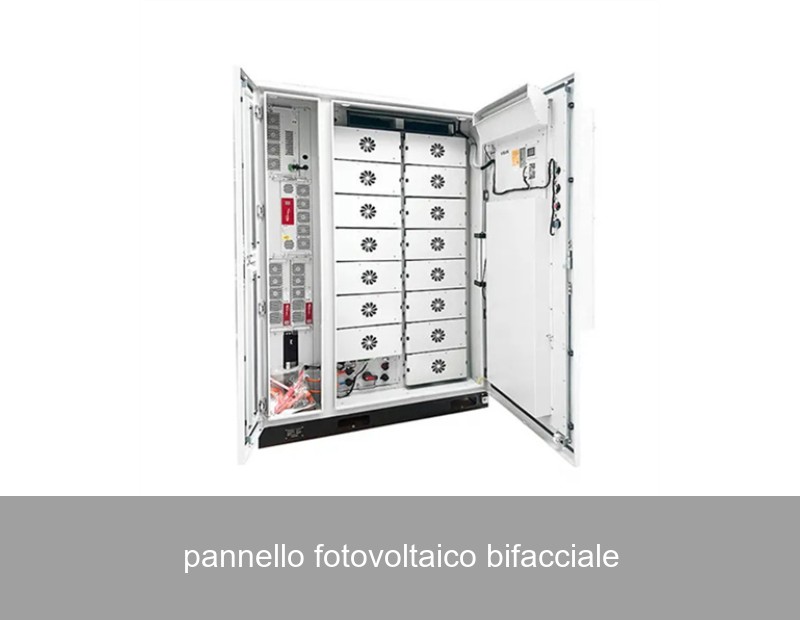
Highjoule's advanced battery energy storage systems (BESS) are the perfect complement to high-yield bifacial solar arrays. Our H-Series Commercial & Industrial Storage Solutions are designed to seamlessly integrate with solar installations of any scale. When your bifacial panels are producing that surplus 15-20% of energy—often during peak daylight hours—our intelligent storage systems store it instead of letting it go to waste or forcing low-value grid export.
This stored energy can then be dispatched during evening peak demand when electricity prices are highest, used to ensure critical operations during a grid outage, or strategically traded in energy markets. Highjoule's Energy Management System (EMS) uses AI-driven forecasting, considering your unique bifacial production profile, to autonomously optimize charge/discharge cycles, maximizing your self-consumption, bill savings, and energy independence. For microgrids or off-grid applications, this combination of ultra-efficient generation and reliable storage is transformative, providing a stable, sustainable power supply 24/7.

Image Source: Unsplash (Representative image of a modern battery storage installation)
Is Bifacial Technology Right for Your Project?
So, should you immediately choose bifacial? It depends. Ask yourself and your energy partner these questions:
- What is my installation surface? (Light-colored flat roof, ground with high albedo, or a dark asphalt roof?)
- What is my mounting strategy? (Can I elevate the panels sufficiently? Am I using trackers?)
- What are my primary goals? (Absolute maximum yield, fastest simple payback, or long-term LCOE optimization?)
- Do I have a plan for the extra energy? (This is the most crucial question.)
The last point is key. Investing in advanced generation technology like bifacial panels is only half the equation. The full value is unlocked when you pair it with an equally intelligent storage and energy management solution. This integrated approach is what Highjoule specializes in—providing end-to-end, smart, and sustainable power solutions that turn your energy assets into a strategic advantage.
Given the potential of your site and your energy goals, what would a system designed to capture both direct sunlight and its reflection, coupled with the intelligence to use every watt optimally, do for your operational resilience and bottom line?
 Inquiry
 Online Chat