


Powering Your Passion: How Solar Panels for Restaurants Are Cooking Up Savings and Sustainability
Imagine your restaurant's kitchen at the peak of the dinner rush. The ovens are blazing, the hood vents are roaring, and the walk-in cooler is humming steadily in the background. Now, imagine the energy bill that arrives at the end of the month, reflecting all that relentless consumption. For restaurant owners across Europe and the US, this is a familiar and costly reality. Energy is often the second-highest operating expense after labor, squeezing already tight margins. But what if you could turn your rooftop—an often-underutilized asset—into a silent, powerful profit center? This is precisely where solar panels for restaurants come into play, transforming sunlight into direct savings and operational resilience.
Solar Panels for Restaurants: More Than Just Green Credentials
The conversation around solar panels for restaurants has evolved dramatically. It's no longer just a "nice-to-have" for the environmentally conscious. It's a strategic financial decision. The logic is compelling: restaurants have high, predictable energy demands during daylight operating hours, which perfectly coincides with peak solar production. By generating your own electricity, you create a natural hedge against volatile utility rates. In the EU, where electricity prices have seen significant fluctuations, and in the US, with its varying state incentives, this price stability is invaluable. It's about taking control of a major cost line and cooking up a recipe for long-term financial health.

Image Source: Unsplash - A modern commercial rooftop solar installation.
Key Benefits of Restaurant Solar Systems
Let's break down the tangible advantages a well-designed solar system brings to your restaurant:
- Slash Operational Costs: Directly reduce your electricity bill by 40-70%, depending on system size and location. This is pure margin improvement.
- Lock-in Energy Costs: Sunlight is free. Once the system is installed, you've effectively fixed a large portion of your energy cost for 25+ years.
- Enhanced Brand Value: Today's diners, especially younger demographics, increasingly prefer to support sustainable businesses. Showcasing your solar commitment is powerful marketing.
- Increased Property Value: Studies show commercial properties with solar installations have higher asset values and can attract more tenants or buyers.
- Reliability & Resilience: When paired with storage, your essential operations can continue during grid outages, protecting inventory and potentially allowing you to remain open.
The Critical Component: Why Storage is the Secret Sauce
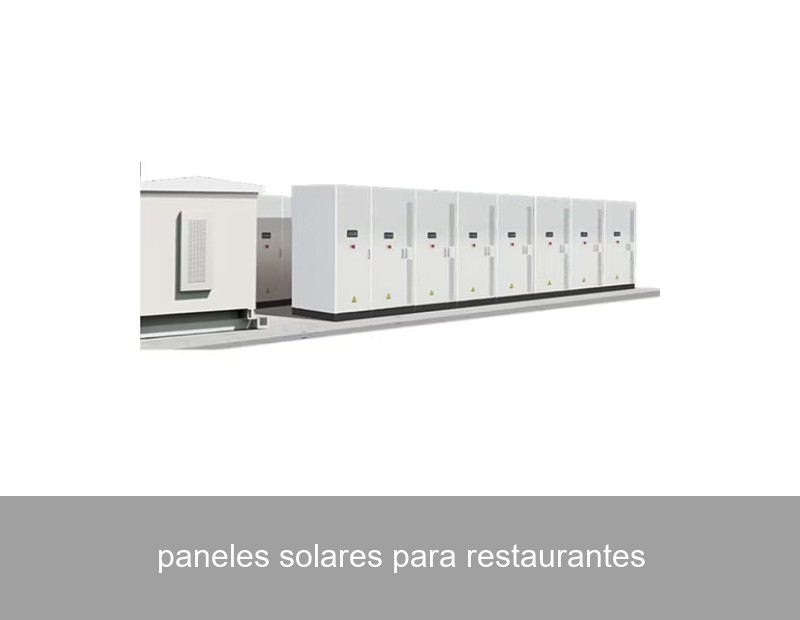
Here's a common puzzle: your restaurant's busiest hours often extend into the evening when the sun isn't shining. A solar-only system exports excess afternoon energy to the grid, but you then buy it back at a higher price at night. The solution? Integrating a battery energy storage system (BESS). This is where expertise from a provider like Highjoule becomes crucial. As a global leader in advanced energy storage since 2005, we understand that for restaurants, solar is just the first ingredient. Our IntelliBESS commercial storage solutions store the surplus solar energy your panels produce during the day. Then, during your expensive evening peak hours, the system intelligently discharges that stored energy, maximizing self-consumption and minimizing grid dependence. This turns a great solar investment into an exceptional one.
| Scenario | Daytime (Solar Peak) | Evening (Peak Demand) | Overall Cost Savings | Resilience |
|---|---|---|---|---|
| Solar Panels Only | High self-consumption, excess exported to grid at lower rate. | Must purchase all power from grid at peak rates. | Good (30-50%) | No backup during outage. |
| Solar + Highjoule Storage | High self-consumption, excess charges battery. | Battery powers critical loads, avoids peak grid rates. | Excellent (60-80%+) | Keeps lights, refrigeration, POS systems running. |
A Real-World Case Study: "Trattoria al Sole," Milan, Italy
Let's look at a concrete example. A popular 150-seat trattoria in Milan was facing annual electricity costs of over €28,000, with crippling peak demand charges. In 2022, they partnered with a local installer who utilized Highjoule's modular IntelliBESS 30 system alongside a 50kW rooftop solar array.
- System: 50kW Solar PV + Highjoule IntelliBESS 30 (30 kWh storage capacity). Results (First 12 Months):
- Electricity bill reduced by 78% annually.
- Peak demand charges from the grid were virtually eliminated.
- The system provided uninterrupted power during two short grid failures, preventing an estimated €3,500 in lost inventory and revenue.
- Combined with Italian incentive programs (Superbonus), the projected payback period was under 5 years.
The owner, Marco, noted: "The solar panels were the obvious first step, but the Highjoule battery is what made the economics phenomenal. We now run our evening service largely on sunshine we captured in the afternoon. Our customers love the story, and our accountant loves the savings."
Making the Switch: A Practical Roadmap for Restaurant Owners
Considering solar panels for your restaurant might seem daunting, but it's a structured process. Here’s a simplified roadmap:
- Energy Audit & Feasibility: Analyze 12 months of utility bills. A reputable provider will assess your roof's structure, orientation, and shading. Highjoule's technical experts often collaborate with installation partners on this phase to model storage savings accurately.
- Financial Modeling & Incentives: Explore available incentives. In the US, the Investment Tax Credit (ITC) now applies to both solar and standalone storage. In the EU, programs vary by country, from feed-in tariffs to grants. The financial case is stronger than ever.
- System Design & Technology Selection: This is critical. Your system should be designed for your specific load profile. Highjoule's IntelliBESS systems, for instance, are known for their high cycle life and sophisticated energy management software, ensuring they can handle the daily charge/discharge cycles a restaurant demands.
- Installation & Commissioning: Work with certified, experienced professionals. A proper installation ensures safety, performance, and longevity.
- Monitoring & Optimization: Modern systems like ours come with cloud-based monitoring. You can track your production, consumption, and savings in real-time from your phone.

Image Source: Unsplash - A restaurant patio ambiance enabled by sustainable power.
Beyond Savings: The Broader Impact on Your Business and Community
Implementing solar panels for your restaurant sends a powerful message. It aligns your business with global sustainability goals, such as those outlined by the International Energy Agency, which highlights solar as the cornerstone of the future energy mix. It engages your staff around a common purpose and attracts a growing segment of eco-aware patrons. Furthermore, by reducing peak demand on the local grid, you're contributing to community-wide grid stability and the integration of more renewables—a true win-win.
So, the question isn't just "Can I afford to install solar?" In today's energy landscape, with the right technology partner, the more pressing question for a forward-thinking restaurateur is: "Can I afford not to explore how solar panels and storage could secure my restaurant's financial and operational future?" What's the first energy bill line item you'd like to start reducing?
 Inquiry
 Online Chat