


Silicon Solar Panels: The Engine of Modern Renewable Energy and How to Maximize Their Potential
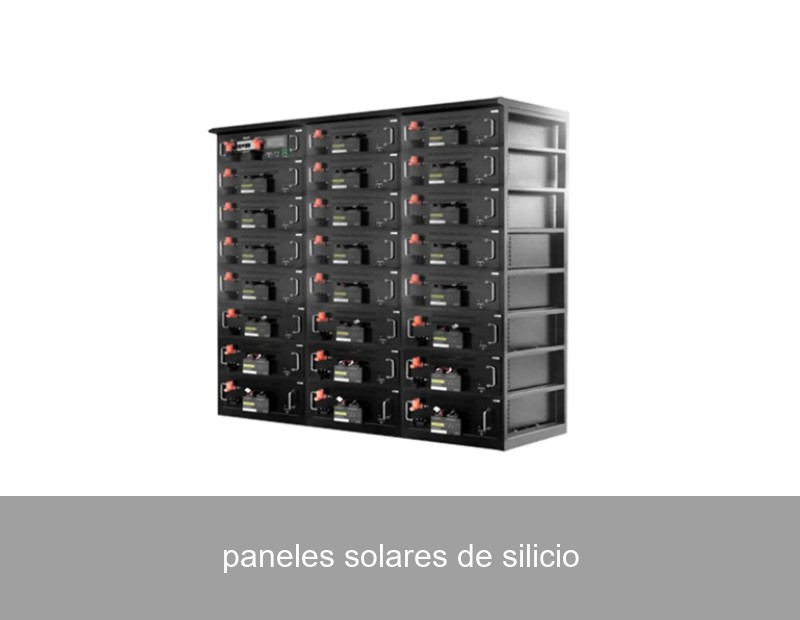
You see them on rooftops, in vast fields, and powering remote devices. Silicon solar panels, or paneles solares de silicio, have become the unmistakable symbol of the clean energy transition. Their dominance isn't accidental; it's the result of decades of refinement, making them the most efficient and reliable workhorse for converting sunlight into electricity. But what happens when the sun sets, or on those cloudy days? The true power of a solar installation is unlocked not just by the panels themselves, but by the intelligent systems that store and manage their energy. This is where the future of energy independence is being written.
Table of Contents
The Dominant Technology: Why Silicon Reigns Supreme
Over 95% of the solar panels installed globally today are based on crystalline silicon. This staggering market share is a testament to the material's perfect balance of performance, durability, and cost-effectiveness. But let's break down why paneles solares de silicio are the undisputed champion.
The journey begins with silicon, the second most abundant element in the Earth's crust. Through a sophisticated manufacturing process, it's purified and formed into either monocrystalline (single-crystal) or polycrystalline (multi-crystal) cells. Monocrystalline panels, with their uniform dark look and slightly higher efficiency rates (often 20%+), are the premium choice for space-constrained installations. Polycrystalline panels, with their blue hue and slightly lower efficiency, have historically offered a compelling value proposition.
The key metrics that make silicon so compelling include:
- Proven Longevity: Most manufacturers offer 25-30 year performance warranties, guaranteeing that panels will still produce 80-90% of their original output after decades.
- High Efficiency: Continuous R&D pushes conversion efficiencies higher, meaning more power from the same rooftop footprint.
- Reliability: They withstand harsh environmental conditions—from hailstorms to high temperatures—with minimal degradation.

Image: A modern silicon solar panel installation. Source: Unsplash
However, the conversation can't stop at the panel. As the International Energy Agency (IEA) notes, solar PV is set to become the largest source of global electricity capacity by 2027 (IEA Renewables 2022 Report). This rapid growth brings a fundamental challenge to the grid: intermittency.
Beyond Generation: The Critical Need for Storage
Here's the reality every solar owner faces: your paneles solares de silicio produce the most energy in the middle of the day, but your home or business often consumes the most energy in the early morning and evening. Without a solution, you're exporting excess power to the grid during the day and buying it back at a higher price at night. This is where the magic of integration happens.
An advanced battery energy storage system (BESS) acts as your personal energy reservoir. It captures the surplus solar energy your panels produce and stores it for use exactly when you need it. This transforms a solar installation from a grid-dependent system into a true energy independence asset. For commercial and industrial users, this capability is even more critical, allowing for load shifting to avoid peak demand charges, which can constitute a significant portion of an electricity bill.
This is the core of Highjoule's mission. Since 2005, we have evolved from a component supplier to a global leader in integrated, intelligent storage solutions. We don't just provide batteries; we provide engineered systems that include sophisticated power conversion, multi-layered safety architectures, and intelligent energy management software. Our Highjoule Hive platform, for instance, allows residential and commercial users to monitor, control, and optimize their energy flow in real-time, ensuring every kilowatt-hour from their silicon panels is used in the most economical and efficient way possible.
How an Integrated Storage System Works
| Time of Day | Solar Production | Energy Storage Action | Result for User |
|---|---|---|---|
| Midday (Sunny) | High | Excess solar charges the battery | Energy stored for later, grid export minimized |
| Evening Peak | Low/None | Battery discharges to power home/business | Reduced reliance on grid, lower energy bills |
| Night | None | Battery supplies base load or grid charges at low rates (if programmed) | Continuous clean power, maximized self-consumption |
| Grid Outage | Varies | System islanding - battery & solar form an independent microgrid | Backup power, resilience, and peace of mind |
Case Study: A Spanish Winery's Sustainable Transformation
Let's move from theory to a tangible example. Bodegas Vallegarcía, a prestigious winery located in the heart of Spain's Castilla-La Mancha region, faced a dual challenge: reducing its significant energy costs for refrigeration and production, and solidifying its commitment to sustainable winemaking. Their abundant sunshine was an underutilized asset.
The Project: Installation of a 250 kW rooftop array of high-efficiency monocrystalline paneles solares de silicio, coupled with a 500 kWh Highjoule Industrial Stack battery storage system and our advanced energy management system.
The Data-Driven Outcome (First Year):
- Energy Self-Sufficiency: The system now covers 85% of the winery's annual electricity consumption.
- Peak Shaving: By using stored solar energy during periods of high grid demand, the winery reduced its peak demand charges by over 40%.
- ROI & Sustainability: The projected payback period is under 6 years. Furthermore, the system avoids approximately 120 tons of CO2 emissions annually—equivalent to planting over 3,000 trees (EPA Equivalencies Calculator).

Image: Example of a commercial solar installation. Source: Unsplash
"The Highjoule system wasn't just an add-on; it was the brain of our solar investment," noted the winery's operations manager. "It allows us to run our cooling systems overnight on sunshine harvested the previous day, which is crucial for preserving the quality of our wines. It turned our solar panels into a 24/7 power source."
Choosing the Right System for Your Silicon Solar Panels
Whether for a home, business, or a community microgrid, pairing your solar array with storage requires careful consideration. Here’s a simplified guide:
- For Residential Users (Highjoule Home Hub): Focus on self-consumption and backup power. Key factors are your daily energy usage pattern, the size of your solar array, and your backup needs (essential loads vs. whole home). Our systems are designed for seamless integration with all major paneles solares de silicio brands and inverters.
- For Commercial & Industrial Users (Highjoule Industrial Stack/Grid): The calculus shifts to financial optimization. Analysis of your load profile, utility rate structure (especially demand charges), and sustainability goals is essential. Highjoule's team provides detailed feasibility studies to model the exact financial and operational benefits.
- For Microgrids & Utilities: Stability and grid services become paramount. Our large-scale containerized solutions provide frequency regulation, black start capability, and renewable energy firming, making the grid more resilient and accommodating of higher solar penetration.
Remember, the battery's chemistry, depth of discharge, cycle life, and the intelligence of its management software are as important as its kilowatt-hour rating. Highjoule uses only tier-1 LiFePO4 (lithium iron phosphate) cells in our core products, renowned for their safety, longevity (10,000+ cycles), and stable chemistry.
Future Horizons for Silicon Solar & Storage
The evolution of paneles solares de silicio continues with technologies like PERC, TOPCon, and heterojunction cells pushing efficiencies closer to theoretical limits. Meanwhile, the storage and management landscape is advancing even faster. We are moving towards AI-driven energy forecasting, where your system learns your habits and weather patterns to optimize charge/discharge cycles automatically. Vehicle-to-grid (V2G) integration will see electric cars become mobile storage units.
At Highjoule, our R&D is focused on this holistic system intelligence. The next frontier isn't just about having storage; it's about creating adaptive, self-healing local energy networks that maximize the value of every solar electron generated.
So, as you consider harnessing the power of the sun with silicon solar panels, we leave you with this question: Is your solar investment truly complete if it only works when the sun is shining, or are you ready to explore how intelligent storage can unlock its full 24/7 potential for your home or business?
 Inquiry
 Online Chat