


Paneles Solares con Baterías para Casa: Your Complete Guide to Home Energy Independence
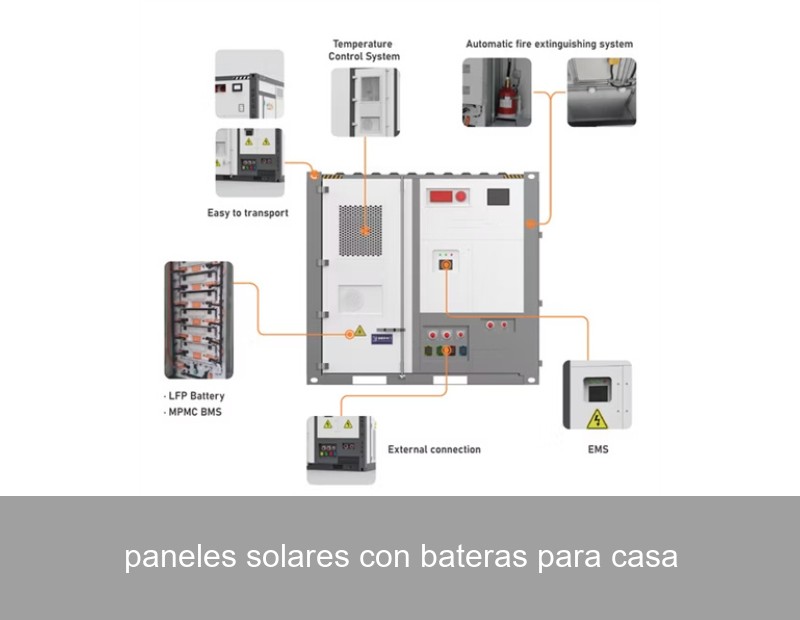
You've likely noticed your neighbors installing sleek solar panels on their roofs. And perhaps you're considering it too. But here's the real game-changer: pairing those panels with a home battery system. Paneles solares con baterías para casa (solar panels with batteries for home) are transforming how households consume energy, moving from simply generating green power to truly owning and controlling it. This isn't just about being eco-friendly anymore; it's about resilience, significant savings, and taking a proactive step towards a modern, intelligent home energy system. Let's explore why this combination is becoming non-negotiable for energy-conscious homeowners.
The Phenomenon: Why Solar Alone Isn't Enough
For years, the dream was simple: install solar panels, reduce your electricity bill, and feel good about clean energy. And while that's still true, a critical gap exists. Solar panels produce energy when the sun is shining—typically in the middle of the day when many homes are empty. Conversely, energy demand peaks in the early morning and evening. Without a battery, excess solar energy you don't use instantly gets sold back to the grid, often at a much lower rate than what you pay to buy it back later. This mismatch is the core problem. A home battery system bridges this gap, storing your midday solar surplus for use during peak hours, blackouts, or at night. It's the key to unlocking true energy self-consumption.

Image Source: Unsplash - A modern home integrating solar and storage.
The Data: Savings, Security, and Sustainability
The benefits of combining solar with storage are backed by compelling data. Let's break it down:
- Bill Savings: By maximizing self-consumption of solar energy (often to 70% or more, compared to 30-50% without a battery), you drastically reduce reliance on the grid. In regions with Time-of-Use (TOU) rates or demand charges, batteries can shift usage away from expensive peak periods, leading to savings of hundreds to thousands annually.
- Energy Security: Power outages are increasing in frequency and duration. A 2023 report by the U.S. Energy Information Administration (EIA) noted a rise in major outage events[1]. A home battery provides seamless backup power, keeping lights, refrigeration, and critical devices running.
- Grid Support & Sustainability: Home batteries can collectively support grid stability, reducing strain during peaks. This allows for higher penetration of renewable energy, further cutting carbon emissions. It's a personal step with a collective impact.
| System Type | Typical Self-Consumption Rate | Backup Power During Outage | Impact on Electricity Bill |
|---|---|---|---|
| Solar Panels Only | 30% - 50% | No (Grid-tied systems shut off) | Reduces, but limited by export rates |
| Paneles Solares con Batería | 60% - 90%+ | Yes (Seamless, automatic) | Maximizes reduction, protects from rate hikes |
A Real-World Case Study: The Johnson Family, California
Let's look at a concrete example from our target market. The Johnson family in Sacramento, California, installed a 8 kW solar array in 2020. While their summer bills dropped to nearly zero, they still faced high charges during winter and evening hours due to PG&E's TOU rates. In early 2023, they decided to integrate a battery storage system.
- System Added: A Highjoule HomePower 10 battery system (10 kWh usable capacity) with a built-in hybrid inverter.
- Results (12-month post-installation):
- Annual electricity costs reduced by an additional 40% compared to solar alone.
- Self-consumption of solar energy increased from ~45% to 88%.
- Experienced two short grid outages; the home's essential circuits operated uninterrupted.
- The system's smart energy management automatically charged the battery with cheap solar and discharged during expensive 4-9 pm peak periods.
"The peace of mind is priceless," says Mrs. Johnson. "We're not just saving money; we're in control. During the last heatwave when the grid was stressed, our home was cool and powered by yesterday's sunshine."
Understanding the Technology: Inverters, Batteries, and Intelligence
Not all systems are created equal. A robust paneles solares con baterías para casa setup hinges on three pillars:
- The Battery: Lithium-ion (specifically Lithium Iron Phosphate or LFP) is the dominant, safe chemistry for homes. Key metrics are usable capacity (kWh)—how much energy it can store—and power rating (kW)—how much it can deliver at once.
- The Inverter: This is the brain. A hybrid inverter manages DC power from solar panels, charges/discharges the battery, and converts DC to AC for home use. It must integrate seamlessly with both.
- The Energy Management System (EMS): This software is the intelligence. It learns your consumption patterns, considers weather forecasts, and adjusts charging/discharging to optimize for savings or backup readiness.

Image Source: Unsplash - A sleek, wall-mounted home battery system.
Highjoule's Integrated Solutions for Your Home
This is where Highjoule's nearly two decades of expertise in advanced energy storage shines. We don't just sell components; we deliver integrated, intelligent systems designed for reliability and simplicity. For the residential market, our HomePower Series is engineered to be the perfect partner for your solar panels.
Our flagship product, the HomePower 15, features:
- Modular Scalability: Start with a base unit and add battery modules as your needs grow, from 10 kWh to over 30 kWh.
- All-in-One Design: Incorporates the hybrid inverter, battery management, and built-in safety features in one compact, wall-mountable unit.
- Highjoule Smart Energy OS: Our proprietary EMS uses AI to optimize your energy flow. You can set preferences (maximize savings, ensure backup, etc.) via a user-friendly app, and the system does the rest.
- Grid Services Ready: In some markets, with your consent, your system can participate in virtual power plant (VPP) programs, earning you additional revenue by supporting the community grid.
Highjoule provides a complete service package: expert site assessment, professional installation by certified partners, comprehensive warranties, and 24/7 system monitoring. We ensure your transition to energy independence is smooth and supported.
Making the Leap: Is It Right for Your Home?
Considering paneles solares con baterías para casa is a significant decision. Ask yourself these questions:
- Do I live in an area with frequent power outages or unstable grid infrastructure?
- Does my utility have high electricity rates, Time-of-Use billing, or unfavorable net metering policies?
- Is my household's energy consumption highest in the morning and evening?
- Do I want to maximize my environmental impact and reduce my carbon footprint further?
- Am I planning for long-term home ownership and value resilience?
If you answered "yes" to several of these, the combination is likely a wise investment. The next step is a professional assessment. Factors like your existing solar system size, roof orientation, main electrical panel, and daily consumption patterns will determine the ideal battery size and configuration. Consulting with experts like Highjoule's network of certified installers is crucial. They can provide a detailed analysis of your potential savings and system design. For further independent research on solar and storage benefits, the U.S. Department of Energy's Solar Energy Technologies Office is an excellent resource [2].
The journey to true energy independence starts with a single question: What would it mean for your family to never worry about a power bill or a power outage again?
 Inquiry
 Online Chat