


On-Grid Solar Energy Storage Cabinet: The Smart Hub for Modern Energy Independence
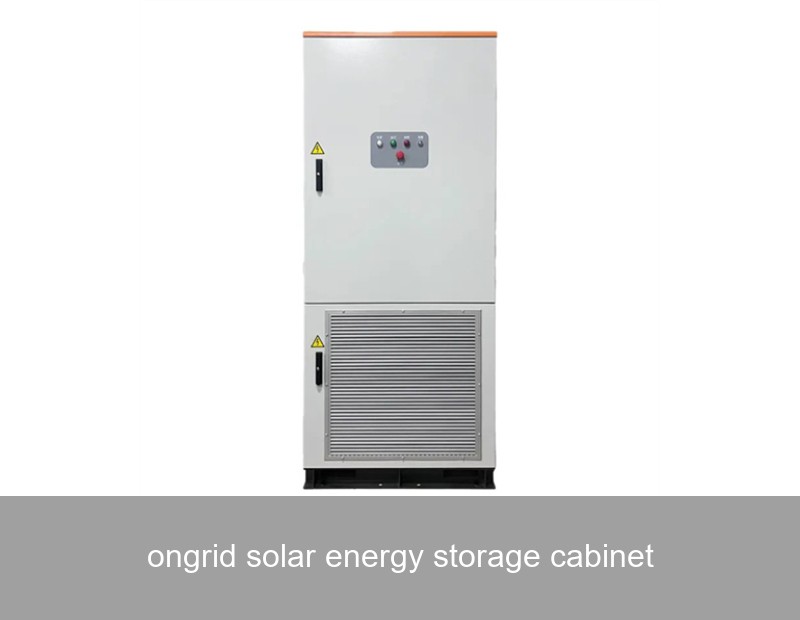
Have you ever looked at your electricity bill after a sunny month and wondered, "My solar panels produced so much power. Why am I still paying the grid?" You're not alone. This common frustration highlights a key gap in traditional solar setups: without a way to store and intelligently manage the energy you generate, a significant portion of its potential value simply flows away. This is where the ongrid solar energy storage cabinet becomes the game-changing centerpiece. It's more than just a battery box; it's the intelligent command center for your self-produced energy, designed to maximize self-consumption, provide backup power, and turn your solar investment into true energy independence.
Table of Contents
The Phenomenon: Wasted Sunlight, Rising Bills
Most residential and commercial solar systems are connected directly to the utility grid (on-grid). During peak sunlight hours, they often generate more electricity than the property can use. This surplus is fed back to the grid, often for a modest feed-in tariff. Conversely, in the evening when the sun is down but demand is high, you pull expensive electricity from the grid. This cycle creates a mismatch: you export cheap, clean energy and import expensive, often fossil-fuel-based power. The financial and environmental benefits of your solar panels are capped. An ongrid solar energy storage cabinet solves this by capturing that midday surplus for use when you need it most, fundamentally altering your relationship with the grid.
The Data: Why Storage is the Missing Link
The numbers make a compelling case. According to the U.S. Department of Energy, solar can provide up to 40% of the nation's electricity by 2035, but grid flexibility and storage are critical to achieving this. For an individual user, studies show that adding storage can increase self-consumption of solar power from a typical 30-50% to over 70-90%. This directly shields you from volatile energy prices. In markets like Germany and California where feed-in tariffs have decreased and time-of-use rates have increased, the payback period for a solar-plus-storage system is becoming increasingly attractive. It's not just about savings; it's about stability and predictability.
Key Functions of a Modern Storage Cabinet
- Maximize Self-Consumption: Store excess solar generation for use at night or on cloudy days.
- Peak Shaving: Avoid drawing power during high-cost peak utility rate periods.
- Backup Power: Provide essential electricity during grid outages (depending on system configuration).
- Grid Support: Advanced systems can participate in grid services, offering potential revenue streams.
The Core: What is an On-Grid Solar Energy Storage Cabinet?
Think of it as the brain and heart of your energy ecosystem. An ongrid solar energy storage cabinet is an integrated unit that typically houses the battery modules, a battery management system (BMS), a hybrid or AC-coupled inverter, cooling systems, and safety disconnects—all in one sleek, UL or IEC-certified enclosure. Unlike a simple battery rack, a cabinet is engineered for safety, scalability, and seamless communication between solar production, storage, home consumption, and the grid.
This is where Highjoule's expertise shines. Since 2005, we've evolved from a battery innovator to a global provider of complete, intelligent storage solutions. Our HES Series (Hybrid Energy Storage) Cabinets are specifically designed for the on-grid user seeking resilience and control. They integrate our proprietary, lithium-iron-phosphate (LiFePO4) battery packs, known for their safety and long cycle life, with a powerful hybrid inverter and our EnergyOS™ platform. This AI-driven software learns your consumption patterns, weather forecasts, and utility rate schedules to autonomously optimize energy flow, ensuring every kilowatt-hour you produce is used in the most economical way possible.

Image Source: Unsplash (Representative image of a clean energy storage installation)
Case Study: A German Bakery's Recipe for Resilience
Let's look at a real-world example from Bavaria, Germany. Bäckerei Schmidt (name changed for privacy) is a medium-sized artisan bakery with high energy demands for ovens, refrigeration, and lighting. They had a 100 kW rooftop solar array but faced two problems: high demand charges from grid peaks during early morning baking and the inability to use solar power after sunset when preparing for the next day.
In 2022, they installed a Highjoule HES-50 Commercial Cabinet with 100 kWh of storage capacity. The system was configured for peak shaving and solar self-consumption maximization. The results after one year were telling:
| Metric | Before Installation | After Installation |
|---|---|---|
| Grid Energy Consumption (Peak Hours) | ~65% of daily draw | ~15% of daily draw |
| Solar Self-Consumption Rate | 48% | 94% |
| Monthly Demand Charges | €1,200 (average) | €280 (average) |
| Annual CO2 Emission Reduction | 42 tonnes (solar only) | +18 tonnes (58 tonnes total) |
The bakery's owner noted, "The Highjoule system doesn't just save us money. It gives us predictable energy costs, which is crucial for business planning. We also market our 'energy-smart baking' to our community, which has been positively received." This case exemplifies how a commercial-scale ongrid solar energy storage cabinet transitions from a cost to a strategic asset.
Beyond Basics: The Highjoule Advancements
Not all storage cabinets are created equal. At Highjoule, we build our systems for the long term, focusing on three pillars beyond simple storage:
1. Intelligence Through EnergyOS™
Our cloud-connected platform turns the cabinet into an active energy manager. It can be programmed to prioritize backup power for critical loads, participate in utility demand response programs (where available), and even forecast energy production and consumption. You get a simple dashboard, but behind it is complex AI optimizing for your wallet and grid stability.
2. Modular & Future-Proof Design
Our cabinets are designed with expansion in mind. Starting with a 10 kWh base configuration for a home? You can easily add more battery packs as your needs grow—whether that's because you buy an electric vehicle or expand your business. This modularity protects your initial investment.
3. Safety as a Foundation
We mandate the ultra-stable LiFePO4 chemistry and incorporate multi-layer protection: cell-level monitoring, active thermal management, and fire-retardant materials. Our systems comply with the latest international standards like UL 9540 and IEC 62619, giving installers and homeowners peace of mind. As noted by the Fire Safety Research Institute, integrated safety in storage systems is paramount for widespread adoption.

Image Source: Unsplash (Representative image of modular battery technology)
Your Energy Future: Questions to Consider
The journey toward true energy independence is exciting. An ongrid solar energy storage cabinet is the logical next step for anyone with or considering solar panels. It's a decision that blends immediate financial sense with long-term resilience. As you contemplate this upgrade, ask yourself and your energy advisor: Is my current system just offsetting costs, or is it actively working as a strategic asset? How would my daily life or business operations benefit from predictable power costs and protection from grid instability?
We at Highjoule are passionate about empowering this transition. Our solutions for residential, commercial, and microgrid applications are built on nearly two decades of innovation aimed at one goal: making clean, reliable, and intelligent energy accessible. What will you power with your own stored sunlight?
 Inquiry
 Online Chat