


Off-Grid Solar Without Battery: A Practical Guide to Power Independence
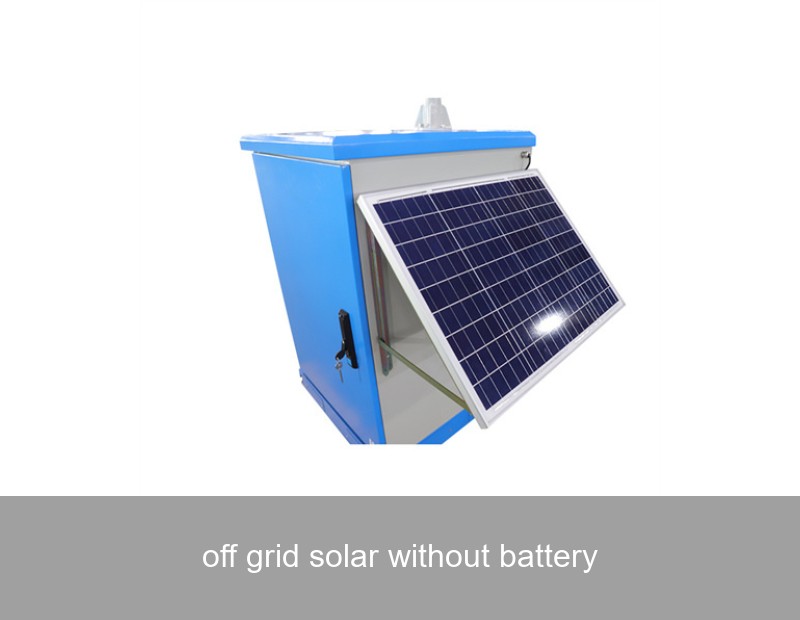
Table of Contents
- The Battery Dilemma: Why Consider Going Without?
- How Does Off-Grid Solar Without a Battery Actually Work?
- A Real-World Case Study: The California Farm
- Key Components for a Battery-Free Off-Grid System
- When Does a Battery-Free Off-Grid System Make Sense?
- Beyond the Basics: Smart Management with Highjoule
- Making the Decision: Is This Right for Your Project?
Imagine powering your remote cabin, agricultural pump, or worksite entirely with the sun, but without the significant upfront cost and maintenance of a large battery bank. It sounds counterintuitive, doesn't it? For decades, the phrase off-grid solar has been synonymous with batteries. Yet, a growing number of savvy homeowners, farmers, and business operators are exploring a compelling alternative: off-grid solar without battery storage. This approach isn't about deprivation; it's about intelligent, application-specific design that matches energy generation directly with immediate demand. Let's unravel how this works, where it excels, and how modern technology from providers like Highjoule is making these systems more reliable and efficient than ever.
The Battery Dilemma: Why Consider Going Without?
Batteries are often the most expensive and temperamental component of a traditional off-grid system. According to the National Renewable Energy Laboratory (NREL), while lithium-ion battery pack costs have fallen dramatically, they still represent 25-35% of the total cost for a typical residential solar-plus-storage system. Beyond cost, batteries have a finite lifespan (typically 10-15 years for lithium), require thermal management, and add system complexity.
The core idea behind a battery-free off-grid system is simple: use the solar energy when the sun is shining, and schedule your major power demands accordingly. It's a return to the original principle of solar power—direct consumption. This model is perfect for loads that are flexible or needed primarily during daylight hours. Think of it as "solar-on-demand" for specific tasks.
How Does Off-Grid Solar Without a Battery Actually Work?
At its heart, the system converts sunlight into usable AC power without an intermediary storage stage. Here’s the basic power flow:
- Solar Panels: Generate DC electricity during daylight.
- Charge Controller: In a battery-less setup, a specialized maximum power point tracking (MPPT) controller optimizes panel output but sends power directly to the inverter.
- Off-Grid Inverter: This is the critical brain. It converts DC to AC power instantly. Unlike a grid-tied inverter, it doesn't need the grid to operate, but it must create its own stable voltage and frequency "grid" for appliances to use. It adjusts output based on available solar energy.
- Loads: Appliances and equipment run directly on this instantaneous solar power.
When a cloud passes or demand exceeds supply, the inverter's output will drop or shut off to protect itself. This is why load management is non-negotiable. The system often includes a diversion load (like a water heater element) to absorb excess energy when solar production exceeds consumption, preventing damage to the system.
A Real-World Case Study: The California Farm
Consider a vineyard in Sonoma County, California, facing high costs to run grid power to a new irrigation pond half a mile from the main property. Their primary need was to run a 2 HP submersible pump (approx. 1.5 kW) for 6-8 hours daily to fill a storage tank for drip irrigation.
- Solution: A 4.8 kW solar array was installed with a robust off-grid inverter and a pump-start controller, but without any batteries.
- Smart Logic: A simple programmable timer ensures the pump only attempts to run between 9 AM and 4 PM. A pressure switch on the storage tank automatically stops the pump when the tank is full.
- Results: The system provides 100% of the irrigation pumping needs during the growing season. The total installed cost was approximately $9,000. A comparable system with enough battery backup to run the pump for a full day without sun would have cost over $18,000. The payback period was slashed from 8 years to under 4.
- Backup: For rare, extended rainy periods, the farm keeps a small portable generator on standby, which is a far cheaper contingency than a large, seldom-used battery bank.
This case highlights the perfect synergy between a predictable, daytime load and a well-designed off-grid solar without battery solution.
Key Components for a Battery-Free Off-Grid System
| Component | Role in Battery-Free System | Key Consideration |
|---|---|---|
| Solar Panels | Primary energy source. | Oversize the array slightly to account for cloudy days and ensure enough power during lower-light periods. |
| MPPT Charge Controller | Optimizes panel voltage/current; often used to manage diversion load. | Must be compatible with "direct-to-inverter" or diversion mode operation. |
| Off-Grid Inverter | Creates stable AC power from variable DC solar input. | Choose an inverter with a wide input voltage range and excellent low-voltage performance. It must handle sudden load changes. |
| Diversion/Load Dump | A "sink" for excess energy (e.g., water heater, space heater). | Critical for system health. Prevents over-voltage and allows full utilization of solar resource. |
| Load Management Controller | The system's intelligence; prioritizes and schedules loads. | Can range from simple timers to advanced energy management systems. |
When Does a Battery-Free Off-Grid System Make Sense?
This approach is not a one-size-fits-all solution, but it is exceptionally effective for specific scenarios:
- Daytime-Only Operations: Workshops, agricultural pumping, ventilation fans, and construction sites.
- Load-Shifting Applications: Heating water or thermal mass (like a concrete floor) during the day for use later.
- Remote Monitoring/Telecom: Powering equipment that has low, constant power needs, often paired with a very small battery for essential control circuits.
- Supplemental Systems: Where a primary power source (like a generator or weak grid) exists, and solar is used to reduce fuel consumption during the day.
- Cost-Sensitive Projects: Where the absolute lowest upfront cost for solar power is the driving factor, and usage flexibility is acceptable.

Agricultural irrigation is a classic and highly effective application for off-grid solar without battery systems, leveraging daytime sun for daytime water pumping.
Beyond the Basics: Smart Management with Highjoule
While the concept is simple, maximizing reliability and efficiency requires smart technology. This is where Highjoule's expertise in advanced energy management transforms a basic setup into a robust power solution. Our H-PowerCube Off-Grid Inverter Series is engineered for demanding, variable direct-solar applications.
Unlike standard inverters, the H-PowerCube features integrated, programmable load control relays and sophisticated algorithms that can:
- Prioritize critical loads (e.g., a refrigerator) to receive power first when the sun comes up.
- Automatically stage secondary, high-power loads (e.g., a well pump) only when surplus solar energy is available.
- Seamlessly integrate a backup generator, starting it only when solar is insufficient for multiple days, thereby minimizing fuel use.
- Provide remote monitoring and control via the Highjoule EnergyOS platform, allowing you to see real-time production, adjust load schedules, and receive alerts from anywhere.
For projects that may eventually need storage, Highjoule's systems are inherently modular. You can start with a battery-free off-grid solar setup to meet immediate daytime needs and cap costs, then easily integrate a Highjoule IntelliBatt lithium-ion battery bank later when your budget allows or your need for nighttime power grows. This future-proofs your investment and aligns with a scalable, pay-as-you-grow strategy.

For cabins and remote homes, a hybrid approach using a small battery for essentials and direct solar for daytime high-power use can be an optimal balance.
Making the Decision: Is This Right for Your Project?
To evaluate if an off-grid solar without battery system fits your needs, ask these questions:
- What is the primary purpose of the power? (e.g., pumping, machining, ventilation)
- Can 80-100% of that energy consumption be shifted to daylight hours?
- What is the consequence of having no power during cloudy weather or at night? (Can the process pause?)
- Is minimizing initial capital expenditure more important than having 24/7 availability?
If your answers skew towards daytime, flexible usage and cost sensitivity, then this model warrants serious consideration. The U.S. Department of Energy's guide to solar performance emphasizes that system design must always be driven by the specific load profile.
So, are you operating a remote asset or planning a project where power needs and sunlight hours naturally align? What could a strategically designed, intelligent system from Highjoule—starting simple and scaling smart—unlock for your operation's efficiency and sustainability?
 Inquiry
 Online Chat