


Off Grid Solar System in Bangalore: Your Guide to Energy Independence
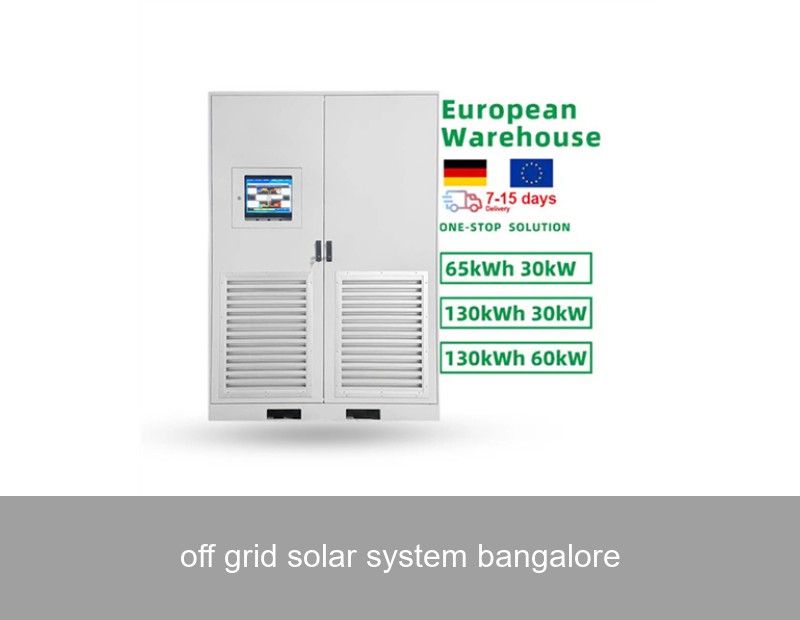
Imagine your home or business in Bangalore, humming with activity, completely powered by the abundant Indian sun—unaffected by the city's frequent power cuts or rising electricity tariffs. This isn't a distant dream; it's the reality offered by a modern off grid solar system in Bangalore. For homeowners, farmers, and business operators in and around India's tech capital, going off-grid is becoming an increasingly savvy solution to ensure uninterrupted power. But what does it truly take to achieve energy independence in a place with Bangalore's unique climate and energy needs? As a global leader in advanced energy storage, Highjoule has been engineering reliable power solutions since 2005. Let's explore how the right technology can turn the challenge of Bangalore's grid instability into a sustainable opportunity.
Table of Contents
- The Bangalore Context: Why Off-Grid Solar is a Necessity
- Anatomy of a Reliable Off-Grid Solar System
- The Heart of the System: Choosing the Right Battery
- Engineered for Reliability: The Highjoule Solution
- Case Study: A Bangalore Plant Nursery's Transformation
- Making the Decision: Is Off-Grid Right for You?
The Bangalore Context: Why Off-Grid Solar is a Necessity
Bangalore, despite its modern image, faces a paradoxical energy situation. The city experiences scheduled and unscheduled load-shedding, especially in its peripheral and industrial areas. According to a 2023 report by the International Energy Agency (IEA), India's electricity demand is growing at one of the fastest rates globally, straining existing infrastructure. For a Bangalore-based small factory, a data-crunching startup, or a reliant home office, a two-hour power cut can mean significant financial loss and disruption.
An off-grid solar system directly addresses this. Unlike grid-tied systems that shut down during outages, a true off-grid system operates in isolation. It captures solar energy, stores it in batteries, and powers your premises 24/7. This is particularly crucial for applications in Bangalore's surrounding rural districts, where the grid may be weak or non-existent, such as in agricultural farms or remote resorts.

Image Source: Unsplash - Rooftop solar installation in an urban environment.
Anatomy of a Reliable Off-Grid Solar System
Think of an off-grid system as a self-contained power station. It has four key components that must be perfectly matched:
- Solar Panels: The primary fuel source. Bangalore receives good solar insolation (about 5.3 kWh/m²/day on average), making it viable. The panel array must be sized to generate enough power even during the monsoon months.
- Solar Charge Controller: This smart regulator protects your batteries by managing the voltage and current from the panels.
- Battery Bank: This is your energy reservoir. It stores excess solar energy generated during the day for use at night and during cloudy periods. Its capacity determines your "hours of autonomy."
- Inverter: Converts the direct current (DC) electricity stored in the batteries into the alternating current (AC) that powers your appliances.
A common pitfall in off grid solar system in Bangalore projects is undersizing the battery bank or using inferior batteries, leading to failure during consecutive cloudy days. This is where quality engineering becomes non-negotiable.
The Heart of the System: Choosing the Right Battery
The battery is the most critical—and often most replaced—component. Let's break down the common types:
| Battery Type | Pros | Cons | Ideal For |
|---|---|---|---|
| Flooded Lead-Acid | Low upfront cost | Regular maintenance, shorter lifespan, lower depth of discharge | Very budget-conscious, temporary setups |
| Sealed Lead-Acid (AGM/Gel) | Maintenance-free, better performance than flooded | Moderate lifespan, sensitive to overcharging | Smaller residential systems where maintenance is an issue |
| Lithium-Ion (LiFePO4) | Long lifespan (10+ years), high depth of discharge, fast charging, maintenance-free | Higher initial investment | Most residential, commercial, and industrial off-grid applications where reliability and total cost of ownership are key. |
For a city like Bangalore, where reliability cannot be compromised, Lithium-Ion (specifically Lithium Iron Phosphate or LiFePO4) technology is increasingly the standard. It handles Bangalore's climate better, requires no watering, and offers a much longer service life, justifying the higher initial cost over time.
Engineered for Reliability: The Highjoule Solution
This is where Highjoule's nearly two decades of expertise come into play. We understand that an off grid solar system in Bangalore isn't just about selling components; it's about delivering guaranteed power availability. Our approach integrates intelligent software with rugged hardware.
Highjoule's HPS (Highjoule PowerStack) series of containerized and modular battery energy storage systems (BESS) are built on stable LiFePO4 chemistry. For off-grid applications, they offer:
- Adaptive Battery Management System (BMS): Our proprietary BMS doesn't just monitor; it learns your energy usage patterns in Bangalore's specific climate, optimizing charge cycles to maximize battery life.
- Scalable Design: Start with what you need. Our modular design allows you to easily expand your storage capacity as your farm, factory, or household grows.
- Integrated Energy Management: The system seamlessly prioritizes loads and can integrate with a backup generator if needed, creating a truly resilient hybrid microgrid.
We provide more than just hardware; we offer a complete smart, efficient, and sustainable power solution, from initial design and simulation to commissioning and remote monitoring, ensuring your off-grid system performs optimally year after year.

Image Source: Unsplash - Technician monitoring a modern battery storage system.
Case Study: A Bangalore Plant Nursery's Transformation
Let's look at a real-world example. "GreenCanopy," a 5-acre horticultural nursery on the outskirts of Bangalore, relied on a diesel generator for 8-10 hours daily during grid outages to power water pumps, climate-controlled greenhouses, and cold storage. Fuel costs were volatile, noise and pollution were problematic, and operations were at the mercy of fuel delivery.
The Challenge: Achieve 24/7 reliable power for critical agricultural loads, eliminate diesel dependency, and reduce operational costs.
The Highjoule Solution: A custom 45 kW off-grid solar system with a 120 kWh Highjoule HPS battery bank.
- System Size: 45 kW solar array, 120 kWh LiFePO4 storage.
- Key Components: High-efficiency bifacial panels, Highjoule HPS battery modules, hybrid inverters.
- Outcome: The system now meets 100% of the nursery's power needs. Diesel generator usage dropped by over 95%, used only as an absolute emergency backup. The payback period was calculated at under 5 years, considering saved diesel costs and maintenance. Most importantly, the consistent power improved plant growth conditions and reduced spoilage in cold storage.
This case, documented in part with data from the Ministry of New and Renewable Energy (MNRE), illustrates the tangible impact a well-engineered off-grid system can have on a business's viability and sustainability.
Making the Decision: Is Off-Grid Right for You?
So, how do you know if an off grid solar system in Bangalore is your best path? Ask yourself these questions:
- Is my location prone to frequent or long-duration power cuts that disrupt my life/business?
- Am I in a remote area with a weak or non-existent grid connection?
- Are my electricity costs high and unpredictable?
- Do I value long-term energy security and price stability over a lower upfront cost?
If you answered "yes" to most of these, then off-grid is a compelling option. The next step is a professional assessment. A reputable provider will analyze your historical energy usage (load assessment), site solar potential, and design a system that meets your "days of autonomy" requirement—how many cloudy days you want to weather without sun.
Remember, the goal is not just to buy equipment, but to purchase energy certainty. With partners like Highjoule, who bring global expertise to local challenges, that certainty is within reach. What would you power first with your own independent energy source?
 Inquiry
 Online Chat