


Northwestern Solar Vietnam Co Ltd: A Case Study in Vietnam's Solar Energy Surge
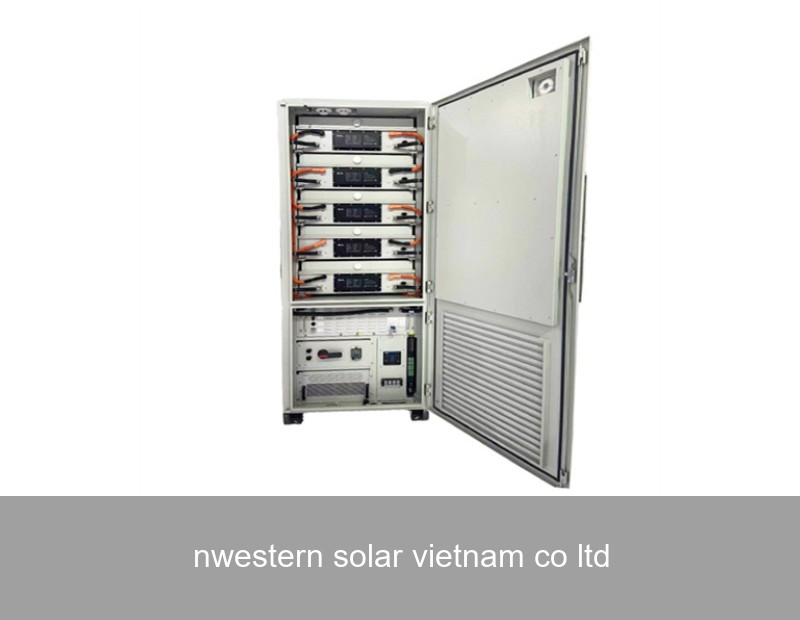
Have you ever wondered how a single, forward-thinking company can illuminate the path for an entire region's energy future? Look no further than Vietnam's remarkable solar transformation. Over the past decade, the country has emerged as a Southeast Asian renewable powerhouse, with companies like Northwestern Solar Vietnam Co Ltd at the forefront of this charge. Their journey from initial adoption to large-scale project development mirrors a global trend: the unstoppable rise of solar, paired increasingly with intelligent energy storage to ensure every kilowatt-hour is captured and utilized. This synergy is not just a technical detail; it's the cornerstone of a reliable, sustainable, and economically sound energy grid.
Table of Contents
The Phenomenon: Vietnam's Solar Boom
Vietnam's energy story is nothing short of spectacular. Faced with rapid economic growth and soaring electricity demand, the government launched a decisive feed-in tariff (FiT) program in 2017. The result? A gold rush for solar. Rooftops and vast fields of photovoltaic (PV) panels sprang up almost overnight. Companies like Northwestern Solar Vietnam Co Ltd transitioned from being proponents to becoming pivotal players, developing, installing, and maintaining solar assets for commercial and industrial (C&I) clients. This rapid deployment solved an immediate need but soon revealed a more complex challenge: how to manage the inherent intermittency of solar power and integrate it smoothly into the national grid.

Large-scale solar farms, similar to those developed by companies in Vietnam, require robust integration solutions. Credit: Unsplash.
The Data: Growth, Grids, and Gaps
The numbers tell a compelling story. According to the International Renewable Energy Agency (IRENA), Vietnam's solar PV capacity skyrocketed from a mere 86 MW in 2018 to over 16,500 MW by the end of 2021[Source: IRENA]. This breakneck growth, however, led to grid congestion, particularly in sun-rich regions like Ninh Thuan and Binh Thuan. At times, grid operators had to curtail (cut off) solar generation to maintain stability, leading to wasted clean energy and reduced project revenues. This "duck curve" phenomenon—where net demand plunges during midday solar peaks and ramps up steeply at dusk—isn't unique to Vietnam; it's a familiar challenge in solar-rich markets like California and parts of Europe.
| Year | Installed Capacity (MW) | Year-on-Year Growth |
|---|---|---|
| 2018 | 86 | Baseline |
| 2019 | ~4,800 | ~5,500% |
| 2020 | ~9,300 | ~94% |
| 2021 | ~16,500 | ~77% |
The Case Study: Northwestern Solar Vietnam's Industrial Pivot
This is where the operational insight of companies like Northwestern Solar Vietnam Co Ltd becomes critical. Let's consider a real-world scenario. One of their key clients, a mid-sized textile factory in Bac Giang province, installed a 1.2 MW rooftop solar system. Initially, it covered about 40% of their daytime load and provided significant savings. However, the factory operated on two shifts, with critical machinery running into the evening. They faced two issues: first, any grid instability or curtailment during the day threatened their production continuity; second, they were still heavily reliant on the grid (and its associated costs) after sunset.
Northwestern Solar Vietnam's solution was to propose an integrated solar-plus-storage system. By adding a battery energy storage system (BESS), the factory could store excess solar generation from midday instead of exporting it all to a stressed grid. This stored energy could then be dispatched during the evening peak, reducing demand charges and providing backup power during short grid outages. The result? The factory increased its solar self-consumption to over 70%, shielded itself from grid volatility, and improved its overall energy resilience. This case is a microcosm of the next essential phase for Vietnam's solar sector: moving from pure generation to intelligent, optimized energy management.
The Solution: Where Advanced Storage Enters the Picture
The experience of Northwestern Solar Vietnam Co Ltd and its clients underscores a universal truth in renewable energy. Solar panels are fantastic generators, but without a "buffer," their value is limited by time and grid capacity. A modern Battery Energy Storage System (BESS) acts as that critical buffer. It doesn't just store energy; it provides a suite of grid services: frequency regulation, ramp rate control, and voltage support. For a developer, this means the ability to offer clients not just cheaper energy, but also reliable and controllable energy. This is the key to unlocking the full potential of every solar investment, whether for a factory in Vietnam, a shopping mall in Germany, or a data center in Texas.
Core Functions of a Solar-Integrated BESS:
- Energy Time-Shifting: Store cheap solar energy for use during expensive peak periods.
- Demand Charge Management: Smooth out peak power draws from the grid, dramatically reducing utility costs for C&I clients.
- Backup Power: Provide seamless, instantaneous power during grid outages, ensuring operational continuity.
- Grid Support: Stabilize local grids, mitigating the integration challenges of high solar penetration.
Highjoule's Role in Stabilizing Renewable Futures
This is precisely the challenge Highjoule was founded to solve. Since 2005, we have evolved into a global leader in advanced储能系统, providing intelligent, efficient, and sustainable power solutions. For partners like Northwestern Solar Vietnam Co Ltd, who are navigating the complexities of grid integration, Highjoule offers more than just hardware. We provide a complete ecosystem built around our HPS (Highjoule PowerStack) series of containerized and modular BESS solutions.
Our systems are engineered with the grid and the end-user in mind. Featuring industry-leading lithium-iron-phosphate (LFP) battery cells for safety and longevity, coupled with our proprietary Adaptive Grid Intelligence (AGI) software platform, the HPS series can be configured for a multitude of applications. Whether the goal is peak shaving for a factory, renewable firming for a solar farm, or creating an islandable microgrid, our technology provides the control and visibility needed. For a solar EPC in Vietnam, this translates into a stronger value proposition for their clients: a future-proof energy asset that maximizes ROI and minimizes risk.

Modern BESS units, like Highjoule's PowerStack, require sophisticated monitoring and control. Credit: Unsplash.
A Global Lesson for Europe and the US
The narrative of Northwestern Solar Vietnam Co Ltd is not an isolated one. It reflects a global pattern. In Europe, the push for energy independence is accelerating the deployment of solar and storage at both the utility and residential levels. In the United States, the Inflation Reduction Act (IRA) has created unprecedented incentives for storage-coupled renewable projects. The core insight from Vietnam's experience is proactive: integrating storage from the planning stage, rather than as an afterthought, yields superior economic and technical outcomes.
As markets mature, the winners will be those who view solar and storage as a single, synergistic system. This approach mitigates grid upgrade costs, enhances community resilience, and delivers the clean, reliable power that modern economies demand. The question for project developers and energy managers in Europe and the US is no longer "Should we consider storage?" but rather "How do we design and optimize our storage integration to future-proof our investments?"
What specific energy challenge in your commercial or industrial operation could be transformed by treating solar generation and intelligent storage as a single, unified solution?
 Inquiry
 Online Chat