


Nokia Energy Solutions Products: A Deep Dive into Industrial Energy Innovation
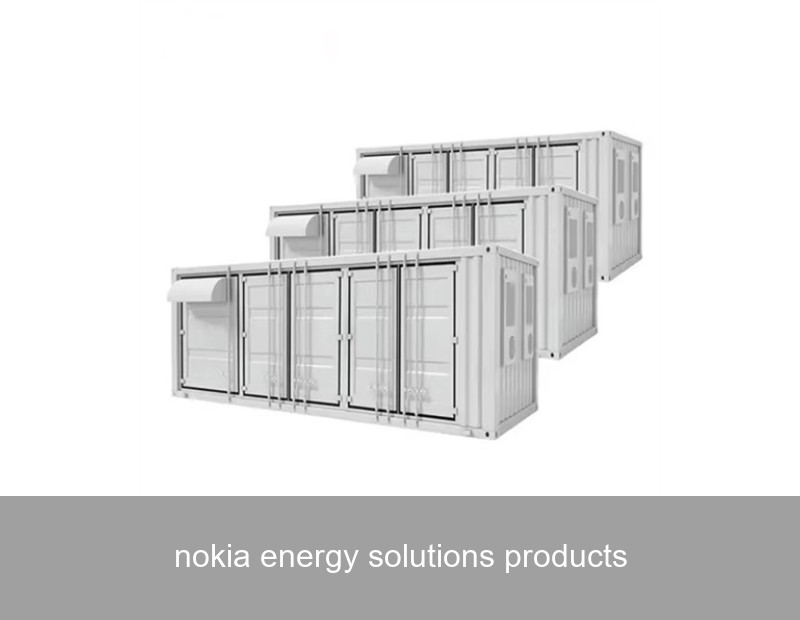
When you hear "Nokia," your mind likely jumps to mobile phones and telecommunications networks. But did you know that Nokia has a significant footprint in the energy sector? Nokia Energy Solutions products represent a fascinating pivot, leveraging the company's core expertise in connectivity, IoT, and software to tackle modern energy challenges. This isn't about manufacturing solar panels or batteries; it's about creating the intelligent digital backbone that makes energy systems smarter, more resilient, and efficient. For facility managers, energy directors, and sustainability officers across Europe and the U.S., understanding this digital layer is becoming as crucial as the physical hardware. Let's explore what this means for the future of industrial and commercial power management.
Table of Contents
The Phenomenon: From Connectivity to Energy Management
The energy landscape is undergoing a seismic shift. We're moving from centralized, fossil-fuel-based grids to decentralized, renewable-heavy systems. This creates a complex puzzle: how do you balance intermittent solar and wind generation with variable demand, all while maintaining grid stability? This is precisely where Nokia's foray into energy makes sense. Nokia Energy Solutions products, like their Digital Automation Cloud and private LTE/5G networks, provide ultra-reliable, low-latency communication. Think of it as the central nervous system for a modern energy setup. It allows wind farms, solar arrays, battery storage systems, and consumption points to talk to each other in real-time, enabling predictive analytics, automated control, and seamless integration.
For businesses, this digital layer is the key to unlocking the full value of their on-site energy assets. It’s no longer enough to just install solar panels; you need to know exactly when to consume, store, or sell that power back to the grid for maximum financial and operational benefit. This is the core promise of a digital energy platform.
The Data: The High Cost of Unoptimized Energy
Let's talk numbers. For industrial facilities in Europe and North America, energy isn't just an operational cost; it's a critical variable impacting competitiveness. According to the U.S. Energy Information Administration, the industrial sector accounts for about 33% of the nation's total energy consumption. Price volatility and demand charges can devastate a quarterly budget. In the EU, the push for carbon neutrality under the Green Deal is adding regulatory pressure.
Consider this typical pain point: demand charges. Many commercial electricity bills are based not just on total consumption (kWh) but on the peak 15 or 30-minute period of usage (kW). A few pieces of heavy machinery starting simultaneously can create a costly spike. Without intelligent monitoring and control, these charges remain a frustrating black box. A study by the National Renewable Energy Laboratory (NREL) highlighted that strategic control of behind-the-meter assets (like batteries) could reduce these peak demands by 15-30%, translating to direct, substantial savings. This is the gap that digital energy management platforms aim to fill.
The Case Study: A German Manufacturing Plant
A concrete example brings this to life. A mid-sized automotive parts manufacturer near Stuttgart, Germany, faced rising energy costs and pressure to meet corporate sustainability targets. They had a 500 kW rooftop solar PV system and were considering a battery, but needed to ensure the investment paid off.
They implemented a solution utilizing a Nokia private LTE network to connect all energy assets—solar inverters, factory load panels, and a new 400 kWh battery storage system—to a centralized energy management system (EMS) software platform. The Nokia network provided the secure, robust connectivity needed for real-time data collection and control commands, immune to the interference common in dense industrial Wi-Fi environments.
The Results (18-month period):
| Metric | Improvement |
|---|---|
| Solar Self-Consumption | Increased from 35% to 68% |
| Peak Demand from Grid | Reduced by 22% |
| Overall Energy Costs | Reduced by 18% |
| Grid Services Revenue | Generated through frequency regulation programs |
The plant didn't just save money; it transformed its energy profile into a more predictable, controllable, and even revenue-generating asset. The digital platform, enabled by reliable industrial-grade connectivity, was the unsung hero.

Credit: Image by Possessed Photography on Unsplash - Modern industrial facilities require integrated energy solutions.
The Solutions: Where Digital Intelligence Meets Physical Storage
This is where the narrative becomes truly powerful. While Nokia provides the digital "nervous system," companies like Highjoule provide the robust "muscle and heart"—the advanced battery storage systems and the intelligence to control them. For a business seeking a complete, turnkey solution, this synergy is ideal.
Highjoule, as a global leader in advanced energy storage systems since 2005, specializes in integrating cutting-edge lithium-ion battery technology with sophisticated energy management software. Our systems are designed to be the perfect physical counterpart to a digital energy platform.
Highjoule's Complementary Product Portfolio:
- H-Joule Commercial & Industrial (C&I) Series: Scalable, containerized or modular battery energy storage systems (BESS) from 100 kWh to multi-MWh. These units are built for durability, safety, and seamless integration with renewable sources and building management systems.
- IntelliJoule AI-Powered EMS: Our proprietary Energy Management System software uses machine learning to predict energy generation and consumption patterns. It automatically optimizes charge/discharge cycles of the BESS to maximize self-consumption of solar, shave peak demand, and participate in grid-balancing programs where available.
- Microgrid Controllers: For campuses or critical facilities seeking energy independence, Highjoule's controllers can island the facility from the main grid, coordinating solar, storage, and backup generators into a stable, independent microgrid.
Imagine this: A Nokia private network ensures bulletproof communication between every meter and sensor. That data feeds into Highjoule's IntelliJoule EMS, which then makes real-time decisions to dispatch our C&I Series battery. The result? Automated peak shaving, increased renewable usage, and enhanced resilience—all working together silently.

Credit: Image by American Public Power Association on Unsplash - A modern Battery Energy Storage System unit.
The Future: Integrated Systems for Energy Independence
The trajectory is clear. The future belongs to integrated, smart energy ecosystems. Products like those from Nokia Energy Solutions provide the critical communication fabric, while partners like Highjoule deliver the physical storage and granular control intelligence. For businesses in Europe and the U.S., this combined approach is the most viable path to achieving three critical goals: cost reduction, sustainability compliance, and operational resilience. As grid volatility increases and renewable penetration grows, the ability to actively manage your energy footprint transforms from a nice-to-have into a strategic imperative.
It prompts a vital question: Is your organization merely paying its energy bill, or is it actively managing its energy as a strategic asset? The technology to do the latter—from the connectivity layer to the storage hardware and AI-driven software—is not just available; it's proven and ready to deploy.
What is the first step your company would need to take to move from passive consumption to active energy management?
 Inquiry
 Online Chat