


What is a Native Solar Supplier and Why It's a Game-Changer for Your Energy Independence
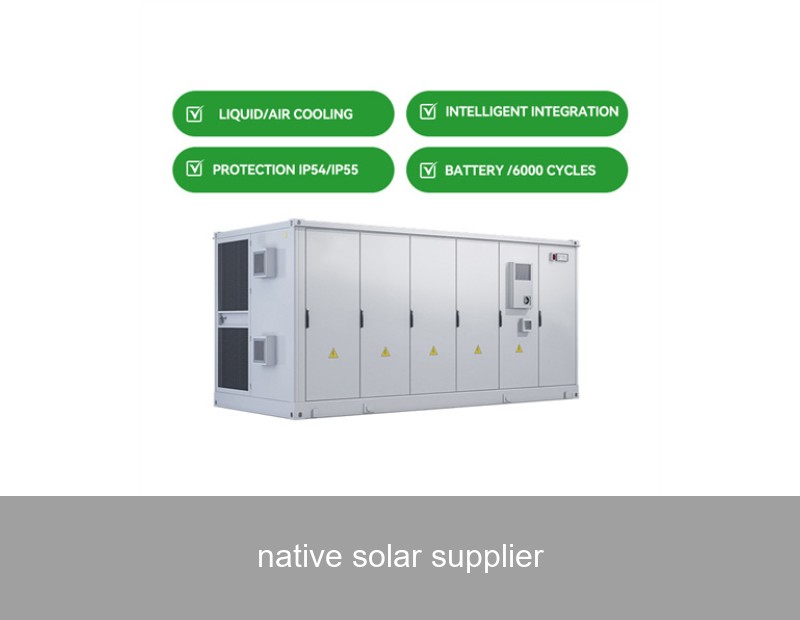
You've likely heard the term "solar supplier," but the concept of a native solar supplier is reshaping the renewable energy landscape. Unlike a company that simply sources panels from a third-party manufacturer, a native supplier is deeply integrated into the solar ecosystem. They often have control over key technologies, particularly the intelligent energy storage systems that make solar power reliable 24/7. For homeowners and businesses across Europe and the U.S., this integration is the key to unlocking true energy independence and maximizing the return on a solar investment.
Table of Contents
The Phenomenon: The Solar "Gap"
Imagine this: you've made a smart investment in a rooftop solar array. On a bright, sunny day, your system is producing more power than your home or business can use. You're essentially giving that excess, clean energy back to the grid, often for a minimal credit. Now, fast forward to a cloudy afternoon or the evening peak hours when your panels are idle. You're forced to pull electricity from the grid, paying the full retail rate—which, as we all know, is only trending upwards.
This is the solar "gap." It's the frustrating disconnect between when you produce energy and when you need it most. A conventional solar panel provider solves only half of the equation. A true native solar supplier understands that the real value lies in bridging this gap seamlessly.

Image: A complete home system requires more than just panels; storage is key. Credit: Unsplash.
The Data: Why Storage is Non-Negotiable
Let's look at the numbers. According to the U.S. Department of Energy's Solar Futures Study, solar could account for up to 40% of the nation's electricity by 2035, but this requires a massive expansion of energy storage to manage intermittency. In Europe, the situation is similar. The International Renewable Energy Agency (IRENA) highlights that the levelised cost of electricity from solar PV has fallen by about 85% in the last decade, yet system value plummets without storage during peak demand periods.
For the end-user, the financial logic is clear. With time-of-use rates and net metering policies becoming less favorable, simply exporting surplus solar is becoming less economical. The ability to store and use your own generation is what locks in long-term savings. A system with storage can increase self-consumption of solar power from a typical 30-50% to over 80% or even 100% for some properties.
Case Study: A German Bakery's Recipe for Resilience
Consider the real-world example of "Bäckerei Schmidt," a family-run bakery in Bavaria, Germany. Their challenge was twofold: high energy costs for ovens and refrigeration, and an unstable grid connection that occasionally caused disruptive voltage sags.
- Phenomenon: High operational costs and vulnerability to grid issues.
- Solution: They partnered with a native solar supplier that provided an integrated system: 50 kW of rooftop solar paired with a 100 kWh commercial battery energy storage system (BESS).
- Data & Outcome:
- Energy Self-Sufficiency: The bakery now covers 92% of its annual electricity needs with its solar+storage system.
- Cost Savings: Annual energy bills reduced by €18,500.
- Resilience: During a 4-hour grid outage, the battery system kept all critical cooling and lighting operational, preventing €8,000 worth of inventory spoilage.
- ROI: The projected payback period is under 7 years, thanks in part to Germany's support for decentralized energy.
This case underscores that a supplier providing an integrated, intelligent storage solution isn't just selling hardware; it's delivering business continuity and financial predictability.
The Insight: The Native Advantage
So, what differentiates a native solar supplier? It boils down to three core competencies:
| Feature | Traditional Solar Installer | Native Solar Supplier |
|---|---|---|
| Core Focus | Panel procurement & installation | End-to-end energy system design |
| Storage Integration | Often an add-on from a third party | Core technology, designed for seamless synergy |
| System Intelligence | Basic monitoring | Advanced energy management software for optimal charging/discharging |
| Long-term Value | Primarily generation | Generation + storage + grid services + resilience |
The native supplier's deep expertise in storage chemistry, power conversion, and system software allows them to optimize every kilowatt-hour. They ensure the batteries and inverters communicate perfectly with the solar arrays, extending equipment life and maximizing efficiency.
How Highjoule Embodies the Native Supplier Ethos
At Highjoule, our journey since 2005 has been focused on one mission: to make sustainable energy not just available, but intelligent, reliable, and truly empowering. We are a native solar supplier by design. Our solutions are built from the ground up with integration in mind.
For residential clients, our HelioHome+ series is more than a battery. It's an AI-driven home energy manager. It learns your consumption patterns, weather forecasts, and utility rate schedules to autonomously decide when to store solar energy, power your home, or even sell back to the grid at the most profitable times.

Image: Advanced home battery systems like Highjoule's HelioHome+ are the brains of a modern energy-independent home. Credit: Unsplash.
For commercial and industrial applications, our GridMax Pro BESS platform is a workhorse. It enables businesses to perform peak shaving (dramatically reducing demand charges), provide backup power, and participate in grid-balancing programs. For microgrids, especially in remote or vulnerable communities, Highjoule systems provide the foundational technology for self-sufficient energy networks that can operate independently from the main grid.
Our role is to be your long-term partner in energy independence, providing not just equipment but the continuous software updates and expert support that ensure your system delivers value for decades.
Making the Choice: Questions for Your Solar Partner
As you evaluate potential partners for your solar journey, moving beyond just price-per-watt is crucial. Here are key questions to ask to identify a true native solar supplier:
- Do you design and manufacture your own storage systems, or are you reselling another brand?
- How does your software actively manage energy flow between solar, storage, home, and grid?
- Can you provide a detailed simulation of my self-consumption rate and savings with and without storage?
- What is your protocol for system updates and performance optimization over the next 20 years?
- Can you show me case studies with verifiable data from installations similar to mine?
The energy landscape is shifting from centralized consumption to decentralized production and control. In this new paradigm, who will you trust to architect your energy independence: a component installer or a native expert in integrated systems?
 Inquiry
 Online Chat