


Napelem Méretek: How Much Solar Power Do You *Really* Need?
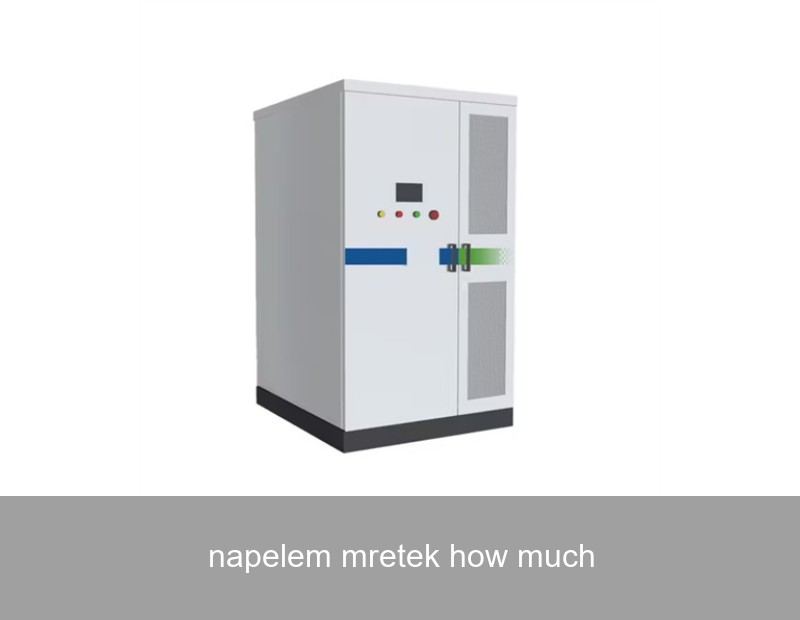
If you're asking "napelem méretek how much?" (solar panel sizes, how much?), you've already taken the first crucial step towards energy independence. It’s a fantastic question, but one that often leads to more questions. The physical dimensions of the panels are just the beginning. The real inquiry is: How much energy generation capacity, storage, and intelligent management do you need to power your home or business efficiently and sustainably? Let's demystify this, moving beyond simple panel counts to a holistic understanding of solar system sizing.
Understanding Solar Panel Sizes and Dimensions
Today's residential and commercial solar panels are more efficient than ever. A standard full-size panel typically measures around 1.7 meters by 1 meter (roughly 5.5ft x 3.3ft) and produces between 400 to 550 watts of power under ideal conditions. These dimensions are fairly consistent across major manufacturers. But here’s the catch: installing 20 of these panels doesn't automatically guarantee you'll cover 100% of your energy needs. The physical "how much" in terms of roof space is only one piece of the puzzle.

Image source: Unsplash - Photo of solar panels on a roof.
The critical metrics are kilowatt-hours (kWh) and kilowatts (kW). Your energy bill shows consumption in kWh (the "energy bucket" you fill each month). Your solar system's size is rated in kW (the "speed" at which it can fill that bucket when the sun shines). Sizing a system correctly means matching your kW array to your kWh consumption patterns, while accounting for local weather, roof orientation, and shading.
Key Factors Determining "How Much" Solar Panel You Need
To move from a vague question to a precise plan, consider these interconnected factors:
- Energy Consumption: Analyze 12 months of utility bills. The annual total in kWh is your primary target. A household using 10,000 kWh/year needs a fundamentally different system than a factory using 1,000,000 kWh/year.
- Roof Area & Orientation: South-facing (in the Northern Hemisphere) roofs with minimal shading are ideal. You need enough unshaded space to physically fit the number of panels required to meet your energy goals.
- Geographic Location: Solar "insolation" maps, like those from The Global Solar Atlas, show how many peak sun hours your location gets. Less sun means you need a larger array to produce the same kWh.
- Future-Proofing: Are you planning an electric vehicle, a heat pump, or a home expansion? Your "how much" should include anticipated future load increases.
- Financial Goals: Do you want to merely offset a portion of your bill, achieve net-zero energy, or even generate surplus to sell back to the grid?
This is where a simple size calculation evolves into a sophisticated energy strategy.
Case Study: A German Bakery's Energy Transformation
Let's look at a real example from Bavaria. A family-run bakery with high refrigeration loads and early morning energy peaks consumed an average of 4,500 kWh per month. Their initial question was also about panel count and roof size.
However, a detailed analysis revealed the core challenge: Their peak energy use happened before sunrise and in the late afternoon, misaligned with solar production peaks. Simply covering the roof with panels would have created a massive overproduction at midday, fed into the grid at low feed-in tariffs, while still forcing them to buy expensive power from the utility during their operational peaks.
| Component | Specification | Rationale |
|---|---|---|
| Solar Array | 65 kW | Size to cover ~110% of annual consumption, not instantaneous need. |
| Battery Storage | 40 kWh usable capacity | Store midday surplus for use during morning and evening peaks. |
| Energy Management System | AI-powered forecasting & dispatch | Intelligently decide when to charge, discharge, or export based on weather, tariff, and usage patterns. |
The result? They installed a system sized for their energy profile, not just their roof. They now achieve over 85% self-consumption of their solar energy, reducing grid dependence and shielding themselves from volatile energy prices. Their payback period was calculated at under 7 years, thanks to optimizing around their specific consumption data.
Beyond the Panels: The Critical Role of the Storage System
As the bakery case shows, asking "napelem méretek how much?" is incomplete without asking "how much storage?" Solar panels generate energy intermittently. A Battery Energy Storage System (BESS) is what transforms a solar array from a daytime-only supplement into a 24/7 power plant for your property.
Sizing your storage is equally nuanced. It depends on:
- Desired Backup Duration: Powering essential loads for 2 hours vs. 12 hours requires vastly different battery capacity.
- Daily "Energy Shifting" Need: The kWh of solar energy you typically produce but cannot use immediately.
- Power (kW) Requirements: Can the battery inverter handle the simultaneous startup load of your HVAC, refrigeration, and machinery?
This is precisely where companies like Highjoule excel. We don't just sell panels and batteries; we provide integrated, intelligent energy solutions. Our HPS (Highjoule PowerStack) series for commercial and industrial applications is modular, allowing you to scale storage capacity from tens to hundreds of kWh. Paired with our EnergyOS™ platform, the system doesn't just store energy—it learns your patterns, forecasts solar production, and autonomously optimizes for cost, carbon, or resilience.

Image source: Unsplash - Photo of a modern battery storage unit.
The Highjoule Solution: Intelligent Sizing for Maximum Value
Founded in 2005, Highjoule has been at the forefront of answering the real "how much" question for thousands of clients across Europe and North America. Our process moves beyond simple calculators:
- Deep Energy Audit: We analyze your historical consumption data (via smart meter logs or bills) to create a load profile.
- Site-Specific Simulation: Using tools like NREL's PVWatts, we model solar production on your exact roof, accounting for tilt, azimuth, and shading.
- Scenario Modeling: We present multiple "how much" scenarios. For instance, what is the ROI difference between a 100% offset system vs. an 80% offset system with storage? How does adding an EV charger in year 3 affect the economics?
- Future-Ready Design: Our systems are designed for expansion. You can start with a core solar+storage setup and easily add more panels or battery modules as your needs evolve.
For residential customers, our Home Energy Hub integrates seamlessly with existing or new solar arrays, providing backup power and intelligent energy management. For businesses and microgrids, our Industrial PowerStack ensures operational continuity and significant cost savings through peak shaving and demand charge management.
Your Next Step Towards Energy Independence
So, "napelem méretek how much?" The most accurate answer is: It depends on your unique energy fingerprint. The physical panel dimensions are a constant; the system size and composition are variables tailored to your consumption, goals, and site.
The journey begins not with a product catalog, but with your latest utility bill and a conversation about what energy resilience means for you. What would a 4-hour power outage cost your business? How much of your monthly energy bill is comprised of demand charges that could be eliminated with smart storage?
Are you ready to transform the simple question of "how much" into a actionable, optimized plan for your energy future?
 Inquiry
 Online Chat