


Choosing the Most Reliable Solar Panel Brands for Your Long-Term Energy Independence
You've decided to go solar. It's a brilliant move for your wallet and the planet. But as you start your research, a critical question emerges: with so many manufacturers promising the sun and stars, how do you identify the most reliable solar panel brands? It's not just about the initial flashy specs; it's about consistent performance, durability through decades of harsh weather, and the peace of mind that your investment is truly protected. Let's cut through the noise and explore what genuine reliability looks like in the solar industry, and why your choice of panels is just one part of a truly resilient energy system.
Table of Contents
- The Reliability Phenomenon: More Than Just a Warranty
- The Data Behind Durarability: What 25+ Years Really Means
- Case Study: Reliability in Action - A German Industrial Rooftop
- Beyond the Panel: The System That Supports Your Solar Investment
- The Highjoule Ecosystem: Intelligent Storage for Unmatched System Resilience
- Making Your Informed Choice: A Framework for Selection
The Reliability Phenomenon: More Than Just a Warranty
When we talk about the "most reliable solar panel brands," we're often immediately drawn to the product warranty—typically 25 years for power output. But here's the insider perspective: a warranty is only as good as the company standing behind it. True reliability is a multi-layered concept built on:
- Product Durability: Resistance to micro-cracks, PID (Potential Induced Degradation), and degradation from UV exposure, hail, and heavy snow loads.
- Performance Consistency: Delivering power output that meets or exceeds its rating, year after year, not just on a sunny lab test day.
- Manufacturer Longevity: A brand with a proven financial track record is more likely to be there in 20 years to honor your warranty claim.
- Third-Party Validation: Independent testing from organizations like DNV or long-term field data from research institutes.
Think of it this way: you wouldn't buy a car based solely on its maximum speed. You'd consider its safety rating, crash test data, and the manufacturer's reputation for building cars that last. The same rigorous approach applies to solar panels.
The Data Behind Durarability: What 25+ Years Really Means
Let's look at the numbers. A top-tier panel from a reliable brand might promise a degradation rate of 0.3% to 0.5% per year. This means after 25 years, it should still produce at least 87-92% of its original power. Lower-tier panels may degrade at 0.8% or more annually, losing significantly more power over time.
But where does this data come from? Accelerated lifecycle testing in environmental chambers subjects panels to extreme thermal cycles, humidity freeze, and mechanical stress. Brands that invest heavily in this R&D and transparently share the results, often publishing white papers, tend to be the industry leaders. According to a long-term study by NREL, the failure rate of modules has decreased dramatically over the last two decades, thanks to improved manufacturing standards—yet the gap between premium and budget brands remains.

Image Source: Unsplash - A well-installed, high-quality solar array is the foundation of reliability.
Case Study: Reliability in Action - A German Industrial Rooftop
Consider a real-world application at a manufacturing plant in Bavaria, Germany. In 2018, the facility installed a 500 kW rooftop system using panels from a brand consistently ranked among the most reliable. The region experiences cold, snowy winters and moderate summers.
| Metric | Projected (Year 1) | Actual (Year 5 Data) | Variance |
|---|---|---|---|
| Annual Energy Yield | 485,000 kWh | 492,500 kWh | +1.5% |
| Average Degradation Rate | 0.45% / year | 0.38% / year | Better than spec |
| Module Failure / Issues | 0 anticipated | 0 recorded | On target |
The data shows not just meeting but exceeding expectations. This consistent over-performance, especially in a climate with thermal cycling stress, translates directly to higher ROI and lower levelized cost of energy (LCOE) for the business owner. This is the tangible benefit of choosing reliability.
Beyond the Panel: The System That Supports Your Solar Investment
Here's a crucial insight we at Highjoule have learned since 2005: The most reliable solar panel is only as good as the system it's integrated into. A premium panel connected to a subpar inverter, poorly sized cables, or an unoptimized mounting system will never reach its full potential. True energy resilience requires a holistic view.
This is where the conversation evolves from solar generation to complete energy management. Your reliable panels produce energy intermittently—peak production happens midday. But what about evenings, cloudy days, or during grid outages? This mismatch between production and consumption is the next frontier for reliability.
The Highjoule Ecosystem: Intelligent Storage for Unmatched System Resilience
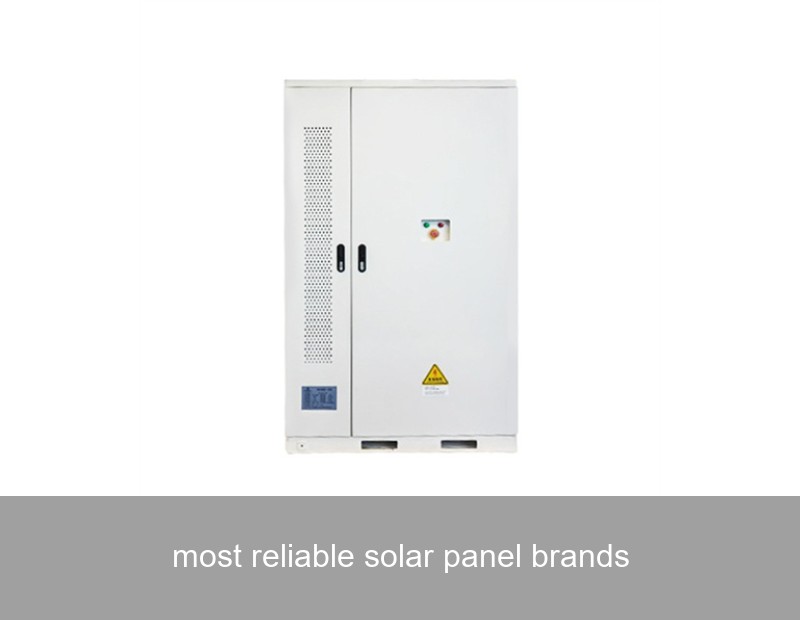
Pairing your high-quality solar array with an intelligent battery storage system is the ultimate upgrade in reliability. It ensures the clean energy you produce is available when you need it most. Highjoule's advanced energy storage solutions are designed specifically to complement and maximize the output of the most reliable solar panel brands.
Our HPS Series Commercial & Industrial Battery Systems and HRS Home Energy Solutions do more than just store energy. They act as the intelligent core of your power system:
- DC-Coupled Efficiency: For new installations, our DC-coupled architecture allows solar energy to charge the batteries directly, minimizing conversion losses and maximizing the usable energy from every sunbeam that hits your premium panels.
- Advanced Cycle Life & Warranty: Just as you scrutinize panel degradation, our battery cells are engineered for thousands of deep cycles with minimal capacity fade, backed by strong warranties that ensure performance over the long haul.
- Grid Intelligence & Backup: Our systems provide seamless backup power during outages, giving you true energy independence. They also enable intelligent energy arbitrage (in markets where available), storing solar or off-peak grid energy for use during expensive peak periods.
- Global Service & Monitoring: With operations across Europe and North America, Highjoule provides remote monitoring and local service support, ensuring your entire energy system—panels and storage—operates reliably for decades.

Image Source: Unsplash - A modern battery storage system integrates seamlessly with solar for full energy control.
Making Your Informed Choice: A Framework for Selection
So, how do you proceed? Use this actionable framework when evaluating your solar-plus-storage project:
- Research Panel Brand Pedigree: Look for brands with at least 10-15 years of proven history, published third-party test data, and strong financial health ratings from independent agencies.
- Demand Full System Transparency: Ask your installer for the specifications of every component: panels, inverter(s), mounting, and especially the battery storage system. How do they work together?
- Simulate Your Real Usage: A good provider will model your home or business's actual consumption patterns against solar production to right-size both the solar array and the battery storage capacity. Oversizing is wasteful, undersizing leaves value on the table.
- Prioritize Integrated Solutions: Seek out providers, like Highjoule and its certified partners, who specialize in seamless solar-storage integration. This ensures compatibility, optimized performance, and single-point accountability.
The journey to energy independence is built on foundations of reliability that last for generations. You now know the key questions to ask. So, we leave you with this: When you envision your ideal energy future—one that's resilient, sustainable, and cost-effective—what is the first feature you want to guarantee in the technology you choose?
 Inquiry
 Online Chat