


Your Guide to a Mini Solar System for Home: Energy Independence Made Simple
Imagine a quiet, sunny afternoon. While your home hums with activity—appliances running, devices charging—your electricity meter is barely ticking over. This isn't a futuristic dream; it's the daily reality for a growing number of homeowners across Europe and the U.S. who have embraced a mini solar system for home. Also known as a residential solar-plus-storage system, this compact powerhouse is transforming how we generate, consume, and think about energy. It's a personal energy revolution, right on your rooftop and in your utility room. But what exactly is it, and is it the right move for your household? Let's demystify the technology and explore how it can bring resilience, savings, and sustainability to your doorstep.
Table of Contents
- What is a Mini Solar System for Home?
- The Phenomenon: Why Homeowners Are Making the Shift
- The Data: Savings, Security, and Sustainability
- A Real-World Case Study: The Smith Family in California
- Key Components of a High-Performance System
- Getting Started: Is a Mini Solar System Right for You?
What is a Mini Solar System for Home?
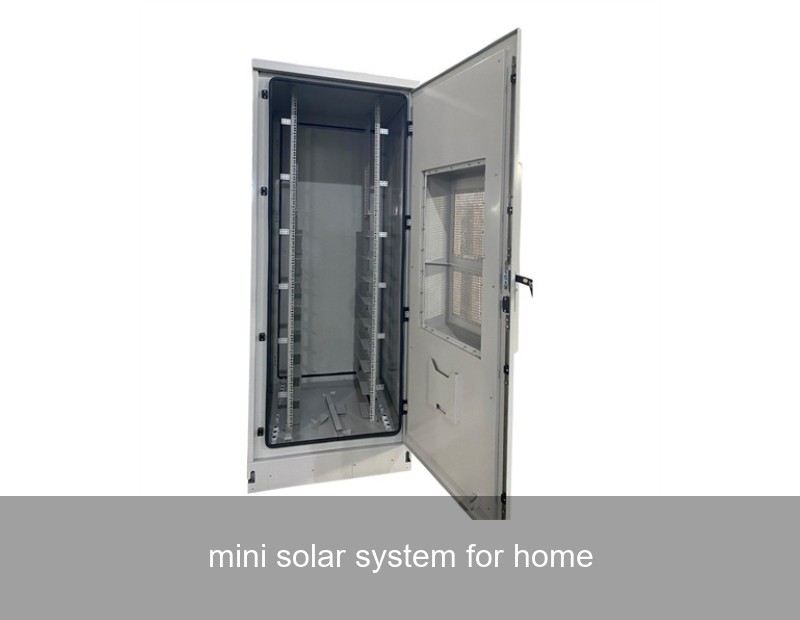
At its core, a mini solar system for home is a scaled-down, fully integrated renewable energy setup. Unlike large-scale solar farms, it's designed specifically for a single household's consumption patterns. Typically, it consists of three key elements: a set of photovoltaic (PV) panels installed on your roof or in your yard, a dedicated inverter that converts the sun's direct current (DC) into usable alternating current (AC) for your home, and—the true game-changer—a battery energy storage system (BESS). This battery is the brain of the operation, storing excess solar energy produced during the day for use at night, during cloudy periods, or during power outages. It turns your solar panels from a daytime-only resource into a 24/7 personal power plant.
Image: A modern home equipped with a solar panel system, embodying energy independence. Source: Unsplash
The Phenomenon: Why Homeowners Are Making the Shift
The trend towards home energy systems isn't just about being "green." It's a pragmatic response to a perfect storm of factors. In Europe, the energy crisis following geopolitical tensions has sent electricity prices soaring, making self-generation a financial shield. In the U.S., homeowners face an aging power grid, with the U.S. Energy Information Administration noting an increase in both the frequency and duration of power outages. Combine this with falling technology costs (solar panel prices have dropped over 80% in the past decade) and attractive government incentives like the U.S. Investment Tax Credit (ITC) or various EU member state grants, and the economic case becomes compelling. People are no longer willing to be passive consumers at the mercy of utility rates and grid reliability.
The Data: Savings, Security, and Sustainability
Let's talk numbers. A well-sized mini solar system for home can typically cover 70-90% of an average household's annual electricity needs. According to data from the National Renewable Energy Laboratory (NREL), adding battery storage can increase a home's consumption of self-generated solar power from 30-50% to over 80%, drastically reducing grid dependence.
| Benefit | Typical Impact | How It Works |
|---|---|---|
| Bill Savings | 40-80% reduction | Using stored solar energy during peak evening rates avoids costly grid electricity. |
| Backup Power | 8-24+ hours of essential load coverage | The battery automatically powers critical circuits during a grid outage. |
| Carbon Footprint | Reduction of 2-4 tons of CO2 annually | Displaces fossil-fuel-based grid electricity with clean, renewable solar power. |
A Real-World Case Study: The Smith Family in California
Consider the Smiths (name changed for privacy), a family of four in Sacramento, California. In 2022, facing rising PG&E rates and annual wildfire-related Public Safety Power Shutoffs (PSPS), they installed a 7.6 kW solar array paired with a 15 kWh battery storage system. Their system was designed to power their refrigerator, lighting, internet, and essential outlets during outages.
- Pre-Installation: Average monthly bill: $220. Experienced 3-5 outages per year, lasting 8-48 hours.
- Post-Installation (12-month data): Average monthly grid bill: $18 (mostly non-bypassable charges). Their system provided seamless backup during 4 separate grid outages, totaling 42 hours.
- Financials: After the 30% federal ITC, their out-of-pocket cost was approximately $18,000. Their calculated payback period is under 8 years, thanks to high local electricity rates and net metering. More importantly, they now have peace of mind and energy certainty.
Key Components of a High-Performance System
Not all mini solar systems for home are created equal. The synergy between components is critical for safety, efficiency, and longevity.
1. High-Efficiency Solar Panels
These are your fuel source. Modern monocrystalline panels offer efficiencies above 22%, meaning you need less roof space to generate more power.
2. The Intelligent Inverter
This is the system's conductor. It manages energy flow between panels, battery, home, and grid. Advanced hybrid inverters can prioritize solar self-consumption and manage backup power seamlessly.
3. The Heart: The Battery Storage System
This is where technology matters most. Lithium iron phosphate (LFP) chemistry has become the industry standard for home storage due to its superior safety, long cycle life (often 6,000+ cycles), and stability. A quality BESS isn't just a battery box; it's an integrated unit with a built-in Battery Management System (BMS) for safety and a sophisticated energy management system for optimal performance.

Image: A sleek, modern home battery storage unit installed in a garage. Source: Unsplash
How Highjoule Powers Smarter Home Energy
This is where our expertise at Highjoule comes into play. Since 2005, we've been at the forefront of advanced energy storage technology, and we've channeled that expertise into our residential solution: the Highjoule Home Energy Hub. We understand that a mini solar system for home must be more than just parts in a box; it must be intelligent, reliable, and simple to live with.
Our Home Energy Hub is an all-in-one AC-coupled system built around our proprietary LFP battery technology. What sets it apart?
- Adaptive Intelligence: Our AI-driven energy management software learns your household patterns and automatically optimizes for self-consumption, cost savings, or backup readiness based on your preferences and real-time utility rates.
- Scalable Design: Start with a single 5kWh module and expand up to 20kWh as your needs grow—a perfect fit for the evolving energy demands of a modern home.
- Grid Services Ready: In certain markets, our systems can participate in virtual power plant (VPP) programs, allowing you to earn credits by contributing tiny amounts of stored energy to help stabilize the community grid.
- Professional Integration: Highjoule works with a certified network of installers across Europe and the U.S. We provide the core technology and the design support, ensuring your system is perfectly tailored and professionally installed.
Getting Started: Is a Mini Solar System Right for You?
Embarking on your energy independence journey involves a few key steps. First, assess your home's solar potential—roof orientation, shading, and local climate. Next, analyze your electricity bills to understand your consumption and rate structure. Then, consult with a qualified installer who can model a system for your specific needs.
Ask potential providers: What is the expected lifecycle of the battery? How is system safety ensured? What does the warranty cover? Is the software updated for ongoing improvements? The answers will separate commodity products from engineered solutions like Highjoule's.
So, as you watch the sun set this evening, consider this: that same sun could be powering your home tonight. What's the first appliance you'd want to keep running when the grid goes down?
 Inquiry
 Online Chat