


Milbank Electrical Boxes & Enclosures: The Unsung Heroes of Modern Energy Systems
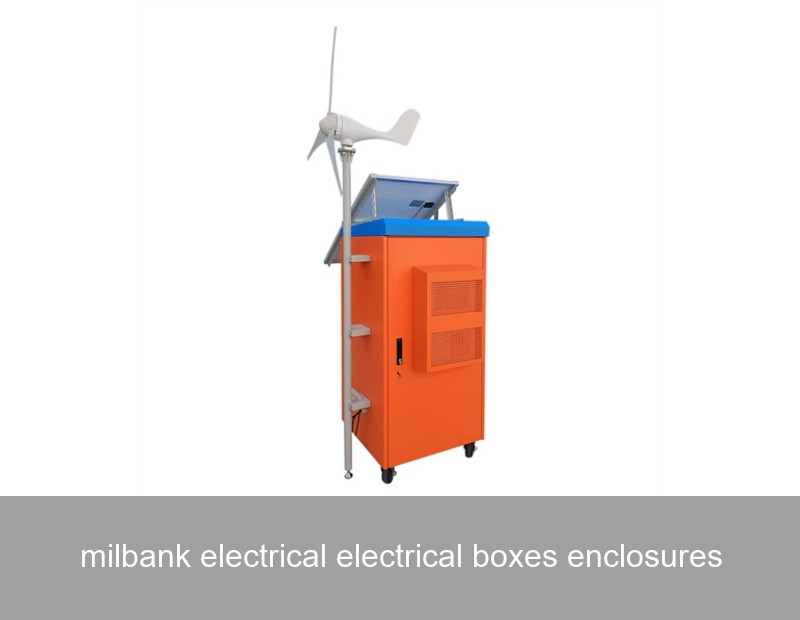
When you think about renewable energy systems—sleek solar panels, powerful battery banks, intelligent inverters—what comes to mind? Probably not the humble Milbank electrical box or enclosure. Yet, as any seasoned installer or system designer will tell you, these components are the silent guardians of safety, reliability, and compliance. In the rapidly evolving landscapes of Europe and the U.S., where grid demands are shifting and decentralized energy is booming, the role of robust electrical boxes and enclosures has never been more critical. They are the critical interface point, the organized hub where power from solar arrays, storage systems, and the grid is managed, metered, and protected. Choosing the right enclosure isn't just about code compliance; it's about future-proofing your energy investment.
Table of Contents
The Phenomenon: More Than Just a Metal Box
Walk onto any commercial solar farm or peer into a residential battery storage setup, and you'll see them: NEMA-rated enclosures, meter sockets, and combination service entrance devices (CSEDs) often bearing the Milbank name. For decades, brands like Milbank have been synonymous with durable, code-compliant electrical gear. But today's phenomenon is this: these enclosures are no longer passive containers. They are becoming active nodes in smart energy ecosystems. With the integration of solar, battery storage, and bidirectional power flows (like vehicle-to-grid), the electrical box is the point where safety, monitoring, and control converge. A poorly specified or installed enclosure can lead to overheating, ground faults, communication interference, and ultimately, system failure or safety hazards.
The Data: Why Specs Matter for Safety & Performance
Let's talk specifics. Why does the material, rating, and size of an electrical enclosure directly impact your system's bottom line?
- NEMA Ratings are Non-Negotiable: A NEMA 3R enclosure (rainproof, sleet-resistant) might suffice for a simple meter main in a mild climate. But for coastal areas (common in both Europe and the U.S.) with salt spray, a NEMA 3RX or 4X (corrosion-resistant) is essential to prevent premature degradation.
- Heat Dissipation is Critical: Power electronics in inverters and battery management systems generate heat. An undersized enclosure in direct sun can become an oven. Internal temperatures exceeding design limits can reduce component lifespan by up to 50% for every 10°C rise, according to Arrhenius' law of thermal aging.
- Space for Growth: Data from the Solar Energy Industries Association (SEIA) shows an increasing trend of system expansion post-installation. Enclosures with spare knockouts and adequate wire bending space save thousands in retrofit costs later.
| Enclosure Consideration | Impact on Energy System | Common Pitfall |
|---|---|---|
| Material & Corrosion Rating | Long-term reliability in harsh environments | Using indoor-rated boxes for outdoor ESS |
| Internal Size & Layout | Proper heat dissipation & serviceability | Overcrowding, leading to hot spots |
| Conduit Entry Points | Clean installation, moisture protection | Improvising seals, compromising integrity |
| UL Listing for Application | Compliance with AHJ (Authority Having Jurisdiction) & insurance | Assuming any enclosure is suitable for solar DC combiner use |
Case Study: A U.S. Commercial Solar+Storage Installation
Consider a real-world example from the U.S. Midwest. A mid-sized manufacturing facility installed a 500 kW rooftop solar array paired with a 750 kWh battery energy storage system (BESS) for demand charge reduction and backup power. The initial design used standard commercial enclosures for the critical AC/DC distribution and metering points connecting the solar, storage, and main service.
The Challenge: Within 18 months, the facility experienced intermittent faults and communication drops in the energy management system (EMS). Troubleshooting revealed that the enclosures housing sensitive monitoring and gateway equipment were subject to wide temperature swings and electromagnetic interference (EMI) from adjacent high-current conductors—a detail overlooked in the initial design.
The Solution & Data: The system integrator partnered with Highjoule's engineering support team. We recommended a retrofit to segregated, specialized enclosures with EMI shielding and dedicated cooling channels for the communication gear, while specifying heavy-duty, properly sized Milbank-style boxes for the main power distribution. The result? A 99.8% communication uptime was achieved post-retrofit, and the facility's EMS could now reliably execute its algorithms, leading to a documented 12% increase in captured demand charge savings annually. This case underscores that the "plumbing" of an energy system—the enclosures and wireways—is as vital as the "brains" (the software).

Image Source: Unsplash (Professional electrical installation)
The Insight: Integration with Advanced Energy Management
Here's where the story gets interesting for us at Highjoule. We see electrical boxes and enclosures not as a commodity, but as the secure foundation for our intelligent energy platforms. Our battery storage systems and integrated energy management systems (EMS) require a flawless physical interface with the grid and on-site generation. For instance, our Highjoule H3 Commercial ESS unit is often paired with a custom-designed distribution panel that incorporates Milbank-quality busbars, breakers, and enclosures. This ensures:
- Seamless Grid Interaction: Utility metering and disconnect equipment are housed in robust, inspector-approved enclosures.
- Protected Communications: Our EMS controllers and IoT gateways are installed in separate, conditioned compartments within the overall enclosure system to avoid interference.
- Serviceability & Safety: Clear labeling, ample working space, and safety disconnects—all within properly rated enclosures—make maintenance safe and efficient, reducing downtime.
In essence, our approach is holistic. We don't just provide the battery; we provide—or specify—the entire interface ecosystem, ensuring that from the Milbank electrical enclosure out to the grid and back, every connection is optimized for performance, safety, and longevity.
Choosing the Right Enclosure for Your Project
So, what should you, as a project developer, installer, or facility manager, keep in mind?
- Consult Early: Involve your enclosure and distribution supplier during the design phase, not as an afterthought.
- Prioritize Environment: Match the NEMA/IP rating to the actual environmental exposures (salt, dust, flood, temperature).
- Plan for Intelligence: Allocate dedicated, protected space for monitoring, metering, and communication hardware.
- Partner with Experts: Work with energy system providers like Highjoule who understand the critical interplay between advanced storage technology and the foundational electrical hardware. Our technical support includes detailed single-line diagrams and bill of materials recommendations that specify the required enclosure types and ratings for a turnkey, compliant installation.

Image Source: Unsplash (Organized electrical panel wiring)
Building Future-Ready Energy Systems
The energy transition is pushing electrical infrastructure to its limits and beyond. The humble electrical box is rising to the challenge, evolving into a sophisticated integration point. As we deploy more Highjoule systems across Europe and North America, we witness daily how the right enclosure strategy prevents problems and unlocks value. It's a lesson in systems thinking: the most advanced battery technology in the world can only be as good as the physical interface that connects it to the world.
What's the one overlooked detail in your current or planned energy project that, like the electrical enclosure, might be the key to unlocking greater reliability and return on investment?
 Inquiry
 Online Chat