


Micro Inverter to Battery: The Smart Upgrade for Your Solar Energy System
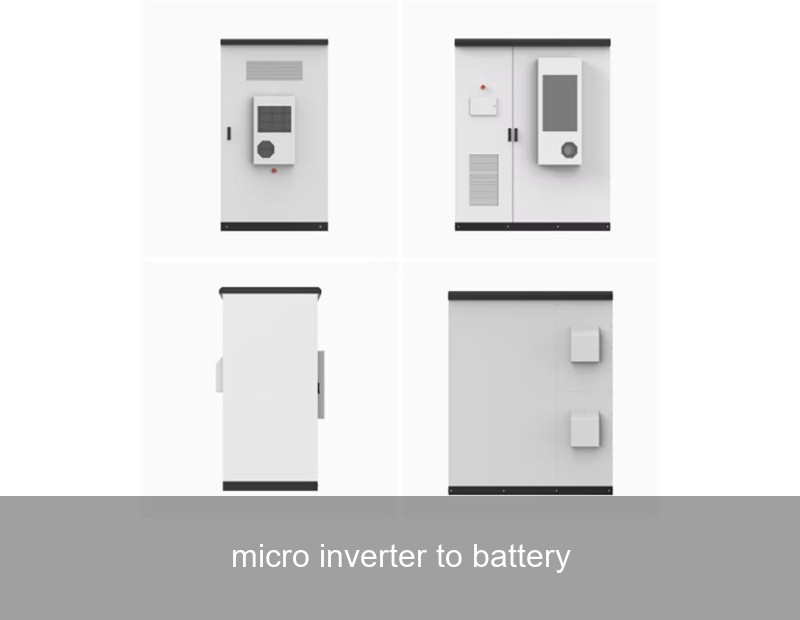
Have you ever looked at your solar panels on a bright, sunny day and wondered if you're truly getting the most out of them? You're generating clean power, but what happens when the sun sets or clouds roll in? This is where the conversation shifts from simply generating solar energy to intelligently managing it. The key to unlocking true energy independence lies in seamlessly connecting your micro inverter to battery storage. This powerful combination isn't just an add-on; it's a transformative upgrade that maximizes self-consumption, provides backup power, and turns your home into a resilient energy hub. For over 18 years, Highjoule has been at the forefront of this evolution, designing smart energy storage solutions that integrate perfectly with modern solar setups to deliver control, efficiency, and peace of mind.
Table of Contents
- The Phenomenon: Wasted Sunlight and Grid Dependency
- The Data: Why Micro-Inverters and Batteries Are a Perfect Match
- A Real-World Case Study: The Smith Residence in California
- The Highjoule Advantage: Seamless Integration for Intelligent Storage
- Making the Connection: How to Integrate a Battery with Your Micro-Inverter System
- Is Your Solar System Future-Proof?
The Phenomenon: Wasted Sunlight and Grid Dependency
Traditional solar systems with string inverters have a fundamental limitation: they are only as strong as their weakest panel. Shade on one panel can drag down the performance of the entire array. Micro-inverters solved this by attaching a small inverter to each individual solar panel, allowing them to operate independently at peak efficiency. This was a game-changer for generation. However, both system types face the same next-level challenge: what do you do with all that excellent DC-to-AC converted power you can't use immediately?
Without storage, excess solar energy is fed back to the grid, often for minimal compensation through net metering programs that are becoming less favorable. When the sun isn't shining, you're forced to buy expensive electricity back from the utility. You're essentially using the grid as a one-way, then two-way, battery—with you on the losing end of the deal. The logical next step is to add your own personal energy reservoir.
The Data: Why Micro-Inverters and Batteries Are a Perfect Match
The synergy between micro-inverters and battery storage is backed by compelling performance and economic data. Let's break it down:
- Increased Self-Consumption: Studies show that adding storage can increase a household's direct use of its own solar power from 30-50% to 70-90% or more. This directly shields you from rising utility rates.
- Enhanced ROI: By storing excess energy instead of selling it cheaply and buying it back at a high price, you improve the return on investment for your entire solar system. The battery pays for itself by arbitraging these price differences.
- Superior Compatibility: Modern battery systems like those from Highjoule use AC-coupled architecture. This means they connect directly to your home's AC electrical panel, making them ideally suited to work with the AC output from micro-inverters. It's a plug-and-play relationship that avoids complex DC rewiring.
| System Type | Self-Consumption Rate (Without Battery) | Self-Consumption Rate (With AC-Coupled Battery) | Key Benefit for Homeowner |
|---|---|---|---|
| Micro-Inverter System | ~35-50% | ~80-95% | Maximizes use of every kilowatt-hour generated |
| Traditional String Inverter System | ~30-40% | ~75-90% | Improves efficiency but may require additional hardware |
Furthermore, the modular nature of micro-inverters aligns perfectly with the scalable design of modern battery storage. You can easily expand both your solar generation and storage capacity over time. For a deeper dive into the technical advantages of AC-coupled systems, the U.S. Department of Energy provides an excellent resource.

Image: A modern home energy system integration. Source: Unsplash
A Real-World Case Study: The Smith Residence in California
Let's move from theory to practice. Consider the Smith family in Sacramento, California. They had a 8kW solar system with micro-inverters installed in 2020. While their electricity bills dropped, they were still vulnerable to Public Safety Power Shutoffs (PSPS) and time-of-use rates where evening electricity costs over $0.45/kWh.
The Solution: In early 2023, they integrated a Highjoule HES-10 home energy storage system. This 10 kWh lithium iron phosphate (LiFePO4) battery system was AC-coupled, meaning it connected directly to their main electrical panel alongside their existing micro-inverter array. The installation was completed in one day with no modifications needed to their existing solar setup.
The Data-Driven Results (12-month period post-installation):
- Grid Independence: Their grid electricity consumption during peak hours dropped by 98%.
- Bill Savings: Their average monthly electricity bill decreased from a net $90 to a net $12 (the basic service charge).
- Backup Power: During three separate grid outages totaling 32 hours, their system automatically switched to battery power, keeping lights, refrigeration, and essential circuits running seamlessly.
- Self-Consumption: They increased their direct use of solar power from an estimated 42% to 89%.
This case illustrates the tangible benefits of bridging micro inverter to battery technology. It's not just about backup; it's about taking complete control of your energy economics.
The Highjoule Advantage: Seamless Integration for Intelligent Storage
At Highjoule, we've engineered our storage solutions with the modern, modular solar home in mind. Our products are designed to be the perfect partner for micro-inverter systems. Here’s how we make the integration effortless and powerful:
- AC-Coupled Design: Our HES Series batteries are inherently AC-coupled. They communicate intelligently with your existing solar system, prioritizing the charging of the battery with excess solar production before any energy is sent to the grid.
- Advanced Energy Management System (EMS): The brain of the system. Our EMS doesn't just store energy; it learns your consumption patterns, considers weather forecasts, and can be programmed to optimize for time-of-use rates, ensuring your battery discharges when grid power is most expensive.
- Scalability: Start with a single 5 kWh or 10 kWh battery unit and stack additional units as your needs grow. This modularity mirrors the panel-level optimization of your micro-inverters.
- Safe & Sustainable Chemistry: We utilize LiFePO4 battery chemistry, renowned for its long cycle life (over 6000 cycles), thermal stability, and safety—a non-negotiable for residential installations.
Our systems are more than just hardware; they come with the Highjoule Connect monitoring platform, giving you real-time and historical insights into your energy generation, consumption, and storage from any device. For an independent perspective on battery safety and chemistry, the Fire Safety Research Institute publishes valuable findings on energy storage systems.

Image: A sleek, wall-mounted home battery storage unit. Source: Unsplash
Making the Connection: How to Integrate a Battery with Your Micro-Inverter System
Thinking about making the upgrade? The process is more straightforward than you might imagine.
- Assessment: A certified Highjoule installer will evaluate your current electrical panel, micro-inverter system size, and your household's energy consumption patterns.
- Design: They will design a system that meets your backup goals (e.g., "whole-home" vs. "essential loads") and financial objectives. The beauty of AC coupling is that your existing solar equipment remains untouched.
- Installation: The battery unit(s) and our dedicated energy management gateway are installed near your main panel. The gateway is the communication hub that orchestrates between your solar, battery, grid, and home.
- Commissioning & Monitoring: Once connected and tested, the system is activated. You'll be shown how to use the Highjoule Connect app to set preferences and monitor your new, integrated energy ecosystem.
It's crucial to work with a qualified installer who understands the communication protocols between different systems. Highjoule maintains a network of certified partners across Europe and North America to ensure flawless integration. The Solar Energy Industries Association (SEIA) also offers great consumer guidance on what to expect from solar-plus-storage projects.
Is Your Solar System Future-Proof?
You made a smart investment by choosing solar power with micro-inverters for optimal generation. But in a world of increasing grid volatility, changing utility policies, and a strong push for electrification, is generation alone enough? Connecting your micro inverter to battery storage is the definitive step to future-proofing that investment. It transforms your system from a one-tool solution into a versatile, intelligent, and resilient energy asset.
What energy challenge keeps you up at night—is it the fear of a blackout, the frustration of seeing your net metering credits shrink, or the desire to truly maximize your contribution to a cleaner grid? Let's discuss how your current setup can evolve.
 Inquiry
 Online Chat