


Micro Energy Storage Facility: The Unsung Hero of a Resilient and Renewable Grid
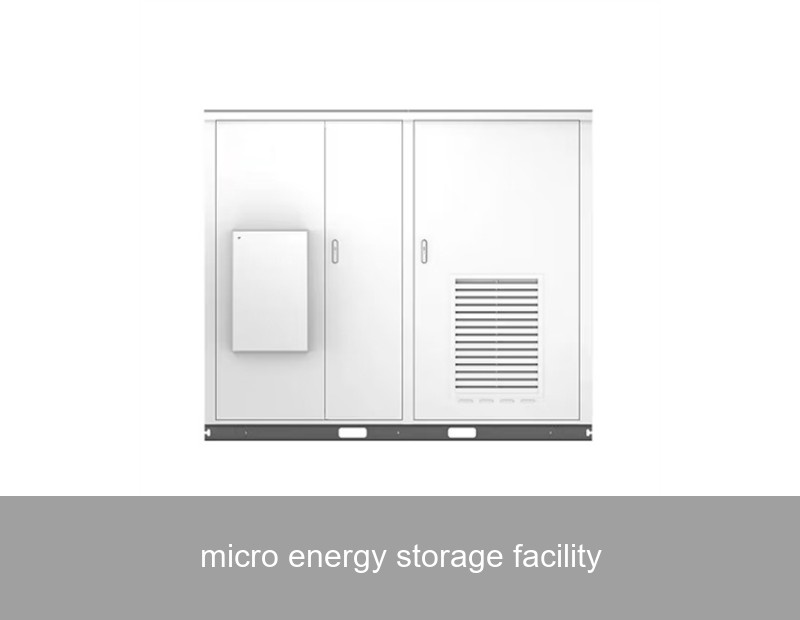
Imagine your local school, powered by solar panels, seamlessly continuing its day even during a widespread grid outage. Or a remote clinic keeping its vaccines refrigerated reliably, day and night. This isn't a distant future scenario; it's the reality being enabled today by the micro energy storage facility. As a product technology expert at Highjoule, I see these compact, intelligent power hubs as the critical missing link in our global transition to sustainable energy. They are the keystone that transforms intermittent renewable generation into dependable, resilient power for businesses, communities, and homes.
Table of Contents
- The Phenomenon: From Centralized Giants to Agile Micro Hubs
- The Data: Why Small-Scale Storage Packs a Massive Punch
- Case Study: A Bavarian Bakery's Recipe for Energy Independence
- The Highjoule Insight: Intelligence is as Important as Capacity
- Beyond Backup: The Multifaceted Applications of a Micro Facility
- Your Energy Future: A Question of Control
The Phenomenon: From Centralized Giants to Agile Micro Hubs
For over a century, our electricity model has been largely one-way: power flows from massive, centralized plants over long distances to end-users. This model is strained by the rise of variable renewables like solar and wind. What happens when the sun sets or the wind stops? Traditionally, we'd fire up a fossil-fuel peaker plant. The modern solution is decentralization—generating and storing power closer to where it's consumed. This is where the micro energy storage facility shines. Think of it not as a single battery, but as an integrated system: a bank of advanced lithium-ion or similar chemistry batteries, sophisticated power conversion systems, and most importantly, a brain—an energy management system (EMS) that makes intelligent, split-second decisions.

Image: A modern, containerized battery storage system. Source: Unsplash (License-free, representative image)
The Data: Why Small-Scale Storage Packs a Massive Punch
The growth trajectory tells a compelling story. According to the U.S. Energy Information Administration (EIA), while large-scale battery storage is growing rapidly, the commercial and industrial (C&I) segment—a prime market for micro energy storage facilities—is exploding. The economics are now undeniable. Let's break down the key value streams:
| Value Stream | How a Micro Facility Delivers | Typical Impact |
|---|---|---|
| Demand Charge Reduction | Discharges during short periods of peak usage to lower the maximum power draw from the grid. | Can reduce commercial electricity bills by 10-30%. |
| Energy Arbitrage | Stores energy when prices are low (e.g., midday solar surplus) and uses it when prices are high. | Optimizes power purchase costs in variable rate markets. |
| Backup Power & Resilience | Provides instantaneous, seamless power during grid outages. | Prevents operational downtime, data loss, and spoilage. |
| Renewable Integration | Smooths solar/wind output, stores excess generation for later use. | Can increase self-consumption of solar power from ~30% to over 70%. |
A report by the National Renewable Energy Laboratory (NREL) highlights that combining solar PV with storage significantly enhances value and resilience, especially for C&I sites. The financial payback period for a well-designed system can often be under 7 years, with a system lifespan exceeding 15.
Case Study: A Bavarian Bakery's Recipe for Energy Independence
Let's make this concrete with a real-world example from our work at Highjoule in Southern Germany. Müller's Heritage Bakery is a medium-sized operation with high energy demands for ovens, refrigeration, and lighting. Their existing 100 kW rooftop solar system covered only a fraction of their daytime load, and they faced steep demand charges. During a winter grid instability event, a two-hour outage threatened to ruin an entire day's production.
Highjoule's solution was a turnkey micro energy storage facility centered on our H-Cube Commercial system. We integrated a 240 kWh battery storage unit with their existing solar PV and installed our proprietary Neuron EMS. The results, measured over one year, were transformative:
- Demand Charges Reduced by 28%: The system intelligently "shaves" peak loads by discharging during simultaneous oven and cooling cycles.
- Solar Self-Consumption Increased from 35% to 82%: Midday solar surplus now charges the batteries, powering the bakery through the late afternoon and evening.
- 100% Backup for Critical Loads: The ovens might pause during an outage, but all refrigeration, lighting, and POS systems run seamlessly, preventing spoilage and maintaining business continuity.
- ROI Projection: 5.8 years, based on combined savings and avoided loss.
"It's like having our own private power plant," the owner noted. "We're not just saving money; we've future-proofed our family business against blackouts and rising energy costs."
The Highjoule Insight: Intelligence is as Important as Capacity
At Highjoule, founded in 2005, we've learned that a micro energy storage facility is only as good as its brain. Many providers focus solely on the battery hardware. Our approach is different. Our Neuron Energy Management Platform is the core of every installation, whether it's our H-Power residential units or our containerized H-Cube Industrial systems for microgrids. This software uses AI and real-time data to perform multi-objective optimization. It doesn't just react; it predicts weather, energy prices, and consumption patterns to make the most economically and operationally beneficial decision every second of the day. This transforms a passive battery into an active financial and resilience asset.
Beyond Backup: The Multifaceted Applications of a Micro Facility
The versatility of these systems is staggering. Here’s how they are being deployed across our key markets:
- Commercial & Retail: Supermarkets use them for refrigeration backup and demand charge management. Office buildings use them to achieve LEED certification and ensure IT server uptime.
- Industrial: Manufacturing plants mitigate the impact of volatile time-of-use rates and protect sensitive processes from voltage sags.
- Critical Infrastructure: Telecom towers, water treatment plants, and clinics use them as primary backup, far superior to noisy, polluting diesel generators.
- Community & Microgrids: Multiple micro energy storage facilities can be networked to form a community microgrid, sharing resources and increasing local resilience, a concept supported by research from the International Renewable Energy Agency (IRENA).

Image: Commercial solar installation, a perfect partner for a micro energy storage facility. Source: Unsplash (License-free, representative image)
Your Energy Future: A Question of Control
The energy landscape is shifting from a "consume-only" model to a "generate, store, and manage" model. The micro energy storage facility is the enabling technology at the heart of this shift. It’s no longer a question of *if* storage will become standard for businesses and communities seeking sustainability and independence, but *when* and *how*.
So, here is a question to consider: When the next grid disturbance occurs, or when your next electricity bill arrives with yet another peak rate surcharge, will you be a passive consumer, or will you have taken control with your own intelligent, resilient micro energy storage facility? What would energy security and predictability unlock for your operations?
 Inquiry
 Online Chat