


Your Guide to Finding a Reliable Micro Energy Storage Cabinet Supplier
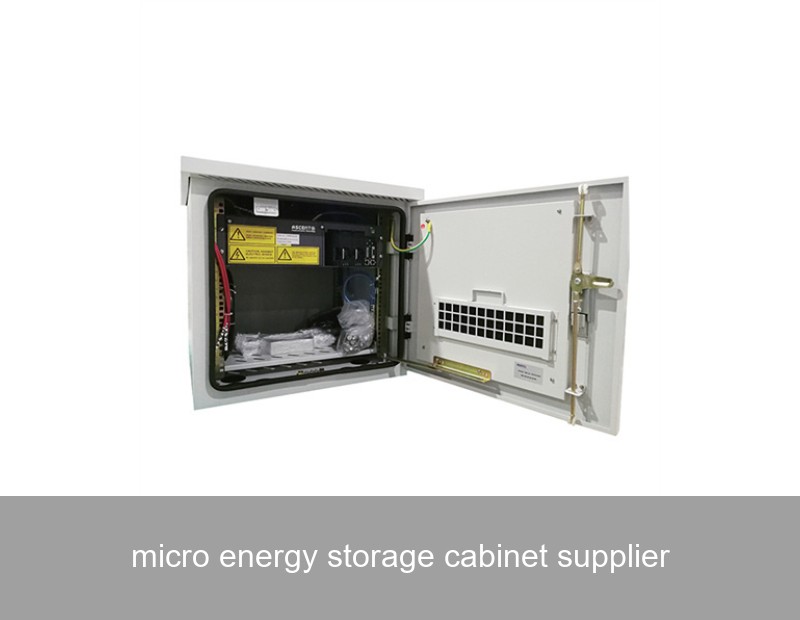
As energy prices fluctuate and the demand for grid resilience grows, businesses and communities are increasingly turning to a smart, localized solution: the micro energy storage cabinet. But navigating the market for a trustworthy micro energy storage cabinet supplier can be complex. This guide will demystify the technology, explore its critical benefits, and highlight what to look for in a partner, helping you make an empowered decision for your energy independence.
Table of Contents
What is a Micro Energy Storage Cabinet?
Think of a micro energy storage cabinet as a sophisticated, oversized battery unit in a sleek, self-contained enclosure. Unlike utility-scale storage farms, these cabinets are designed for on-site deployment at commercial, industrial, or multi-residential sites. They store electricity from the grid (often during off-peak, cheaper hours) or from on-site renewable sources like solar panels, and dispatch it when needed most.
A high-quality cabinet from a leading micro energy storage cabinet supplier integrates several key components:
- Battery Modules: The core energy storage medium, typically using advanced lithium-ion chemistry for density and longevity.
- Battery Management System (BMS): The "brain" that monitors cell health, temperature, and state of charge for safety and performance.
- Power Conversion System (PCS): Inverts DC battery power to AC for building use, and manages the flow of energy.
- Thermal Management: A critical cooling/heating system to maintain optimal battery operating temperatures.
- Energy Management Software (EMS): The intelligent layer that controls when to charge and discharge based on algorithms, weather forecasts, and energy tariffs.

Image Source: Unsplash - Example of a modern energy storage enclosure.
Why the Demand is Surging Now: The Phenomena Driving Adoption
The shift towards decentralized energy isn't just a trend; it's a necessary response to modern grid challenges. Let's break down the phenomenon.
The Problem: Grid Strain and Volatile Costs
From heatwaves in Southern Europe to winter storms in Texas, extreme weather events are testing the limits of aging grid infrastructure. This leads to more frequent and costly power outages. Simultaneously, energy prices, especially during peak demand periods, have become notoriously unpredictable. For a business, a single outage can mean lost revenue, spoiled inventory, and operational chaos.
The Data: Quantifying the Need
The numbers speak volumes. According to the U.S. Department of Energy, achieving high levels of solar energy deployment will require a significant expansion of energy storage capacity. Meanwhile, a report by the International Energy Agency (IEA) notes that behind-the-meter storage (like micro-cabinets) is one of the fastest-growing segments, driven by commercial demand for backup power and bill management. In some US markets like California, commercial demand charges can constitute up to 50% of an electricity bill—a cost that storage directly mitigates.
The Solution: Localized Control with Micro-Storage
This is where a robust micro energy storage cabinet becomes a strategic asset. It acts as an on-site energy buffer. By discharging during peak grid demand hours (a process called peak shaving), it slashes expensive demand charges. During an outage, it provides seamless backup power, keeping critical operations online. When paired with solar, it maximizes self-consumption of renewable energy, reducing both costs and carbon footprint.
What to Look for in a Micro Energy Storage Cabinet Supplier
Choosing the right supplier is as important as the technology itself. You need a partner, not just a vendor. Here are the key pillars to evaluate:
| Evaluation Criteria | Why It Matters | Key Questions to Ask |
|---|---|---|
| Proven Technology & Safety | Battery systems must have rigorous safety certifications (UL, IEC) and a track record of reliable operation in the field. | What safety standards does your cabinet meet? Can you provide field performance data? |
| System Intelligence & Software | The value is in the software. Smart algorithms that adapt to weather, tariffs, and usage patterns deliver the highest ROI. | How does your EMS optimize for cost savings? Is it user-configurable? |
| Scalability & Flexibility | Your energy needs may grow. A modular design allows you to add cabinets or battery capacity easily. | Is the system modular? What does the expansion process look like? |
| Full-Service Partnership | Look for suppliers who offer site assessment, financing options, installation, maintenance, and long-term support. | Do you offer a full turnkey service? What are your warranty and service level agreements? |
This is precisely where a company like Highjoule distinguishes itself. With nearly two decades of experience since 2005, Highjoule has evolved into a global leader, not just as a micro energy storage cabinet supplier, but as a comprehensive solution provider. Our H-Cabinet Series is engineered for the demands of commercial and industrial applications. It features industry-leading cycle life, a modular design for easy scaling, and is governed by our proprietary Helios Energy Management Platform. This AI-driven platform doesn't just react; it predicts energy usage and market prices to autonomously optimize your energy schedule for maximum savings and resilience. We stand behind every system with a 10-year performance warranty and a global network of technical support specialists.
Case Study: Sustainable Power and Savings at a California Winery
Let's move from theory to a tangible example. A renowned winery in Napa Valley, California, faced a dual challenge: skyrocketing energy costs during the intense irrigation and fermentation seasons, and an increasing risk of public safety power shutoffs (PSPS) during wildfire season, which could ruin entire batches of wine.
The Project
The winery partnered with Highjoule to design and install a customized microgrid solution. The system integrated:
- An existing 500 kW solar PV array.
- Two parallel Highjoule H-Cabinet 250 units, providing a total of 500 kWh of storage capacity.
- Seamless integration with the winery's critical loads (fermentation tanks, cooling systems, and tasting room).
The Data-Driven Results
After one full year of operation, the results were compelling:
- Demand Charge Reduction: The system's peak shaving capability reduced the winery's monthly demand charges by an average of 42%.
- Solar Self-Consumption: Increased the on-site use of solar generation from ~60% to over 90%, drastically cutting grid imports.
- Reliability: Successfully provided backup power during three separate grid outage events, the longest lasting 8 hours, preventing an estimated $150,000 in potential product loss.
- ROI: The project achieved a simple payback period of under 5 years, factoring in available state incentives.

Image Source: Unsplash - Solar installation at a vineyard, similar to the case study environment.
This case exemplifies the multifaceted value a top-tier micro energy storage cabinet supplier can deliver: direct financial savings, enhanced sustainability, and crucial business continuity.
The Future of Distributed Energy and Your Role
The energy landscape is fundamentally shifting from a one-way, centralized model to a dynamic, distributed network. Micro energy storage cabinets are the building blocks of this new grid. They empower businesses, municipalities, and communities to take control, become proactive energy managers, and contribute to overall grid stability by reducing collective strain during peak times.
As you consider this path, the question isn't just about purchasing hardware. It's about choosing a strategic partner for your energy future. Does your current energy strategy leave you exposed to volatility and risk, or does it empower you with predictability and control?
What would the ability to lock in a significant portion of your energy costs and ensure operational continuity do for your business planning and peace of mind?
 Inquiry
 Online Chat