


Make Your Own Power Station: The Ultimate Guide to Energy Independence
Have you ever watched your electricity bill climb with the seasons and wondered, "What if I could make my own power?" You're not alone. Across Europe and the U.S., a quiet revolution is underway. Homeowners and businesses are no longer just consumers; they're becoming producers, turning their properties into personal power stations. This shift isn't just about saving money—it's about resilience, sustainability, and taking direct control of your energy future. Let's explore how you can join this movement.
Table of Contents
The "Why" Now: More Than Just a Trend
The dream to make your own power station is being fueled by a powerful convergence of factors. Grid instability, from winter storms in Texas to heatwaves straining European networks, has moved from a theoretical risk to a personal concern. Simultaneously, the economic equation has flipped. The cost of solar panels has plummeted by over 80% in the last decade (IRENA), while electricity prices for consumers have seen significant volatility.
But here's the critical insight: generating power is only half the battle. The true key to independence is storing it. This is where advanced battery energy storage systems (BESS) come in, transforming intermittent sunshine into a reliable, 24/7 power source for your home or business.

This isn't a futuristic concept. It's a practical, here-and-now solution. The U.S. Energy Information Administration notes a surge in behind-the-meter storage, and Europe is seeing similar growth, driven by both ambition and necessity.
The Core of Your Power Station: Solar + Storage
Think of your personal power station as having two main components: the generator and the bank.
- The Generator (Solar PV): Your rooftop solar array captures sunlight and converts it to direct current (DC) electricity.
- The Bank (Battery Storage): This is the heart of your independence. It stores excess solar energy produced during the day for use at night, during peak rate periods, or when the grid is down.
Not all "banks" are created equal. When looking to make your own power station, you need a battery system that is safe, long-lasting, and intelligent. Key specifications to understand include:
| Specification | What It Means for You |
|---|---|
| Usable Capacity (kWh) | The actual amount of energy you can store and use. Think of it as the size of your fuel tank. |
| Power Rating (kW) | How much electricity the battery can deliver at once. This determines how many appliances you can run simultaneously. |
| Depth of Discharge (DoD) & Cycle Life | Indicates battery longevity. A high-quality battery can be deeply discharged daily for thousands of cycles. |
| Chemistry | Lithium Iron Phosphate (LFP) is now the preferred choice for home storage due to its superior safety, stability, and long life. |
Beyond the Basics: The Brains of the Operation
To truly optimize your investment, your system needs intelligence. This is where energy management systems (EMS) and hybrid inverters shine. They act as the brain of your personal power station, making autonomous decisions to maximize your savings and comfort. For instance, they can:
- Automatically switch to battery power during expensive peak utility rates (load shifting).
- Prioritize charging your battery with excess solar before selling it back to the grid.
- Seamlessly provide backup power during an outage, often in less than a heartbeat.
A Real-World Case: The Smithson Manufacturing Story
Let's move from theory to practice. Smithson Manufacturing, a mid-sized factory in Germany, faced crippling peak demand charges and sought predictability in its energy costs. Their goal was to make their own power station to gain control.
They installed a 250 kW solar canopy and paired it with a 500 kWh containerized battery storage system. The results, monitored over one year, were compelling:
- Cost Savings: Reduced peak demand charges by 40%, slashing their overall electricity bill by over €28,000 annually.
- Self-Consumption: Increased on-site consumption of their solar generation from 35% to over 80%.
- ROI: Achieved a full return on investment in under 6 years, with decades of low-cost operation ahead.
- Resilience: Now maintains critical cooling and assembly line operations during short grid interruptions.

This case underscores a vital point: making your own power station is a strategic financial decision with a clear, quantifiable payoff.
How Highjoule Empowers Your Energy Independence
This is where our expertise comes into play. At Highjoule, with nearly two decades of experience since 2005, we don't just sell components; we deliver intelligent, integrated power solutions. Our mission is to provide the technology and guidance you need to successfully build and manage your own power station.
For residential clients, our HomePower Stack series is a prime example. It's an all-in-one AC-coupled system featuring our safe LFP batteries, a hybrid inverter, and the intuitive Highjoule Harmony OS. This platform learns your energy habits and automatically optimizes for self-consumption, cost savings, and backup readiness. It's designed for seamless installation and worry-free operation, putting you in control via a simple smartphone app.
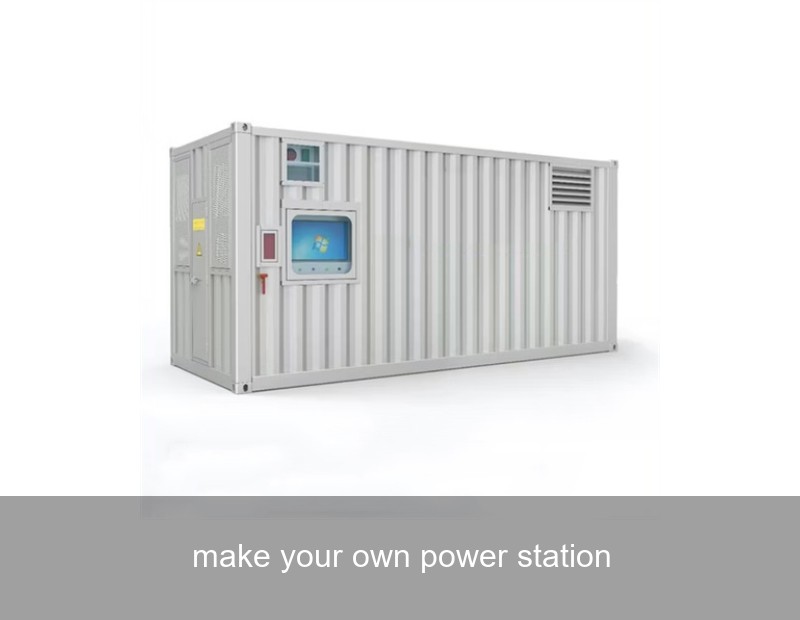
For commercial and industrial applications, our scalable Megaflex BESS solutions are engineered for durability and performance. These containerized or modular systems can be tailored to manage demand charges, provide uninterrupted power for critical processes, and integrate with larger solar farms. Coupled with our advanced grid-service capable software, they turn your energy assets into a value stream.
Our approach is holistic. We partner with certified installers across Europe and North America to ensure your journey to make your own power station is smooth, from initial consultation and system design to commissioning and long-term support.
Getting Started on Your Journey
Embarking on this path requires careful consideration. Ask yourself and potential providers these key questions:
- What are my primary goals? (Bill savings, backup power, carbon reduction?)
- What is my current energy consumption pattern, especially during peak hours?
- Does the provider offer a complete, interoperable system with a single point of warranty?
- Is the system's software future-proof, capable of adapting to new tariffs or grid services?
We encourage you to look beyond upfront cost and evaluate the total cost of ownership, safety certifications, and the provider's track record. A reliable personal power station is a long-term asset.
So, what's the first step you'll take to turn the question of "what if" into the reality of your own resilient, efficient, and independent power station?
 Inquiry
 Online Chat