


Unlocking True Value: The Critical Role of a Long Life Energy Storage Cabinet
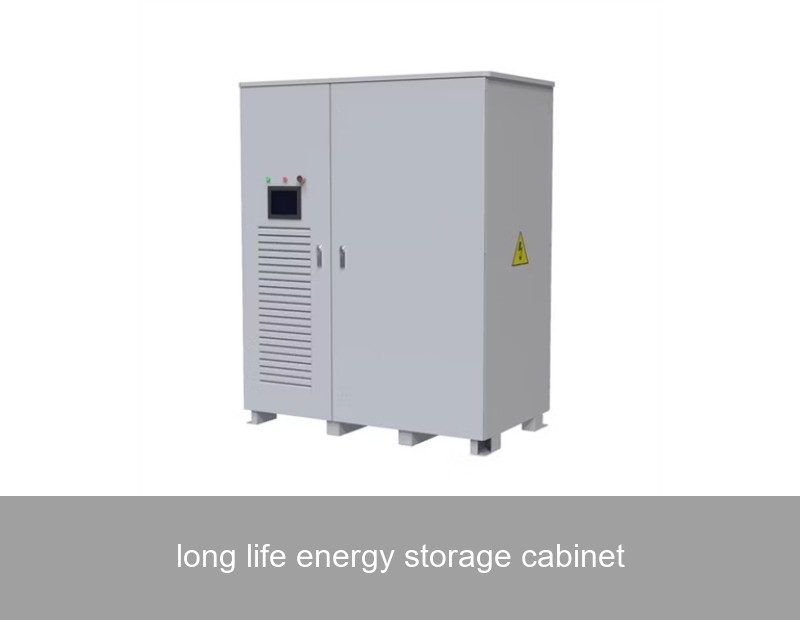
Let's be honest. When you first think about energy storage, the immediate questions are about capacity and power: "How many kilowatt-hours can it hold?" or "How much power can it deliver?" These are important, but they only tell half the story. The true game-changer for your investment, whether for your home, business, or community, lies in a single, often overlooked feature: longevity. A long life energy storage cabinet isn't just a product specification; it's the foundation for a sustainable and economically viable energy future. In this article, we'll explore why lifespan is the ultimate metric, how it's achieved, and what it means for energy independence across Europe and the US.
Why Battery Lifespan is the Ultimate Metric for Your Investment
Imagine buying a car based solely on the size of its fuel tank, without considering how many miles the engine will last. That's the trap many fall into with energy storage. The initial cost per kilowatt-hour (kWh) is a starting point, but the levelized cost of storage (LCOS) is the real measure of value. LCOS accounts for the total cost over the system's lifetime, divided by the total energy it will deliver. A cabinet with a longer operational life dramatically lowers the LCOS, making your clean energy cheaper over time.
The phenomenon is clear: short-lived systems lead to frequent, costly replacements, more downtime, and a higher total environmental footprint. The data backs this up. According to the National Renewable Energy Laboratory (NREL), extending the cycle life of a battery storage system from 10 to 20 years can reduce its LCOS by nearly 40%. This isn't a marginal improvement; it's a complete redefinition of the financial model for solar-plus-storage projects.

Image Source: Unsplash - A modern energy storage cabinet installation.
The Core Challenge: Degradation
Every battery degrades. Capacity fades, internal resistance increases. The goal of a long life energy storage cabinet is to minimize this degradation through superior chemistry, intelligent management, and robust engineering. It's about ensuring that after 10 or 15 years, your system still delivers over 80% of its original capacity, providing a reliable and predictable performance decade after decade.
The Key Technologies Behind a 20+ Year Storage Cabinet
Building a storage system that stands the test of time requires a multi-layered approach. It's not just about the cells; it's about the entire ecosystem.
- Advanced Cell Chemistry: While Lithium Iron Phosphate (LFP) has become the industry standard for safety and cycle life, the frontier is constantly moving. Innovations like Highjoule's TerraDura™ cells utilize proprietary electrode structuring and electrolyte formulations designed to suppress lithium plating and reduce structural stress at the particle level, directly targeting the primary causes of degradation.
- Predictive Battery Management System (BMS): A smart BMS is the brain of the operation. It doesn't just react; it predicts. By continuously monitoring thousands of data points—voltage, temperature, current, internal impedance—it can dynamically adjust charging parameters, perform active cell balancing, and even forecast maintenance needs. This proactive management is crucial for maximizing lifespan.
- Advanced Thermal Management: Heat is the enemy of batteries. A passive cooling system might suffice for short cycles, but a long life energy storage cabinet requires active liquid cooling. This maintains an optimal, uniform temperature across all cells, preventing hot spots that accelerate aging and ensuring consistent performance in both the Arizona summer and the Norwegian winter.
- Robust System Integration & Safety: Long life also means resilience. This includes component-level redundancy, ingress protection (IP55 or higher for outdoor cabinets), and integrated fire suppression systems. The mechanical design must withstand environmental stresses, ensuring the cabinet itself protects its valuable core.
A Real-World Case: The Danish Community Microgrid
Let's move from theory to practice. In the town of Ringkøbing, Denmark, a community microgrid project faced a critical challenge: integrating a large share of wind power while maintaining grid stability. The initial storage solution, focused on low upfront cost, began showing significant capacity fade after just 6 years, threatening the project's economics.
The community consortium decided on a replacement with a focus on longevity. They installed a 2 MWh long life energy storage cabinet system in 2020, specifically designed for high-cycle, daily use and a 25-year design life. The system's advanced LFP chemistry and liquid cooling were key selection criteria.
| Metric | Old System (2014-2020) | New Long-Life System (2020-Present) |
|---|---|---|
| Projected Lifespan | 7-8 years | 20+ years |
| Capacity Retention (after 3 years) | ~75% | >92% (measured) |
| Annualized Cost of Ownership | High (due to early replacement) | Reduced by an estimated 50% |
| Primary Function | Wind smoothing | Wind smoothing, peak shaving, grid services |
This case, documented in part by the European Energy Community, highlights the shift from CapEx (capital expenditure) to OpEx (operational expenditure) thinking. The new system's longevity ensures stable energy costs for the community for decades, proving that a higher initial investment can lead to far greater savings and reliability.
Highjoule's Approach to Building Your Long-Term Energy Asset
At Highjoule, founded in 2005, we've witnessed the evolution of energy storage from a novelty to a grid-critical asset. Our philosophy is simple: build storage that lasts. Our flagship product line, the Everlast Series Cabinet, embodies this commitment to the long life energy storage cabinet principle.
What makes the Everlast Series different? It's the holistic integration of the technologies we discussed:
- TerraDura™ Battery Cells: Our in-house developed LFP cells are rated for over 12,000 cycles at 80% depth of discharge, translating to a daily-cycle lifespan well beyond 20 years.
- NeuralGrid BMS: This AI-powered system doesn't just manage; it learns. It adapts to your unique usage patterns, optimizing charge/discharge cycles to extend life further, and provides real-time health reports via our Highjoule Pulse monitoring platform.
- ClimateSeal Liquid Cooling: Our patented two-phase cooling loop ensures temperature uniformity within ±2°C across the entire cabinet, effectively eliminating thermal degradation.

Image Source: Unsplash - Technician servicing an advanced energy storage unit.
For commercial and industrial clients, this translates into predictable energy budgets and uninterrupted operations. For utilities and microgrids, it means a durable, non-wires alternative that can defer costly infrastructure upgrades. Our systems are designed, tested, and proven in diverse climates from California to Scandinavia, ensuring global reliability.
Beyond Today: The Future of Long-Duration Energy Storage
The quest for longevity is also driving innovation beyond lithium-ion. Technologies like flow batteries, which separate power and energy components, offer inherent advantages for ultra-long duration storage (10+ hours) and decades-long lifespans. Highjoule's R&D division is actively exploring hybrid systems that combine the power density of our Everlast cabinets with the extreme longevity of emerging technologies, creating tailored solutions for the multi-day storage needs of the future.
The International Energy Agency (IEA) consistently emphasizes that long-duration storage is the key to achieving high renewable penetration. The foundation of this will always be a long life energy storage cabinet that can provide daily cycling reliability for the entire energy transition journey.
Your Energy Legacy Starts with a Choice
The transition to renewable energy is a long-term commitment. Shouldn't your storage system share the same horizon? When evaluating your next project, we urge you to look beyond the price tag and the spec sheet's peak power. Ask the deeper questions: What is the projected capacity retention in Year 15? What is the guaranteed cycle life under my specific usage profile? How does the BMS actively extend the system's health?
What will your energy resilience look like in 2040? The choice you make today in your storage technology will be the defining answer.
 Inquiry
 Online Chat