


Lithium Ion Batteries for Solar Panels: The Key to Unlocking 24/7 Renewable Energy
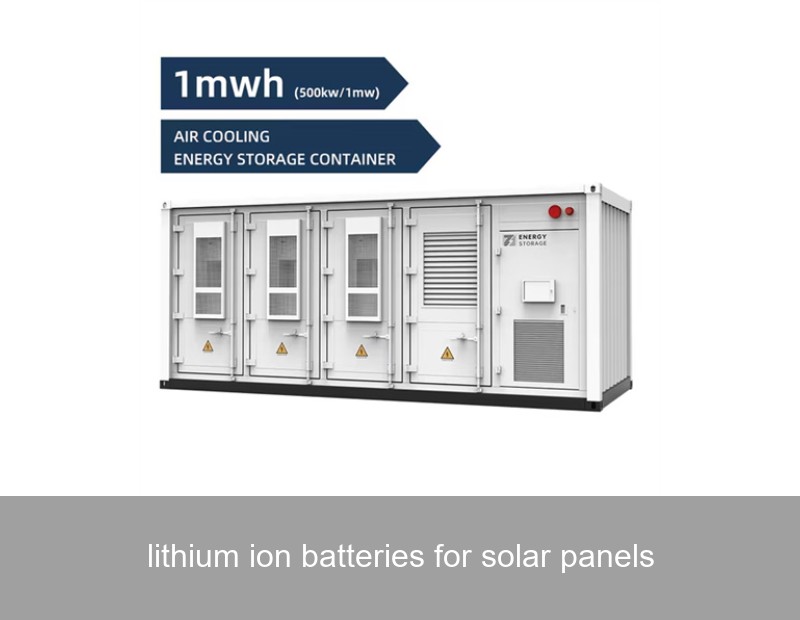
You’ve made the smart decision to install solar panels. They’re soaking up the sun, cutting your electricity bills, and reducing your carbon footprint. But what happens when the sun goes down, or clouds roll in? This is the fundamental challenge of solar power—it’s intermittent. To truly achieve energy independence and maximize your investment, you need a way to store that sunshine for later use. This is where lithium ion batteries for solar panels become not just an add-on, but the essential heart of a modern, resilient energy system. They transform your solar array from a part-time power source into a full-time, reliable energy asset for your home or business.
Why Lithium-Ion Dominates: The Technical Edge for Solar Storage
The shift to lithium-ion technology in solar energy storage wasn't accidental. It was a decisive move driven by clear performance advantages over older battery types, like lead-acid. Let's break down the data that makes lithium-ion the undisputed leader.
- Higher Depth of Discharge (DoD): You can safely use 90-95% of a lithium-ion battery's capacity without damaging it. Many lead-acid batteries shouldn't be discharged beyond 50%. This means you get nearly twice the usable energy from a similarly rated battery.
- Superior Efficiency: Round-trip efficiency measures how much energy you get back versus what you put in. Modern lithium-ion systems boast 95-98% efficiency, while lead-acid often lags at 80-85%. That difference means more of your hard-earned solar power actually powers your home.
- Longer Lifespan: Lithium-ion batteries for solar panels typically offer cycle lives of 6,000 to 10,000 cycles, with warranties often guaranteeing 70% capacity after 10 years. Lead-acid batteries may need replacement every 3-5 years under similar use.
- Compact Size & Faster Charging: Their high energy density means they take up less space, and they can charge at a much higher rate, crucial for capturing all available solar energy during short peak sun hours.
These aren't just spec sheet numbers. As the U.S. Department of Energy notes, pairing solar with cost-effective storage like lithium-ion batteries is key to grid stability and maximizing renewable use.
Beyond the Basics: Key Features for Solar Success
Not all lithium-ion batteries are created equal, especially when paired with solar. Here are the critical features that separate a basic battery from a high-performance solar storage solution.
| Feature | Why It Matters for Solar |
|---|---|
| Integrated Battery Management System (BMS) | This is the brain of the battery. A sophisticated BMS monitors cell voltage, temperature, and health, ensuring safety, optimizing performance, and extending lifespan by preventing overcharge or deep discharge. |
| Scalable Capacity | Your energy needs may grow. A modular system allows you to start with what you need and add more battery units later without complex, costly replacements. |
| Smart, Grid-Interactive Capabilities | Advanced systems can communicate with the grid, enabling features like peak shaving (reducing use during expensive rate times) and providing backup power during outages automatically. |
| Thermal Management | Lithium-ion batteries perform best within a specific temperature range. Systems with active cooling/heating maintain optimal temps, ensuring performance and safety in extreme weather. |
A Real-World Case: Powering Resilience at a California Winery
Let's move from theory to practice. Consider the challenges faced by a mid-sized winery in Sonoma County, California. Their operations—from refrigeration to irrigation—are energy-intensive. They faced three major problems: high time-of-use electricity rates, an unreliable grid prone to Public Safety Power Shutoffs (PSPS) during wildfire season, and a desire to operate more sustainably.
Their solution was a 500 kW solar canopy system paired with a 1 MWh lithium-ion battery storage system. Here’s the impact, measured over one year:
- Financial: By storing solar energy and discharging it during peak rate periods (4-9 PM), they reduced their demand charges and energy costs by over 40%.
- Resilience: During a 36-hour grid outage, the battery system seamlessly powered critical loads—keeping fermentation tanks and storage facilities at precise temperatures, preventing millions of dollars in product loss.
- Sustainability: The system increased their on-site renewable consumption from ~60% to over 90%, drastically cutting their carbon footprint.
This case mirrors findings from the National Renewable Energy Laboratory (NREL), which highlights how solar-plus-storage provides critical value in commercial settings through bill savings and backup power. This winery’s story isn't unique; it's a blueprint for businesses across Europe and the U.S. seeking control over their energy future.

Image: Solar panels in agricultural settings, like vineyards, are an ideal application for lithium-ion battery storage. (Source: Unsplash)
Choosing the Right System: What to Look For in a Solar Battery
With so many options, how do you choose? Focus on these pillars:
- Power & Capacity: Understand the difference. Power (kW) is how much electricity can flow at once—critical for starting large appliances. Capacity (kWh) is the total amount of energy stored—it determines how long you can power your home.
- Warranty & Lifespan: Look for a warranty that guarantees both a period of time (e.g., 10 years) and a retained capacity (e.g., 70%). This is a better indicator of long-term value.
- System Compatibility: Ensure the battery seamlessly integrates with your existing or planned solar inverter. Some systems are "AC-coupled," working with any solar setup, while others are "DC-coupled," which can be more efficient but require specific inverters.
- Software & Monitoring: The user interface is your window into the system. Look for intuitive apps that show energy flow, savings, and system health, and allow you to customize modes (e.g., maximize self-consumption, backup priority).
The Highjoule Advantage: Intelligent Storage Engineered for Your Life
At Highjoule, we've been engineering advanced energy storage solutions since 2005. We understand that lithium ion batteries for solar panels are more than just components; they are the core of personal energy independence. Our product line, from residential HomePower units to commercial and industrial GridMax systems, is built on three principles:
- Uncompromising Safety: Our proprietary Sentinel BMS features multi-layer protection and active thermal management, ensuring safe operation in diverse climates from Scandinavian winters to Mediterranean summers.
- Adaptive Intelligence: Highjoule systems don't just store energy; they learn. Our AI-driven software analyzes your consumption patterns, weather forecasts, and utility rates to automatically optimize when to charge from solar or the grid, and when to discharge—maximizing your savings and comfort.
- Modular & Future-Proof Design: Start with a single HomePower 10 unit (10 kWh) and stack additional modules as your needs evolve—whether it's adding an EV charger or expanding your home. Our commercial GridMax systems are designed for seamless scalability to meet growing business demands.
For microgrids and large-scale industrial applications, our team provides full turnkey solutions—from design and engineering to installation and lifetime performance monitoring—ensuring reliability and return on investment.

Image: A sleek, modern home battery storage unit like Highjoule's HomePower series. (Source: Unsplash)
Future-Proofing Your Energy Independence
The journey toward a sustainable, resilient energy future is accelerating. As electric vehicles become ubiquitous and grid dynamics grow more complex, your home or business energy system will need to be more intelligent and interconnected. The International Energy Agency (IEA) consistently highlights the pivotal role of battery storage in the clean energy transition. By choosing the right lithium ion batteries for solar panels today, you're not just solving today's problem of nighttime power or high bills. You're building an adaptable energy platform for tomorrow.
So, the question isn't just "What battery should I buy?" It's broader and more strategic: How will you design your energy ecosystem to not only save money but also become an active participant in a more stable and sustainable grid? The technology is here, proven, and ready. What's the first step you'll take to harness the full potential of your solar investment?
 Inquiry
 Online Chat