


Lithium Battery Fabrication: The Engine Behind Reliable Energy Storage
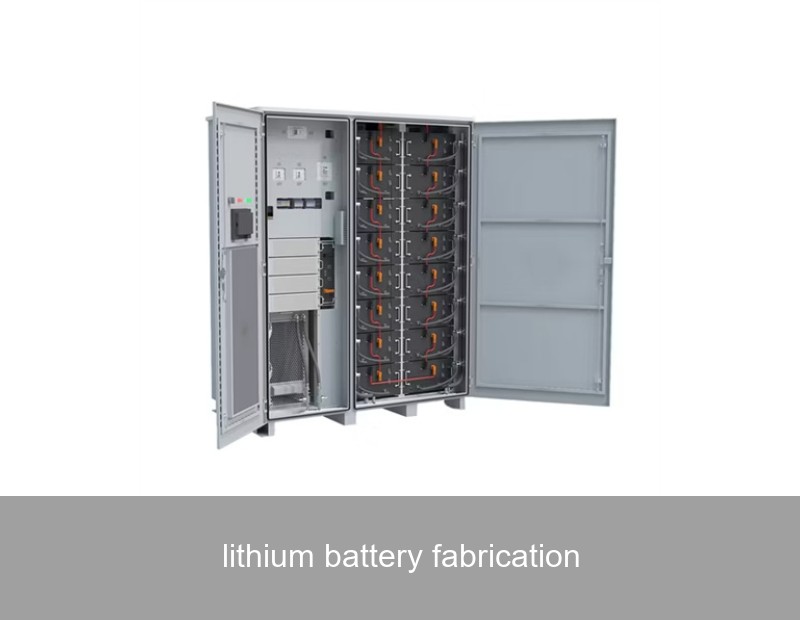
When you flip a light switch powered by your solar panels at night, or when a factory seamlessly rides through a grid outage, there's a silent powerhouse at work: the lithium-ion battery. But have you ever wondered what determines its safety, lifespan, and performance? The answer lies long before it's installed in your home or business—it's rooted in the precise, complex world of lithium battery fabrication. This isn't just assembly; it's the meticulous engineering and manufacturing process that transforms raw materials into the heart of modern energy storage. For anyone relying on batteries for clean energy, understanding this process is key to making an informed choice.
The Core Steps of Fabrication: More Than Just Assembly
Think of battery fabrication like baking a sophisticated, multi-layered cake where consistency is everything. A single flaw in one layer can spoil the whole thing. The process is a cascade of highly controlled steps, each critical to the final product's integrity.
Electrode Manufacturing: The Foundation
It all starts with coating thin metal foils (copper for the anode, aluminum for the cathode) with a slurry containing the active material (like lithium iron phosphate or NMC), conductive additives, and binder. This coating must be perfectly uniform in thickness and density. Any variation can lead to hot spots or reduced capacity. The coated foils are then dried and calendared—compressed to a precise thickness to ensure optimal density and electrical contact.
Cell Assembly: Precision in a Dry Room
This is where the iconic "jelly roll" or stacked layers are created. The anode and cathode sheets are separated by a micro-porous polymer separator—a critical safety component. They are wound or stacked with extreme precision. All of this happens in an ultra-dry environment, as even trace amounts of moisture can react with the electrolyte and degrade the cell. The assembled core is then placed into its casing (cylindrical, prismatic, or pouch).
Filling, Sealing, and Formation: The "Birth" of the Battery
The dry cell is filled with a precise amount of electrolyte liquid, which enables lithium-ion movement. It's then hermetically sealed. But the cell is still inert. The next phase, formation, is its first charge and discharge. This step is crucial as it forms the Solid Electrolyte Interphase (SEI) layer on the anode—a stable passivating layer that dictates long-term cycle life and safety. Poorly managed formation can lead to early degradation.

Image: Precision and automation in battery module assembly are critical for quality. Source: U.S. Department of Energy (public domain)
Aging, Grading, and Module Integration
After formation, cells are aged and their key parameters (capacity, internal resistance, self-discharge rate) are meticulously measured. They are then "graded" and grouped with nearly identical peers. This grading is vital. As a leading provider of advanced energy storage systems, Highjoule understands that using perfectly matched cells is non-negotiable for building durable battery packs. Our Highjoule HPS Series for commercial and industrial applications leverages top-tier, rigorously graded cells to ensure every module in the system performs uniformly, maximizing overall lifespan and safety.
How Fabrication Quality Directly Impacts Your Storage System
You might not see the fabrication process, but you'll certainly experience its consequences. The choices made on the factory floor manifest in your daily energy usage.
- Safety: Impurities, metallic dust, or coating defects can lead to internal short circuits, the primary cause of thermal runaway. Robust fabrication includes multiple quality control checkpoints to prevent this.
- Cycle Life & Degradation: Inconsistent electrode density or poor SEI layer formation accelerates capacity fade. A well-fabricated cell from a quality-focused supplier can deliver thousands of cycles with minimal degradation.
- Performance: High internal resistance from poor interfacial contact limits power output. This means your battery might struggle to start a large motor or absorb a sudden surge of solar power.
This is why at Highjoule, we don't just buy commodity cells. We partner with leading fabricators who share our commitment to traceability and quality. Our systems, like the Residential HES Home Battery, are built with cells that have passed our stringent vetting process, ensuring that the core technology inside your garage or basement is as reliable as the intelligent software that manages it.
Case Study: From Fabrication Line to Grid Stability in Bavaria
Let's look at a real-world example that connects advanced fabrication to grid services. In 2022, a medium-sized dairy cooperative in Bavaria, Germany, faced two challenges: volatile energy costs and a need for uninterrupted cooling processes. They installed a 1.2 MWh Highjoule C&I storage system, powered by lithium iron phosphate (LFP) batteries.
The LFP cells selected were notable for their "dry electrode" fabrication process—a newer technique that uses a binder and dry powder mix, eliminating the toxic solvent drying stage. This process, reported by research institutions like NREL to reduce cost and energy use in fabrication, also yields electrodes with higher density and better adhesion.
| Metric | Result | Impact |
|---|---|---|
| Cycles Completed | ~580 | Deep daily cycling for peak shaving & self-consumption |
| Capacity Retention | 99.1% | Exceptional stability, attributed to robust cell fabrication |
| Round-Trip Efficiency | 94.5% | High efficiency due to low internal resistance cells |
| Grid Services Revenue | €18,500 | Participation in primary control reserve market |
The key takeaway? The superior fabrication of the cells enabled not just reliable daily load shifting but also the high-power, rapid-response performance needed to sell grid stabilization services. The dairy now saves on energy costs, protects its operations, and generates revenue—a triple win built on the foundation of advanced lithium battery fabrication.
The Highjoule Approach: Intelligent Systems Built on Fabrication Excellence
At Highjoule, we view our role as translating the potential locked within well-fabricated cells into real-world value for our customers. Our expertise bridges the gap between cell chemistry and your energy goals.
- System-Level Engineering: We design sophisticated thermal management and battery management systems (BMS) that protect the cells, compensating for minor variations and operating them in their absolute sweet spot. Our BMS is the "brain" that safeguards the "heart" made in the fabrication plant.
- Integration for Any Scale: Whether it's a residential setup, a large industrial microgrid, or a utility-scale storage park, our engineering teams design solutions that scale fabrication quality up to system-level reliability. Our Microgrid Controller seamlessly integrates storage with generation and loads, creating resilient energy islands.
- Full Lifecycle Support: From initial design to decades of operation and eventual recycling, we provide support. We understand that the longevity baked into the cells during fabrication must be matched by professional system maintenance.

Image: A containerized BESS unit, like those deployed by Highjoule, integrates thousands of fabricated cells into a robust grid asset. Source: Unsplash (License: Free to use)
Future Trends: How Fabrication is Evolving for a Sustainable Future
The race for better batteries isn't just about new chemistries; it's about reinventing fabrication itself. The industry is moving towards:
- Solid-State Batteries: These promise greater safety and energy density but require a complete overhaul of fabrication lines, dealing with solid electrolytes instead of liquids.
- Sustainability-Driven Processes: Reducing water and energy use in fabrication, and eliminating cobalt, are major focuses. Techniques like direct cathode recycling are being developed to close the loop, a principle Highjoule supports through its own end-of-life battery takeback programs.
- AI and Advanced In-Line Diagnostics: Machine vision and real-time data analytics during coating and formation are becoming standard, pushing defect rates toward zero. This data-rich approach aligns with Highjoule's smart monitoring platforms, which provide insights from the cell level to the entire system.
Staying abreast of these trends allows us to future-proof our offerings. By engaging with fabricators at the cutting edge, we ensure our customers benefit from the latest advancements in lithium battery fabrication without having to become battery scientists themselves.
Your Next Step
Choosing an energy storage system is ultimately an investment in the quality and innovation of the underlying fabrication process. It's the difference between a commodity product and a engineered solution designed to last. As you evaluate options for your home or business, what specific performance guarantee or data point would give you the utmost confidence in the longevity and safety of your battery investment?
 Inquiry
 Online Chat