


Li Ion Battery Production: Powering Our World, Shaping Our Future
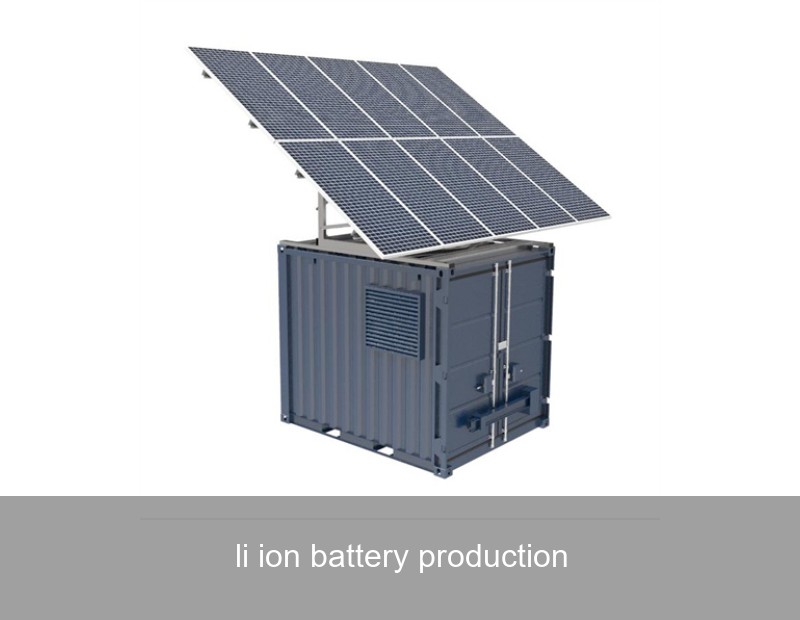
Have you ever stopped to think about what powers the device you're reading this on, or the electric vehicle silently gliding past you? The answer, more often than not, is a lithium-ion (Li-ion) battery. The global surge in demand for clean energy and electric mobility is fundamentally tied to the science and scale of Li ion battery production. This intricate process is not just about manufacturing cells; it's about engineering the very heart of the energy transition. For companies like Highjoule, a global leader in advanced energy storage systems since 2005, understanding this production landscape is crucial. It allows us to source the highest quality battery cells and integrate them into our intelligent, safe, and durable storage solutions for homes, businesses, and microgrids. Let's delve into the fascinating world of how these power packs are made and what it means for a sustainable future.
Table of Contents
- The Journey Begins: From Raw Materials to Electrode Slurry
- Precision Engineering: Coating, Drying, and Assembly
- The Critical Finale: Formation, Aging, and Grading
- Beyond the Cell: The Role of System Integration
- A European Case Study: Scaling Production with Sustainability
- Future Horizons: Innovation in Production
The Journey Begins: From Raw Materials to Electrode Slurry
The story of a Li-ion battery starts long before the factory floor, in mines and chemical processing plants. Key raw materials like lithium, cobalt, nickel, and graphite are sourced and refined. The environmental and ethical sourcing of these materials, particularly cobalt, is a significant focus for the industry. Once refined, the active materials undergo a meticulous mixing process.
Imagine baking a very precise, conductive cake. The cathode (positive electrode) material, often a lithium metal oxide like NMC (Nickel Manganese Cobalt), is mixed with a conductive carbon additive and a binder dissolved in a solvent to form a uniform slurry. The anode (negative electrode) follows a similar process, typically using graphite. The consistency and purity of these slurries are paramount; any imperfection can lead to reduced performance or safety risks later. This underscores why at Highjoule, we partner with cell manufacturers who demonstrate rigorous control from this very first step, ensuring the foundational quality of our commercial & industrial battery energy storage systems (BESS).
Precision Engineering: Coating, Drying, and Assembly
The slurry is then coated onto thin metal foils—aluminum for the cathode and copper for the anode—in an ultra-precise, continuous process. This is where micrometer-level accuracy comes into play. The coating must be perfectly even in thickness and density to ensure uniform current distribution.

Image: Precision coating of electrode slurry is critical for battery performance. Source: Pexels
After coating, the electrodes are dried in long ovens to evaporate the solvent, then calendared—compressed between heavy rollers to achieve the exact porosity and density. They are then slit into narrower widths. The next stage is cell assembly. For prismatic or pouch cells (common in storage systems), the anode, separator (a critical porous plastic film that prevents short circuits), and cathode are stacked or wound together. This "jellyroll" or stack is then placed into its casing. The electrolyte—the liquid that allows lithium ions to shuttle back and forth—is injected in a dry room environment, as even trace moisture can ruin the cell.
The Critical Finale: Formation, Aging, and Grading
Here’s a step many don't know about, but it's the true "birth" of the battery. The newly assembled cells undergo their first charge, known as formation. This initial cycle creates the Solid Electrolyte Interphase (SEI) layer on the anode, a passive film that is essential for long-term stability and safety. It's a delicate, time-consuming, and energy-intensive process.
Following formation, cells enter an aging period. They are stored for days or weeks while their voltage is monitored. Cells with internal micro-shorts or self-discharge issues are weeded out. Finally, cells are graded based on their actual capacity, internal resistance, and performance under load. This binning process is crucial for system integrators. Using closely matched cells in a battery pack ensures balance, longevity, and safety. Highjoule’s proprietary battery management system (BMS) is designed to work with top-tier, consistently graded cells, maximizing the lifecycle and ROI of our residential energy storage solutions.
Beyond the Cell: The Role of System Integration
Li ion battery production doesn't end with a working cell. For real-world applications, cells are integrated into modules, which are then combined into packs. This is where the expertise of a system provider like Highjoule becomes indispensable. We add:
- Advanced Thermal Management: Liquid or air-based systems to keep cells in their optimal temperature window, crucial for performance and preventing thermal runaway.
- Intelligent Battery Management Systems (BMS): The "brain" of the storage system, constantly monitoring voltage, temperature, and state of charge for each cell or module, ensuring safe operation.
- Power Conversion Systems (PCS): Inverters and converters that manage the flow of electricity between the battery (DC) and your home or business grid (AC).
This integration is what transforms raw battery cells into a reliable, grid-ready asset. A poorly integrated system can undermine even the best cells, while superior integration—like that in Highjoule's microgrid solutions—can extend system life and enhance safety.
| Production Stage | Key Challenge | Highjoule's Focus in System Design |
|---|---|---|
| Electrode Coating & Calendaring | Uniformity and purity of active layers | Sourcing cells from manufacturers with proven, precise coating technology. |
| Formation & Aging | Time, cost, and identifying infant mortality failures | Using only fully formed and aged, A-grade cells for pack assembly. |
| Cell-to-Pack Integration | Thermal management, electrical balancing, safety | Patented cooling architecture and multi-layer BMS for cell-level monitoring and protection. |
A European Case Study: Scaling Production with Sustainability
Let's look at a real-world example driving change in our target market. Northvolt in Sweden is a pioneer in European Li ion battery production, with a mission to produce the world's greenest battery. Their gigafactory, Northvolt Ett, is designed for circularity and scale.
Phenomenon: Europe's push for electric vehicle and renewable energy storage independence created a massive demand for locally produced, sustainable batteries.
Data: Northvolt aims for 50% recycled content in new cells by 2030. Their production processes are powered by 100% fossil-free energy from the Nordic grid, reducing the carbon footprint of battery production by up to 80% compared to cells made using coal power [Source: Northvolt Sustainability Report]. The factory has an initial capacity of 60 GWh, enough for batteries for approximately one million electric vehicles annually.
Case: This model isn't just about scale; it's about redefining the environmental parameters of manufacturing. It addresses the "dirty secret" of battery production—the carbon-intensive energy often used in the process.
Insight: This shift matters deeply to system providers like Highjoule. By prioritizing partnerships with manufacturers who embrace clean energy in production, we can offer our commercial and utility clients a truly sustainable storage solution from cradle to grave, aligning with their ESG (Environmental, Social, and Governance) goals. It allows us to provide a product that is not only high-performing but also has a compelling green narrative.

Image: Modern gigafactories emphasize scale, automation, and clean energy use. Source: Pexels
Future Horizons: Innovation in Production
The evolution of Li ion battery production is relentless. Innovations like dry electrode coating (pioneered by companies like Tesla) aim to eliminate the energy-intensive solvent drying step. Sodium-ion and solid-state battery technologies promise to alter the raw material and production landscape further, potentially using more abundant materials and simpler, safer assembly processes.
For an established player like Highjoule, founded in 2005, staying at the forefront of these trends is part of our DNA. We actively evaluate new cell chemistries and production advancements, not to jump on every hype cycle, but to responsibly integrate proven, next-generation technology into our systems when it offers clear, tangible benefits in safety, longevity, or cost for our customers. Our modular system architecture is designed with this kind of future adaptability in mind.
The Human Element in a High-Tech Process
While automation dominates, the human element—in design, engineering, and quality control—remains irreplaceable. The engineers at Highjoule work in tandem with cell production data, designing systems that accommodate the inherent, though minimal, variances between cells. This synergy between cutting-edge manufacturing and sophisticated system integration is what delivers a product you can trust to power your business or home for decades.
As you consider the role of energy storage in your energy independence strategy, what specific challenge—be it demand charge management, backup power resilience, or integrating a new solar array—could be solved by a system built on the foundation of optimally produced and intelligently integrated batteries?
 Inquiry
 Online Chat