


Your Ultimate Guide to a Reliable Kit Energia Solar Off Grid Para Freezer
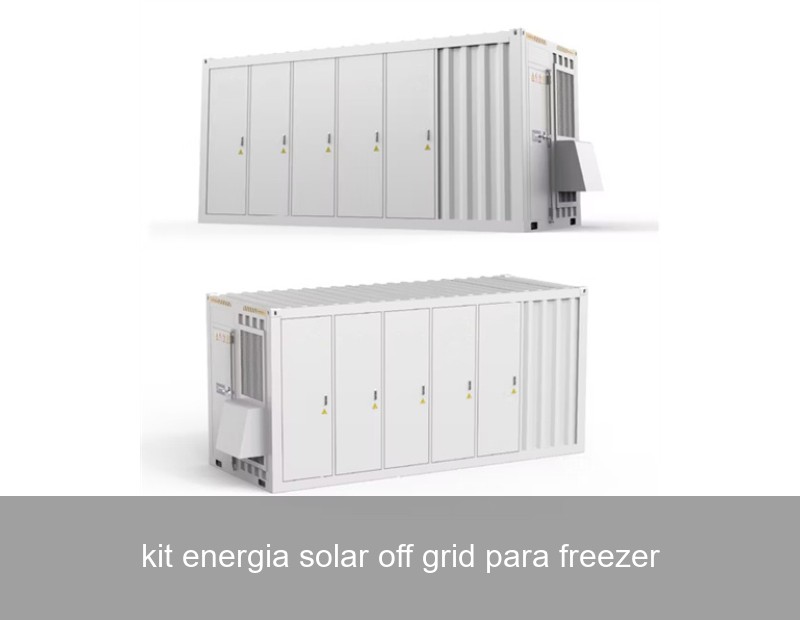
Imagine your freezer, humming away, preserving food, vaccines, or valuable samples—completely independent of the main power grid. Whether you're running a remote cabin, a sustainable farm, a medical clinic in an underserved area, or a research outpost, achieving this level of reliable, off-grid refrigeration is a game-changer. The key lies in a properly designed kit energia solar off grid para freezer. But this isn't just about slapping a solar panel on your roof. It's about creating a resilient, intelligent energy ecosystem. As a global leader in advanced energy storage, Highjoule has been engineering such solutions since 2005, turning the complex challenge of powering critical appliances off-grid into a simple, reliable reality.
What is an Off-Grid Solar Kit for a Freezer?
An off-grid solar kit for a freezer is a self-contained power system designed to generate, store, and manage electricity specifically to run a freezer (or refrigerator) 24/7 without any connection to the public utility grid. Unlike a simple solar generator, a true kit is a system engineered for continuous, cyclic operation. It must handle the freezer's high starting surge (inrush current) and provide steady power through nights and cloudy days. Think of it as a miniature, dedicated power plant on your property, silently ensuring your perishables stay frozen.
The Challenge: Power-Hungry Appliances Off-Grid
Freezers are deceptively demanding appliances. The main challenge isn't just their average consumption; it's the compressor startup surge. When the thermostat calls for cooling, the compressor motor can draw 3 to 6 times its running wattage for a few seconds. A freezer that runs on 150 watts might momentarily need 600-900 watts to start. An undersized inverter will trip, leaving your system useless. Furthermore, freezers run intermittently. You need a battery bank with enough depth of discharge (DoD) to handle multiple cycles per day without degrading prematurely. This is where precise component matching and intelligent energy management become critical.
Key Components of a Reliable Solar Freezer Kit
Every robust solar freezer kit is built on four pillars:
- Solar Panels: The fuel source. You need enough total wattage to collect sufficient energy during peak sun hours to run the freezer and recharge the batteries.
- Charge Controller: The brain of the charging process. A Maximum Power Point Tracking (MPPT) controller is highly recommended for off-grid setups as it can be up to 30% more efficient at harvesting energy from your panels, especially in variable weather.
- Energy Storage (Battery Bank): The heart of the system. This is where Highjoule's expertise shines. Modern Lithium Iron Phosphate (LiFePO4) batteries, like those in our Highjoule H-series residential storage systems, are ideal. They offer a much deeper usable discharge (over 90% DoD), longer lifespan (6000+ cycles), and higher efficiency than traditional lead-acid, meaning you need fewer batteries and solar panels to achieve the same reliability.
- Inverter: The translator. It converts the DC power from the batteries into the AC power your freezer needs. For a freezer kit, a pure sine wave inverter is non-negotiable to protect the compressor motor. Its continuous wattage rating must exceed the freezer's running watts, and its surge rating must handle the startup surge.

Image Source: Unsplash - Representative image of an off-grid solar setup.
Sizing Your System: It's More Than Just Panels
Let's walk through a simplified example for a typical 15 cubic foot chest freezer (more efficient than upright) in a temperate European climate like Southern France.
| Parameter | Example Value | Notes |
|---|---|---|
| Freezer Running Watts | 150 Watts | Check appliance label or manual |
| Estimated Daily Run Time | 8 hours | Varies with ambient temperature and usage |
| Daily Energy Consumption | 1200 Watt-hours (1.2 kWh) | 150W x 8h = 1200Wh |
| System Losses & Inefficiency Factor | 1.3 | Accounting for inverter, wiring, and battery losses |
| Adjusted Daily Energy Need | ~1560 Wh (1.56 kWh) | 1200Wh x 1.3 = 1560Wh |
| Peak Sun Hours (Southern France) | 4.5 hours | Seasonal average (Source: EU PVGIS) |
| Minimum Solar Array Size | ~350 Watts | 1560Wh / 4.5h = 347W |
| Battery Storage for 2 Autonomy Days | 3120 Wh | 1560Wh x 2 days |
| Highjoule LiFePO4 Battery Capacity | 3.5 kWh unit (e.g., H-Core 3.5) | Provides ample buffer, using ~90% of its capacity safely. |
| Inverter Requirement | 600W Continuous, 1800W+ Surge | Must handle 150W run and ~900W startup surge. |
This table illustrates why professional design matters. An off-the-shelf "solar generator" with a 300Wh battery would fail miserably. A system built around Highjoule's modular H-Core batteries and matched inverter/controller, however, provides a robust, scalable, and long-lasting solution.
Real-World Case Study: Off-Grid Research in Alaska
The University of Alaska Fairbanks' Toolik Field Research Station faces extreme conditions: temperatures plunging to -40°C, months of darkness, and critical need to preserve scientific samples. Their older diesel-powered systems were unreliable and environmentally taxing. They implemented a hybrid solar-battery-diesel system for their sample storage facilities. Integrating a large solar array with a high-capacity, cold-weather optimized battery energy storage system (BESS) allowed them to:
- Reduce generator runtime by over 60% during the summer months.
- Maintain consistent freezer temperatures critical for years-long permafrost studies.
- Cut diesel fuel consumption by thousands of liters annually, lowering costs and emissions.
While this is a larger-scale project, the principles are identical to a residential kit energia solar off grid. The BESS acts as the essential buffer, smoothing out power between generation (solar/diesel) and the sensitive load (freezers). Highjoule's industrial and microgrid solutions are engineered for precisely this type of mission-critical, harsh-environment application, bringing proven large-scale resilience down to the residential and commercial level.

Image Source: Unsplash - Solar power generation in cold, remote settings.
Why Choose a Highjoule Integrated Solution?
Building a kit from disparate components can lead to compatibility issues and void warranties. Highjoule provides pre-engineered, intelligent systems. Our Highjoule Home Power Hub integrates a high-efficiency hybrid inverter/charger, MPPT solar controller, and our proprietary H-Core LiFePO4 batteries into a single, manageable system. For your solar freezer kit, this means:
- Seamless Compatibility: Every component is designed to communicate perfectly, optimizing performance and safety.
- Smart Monitoring & Control: Via a user-friendly app, you can track energy production, battery levels, and freezer power consumption in real-time from your phone, receiving alerts if anything needs attention.
- Scalability: Start with a system for your freezer. Later, easily add more battery modules or solar panels to power lights, a water pump, or an entire home.
- Professional Support: From initial sizing consultation to global technical support, you're partnering with an expert, not just buying hardware.
Installation & Maintenance: Tips for Longevity
Proper installation maximizes ROI. Place solar panels where they get unobstructed sun, especially in winter. Keep the battery bank in a temperate, dry location—Highjoule's LiFePO4 batteries have a wider operating temperature range but still perform best around 15-25°C. Use correct wire gauges to minimize losses. Most importantly, ensure your freezer is in good condition and energy-efficient. A poorly sealed door can double your energy needs, forcing you to oversize your solar kit. Maintenance is minimal with modern systems: periodically clean solar panels and check connections. The Highjoule system's built-in diagnostics handle the rest.
The Future of Off-Grid Refrigeration
Technology is moving towards direct DC-powered appliances and even more integrated systems. Imagine a freezer with a built-in, optimized DC compressor that plugs directly into your battery bank, eliminating inverter losses altogether. Highjoule's R&D in system-level integration is actively exploring these efficiencies. The core goal remains: providing absolute power reliability for critical applications, whether it's food security, medical storage, or scientific research, anywhere on the planet.
What critical application would you secure with the independence of a perfectly designed off-grid power system? Is it the resilience of your homestead, the reliability of your remote business, or the preservation of something truly irreplaceable?
 Inquiry
 Online Chat