


Inverter Plus Lithium Battery: The Smart Heart of Modern Energy Independence
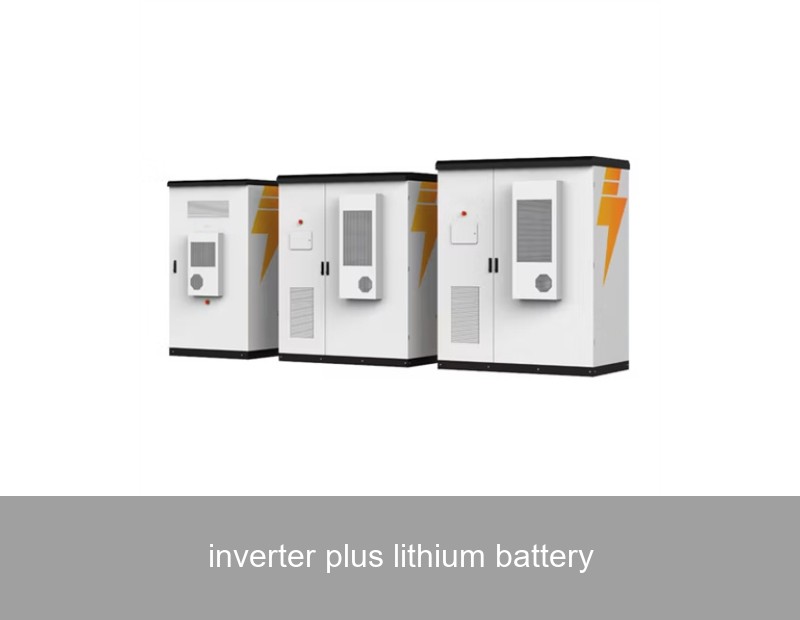
Have you ever wondered what truly powers a home or business that runs smoothly on solar energy, even after the sun sets? The secret isn't just the solar panels on the roof. The real magic happens inside a powerful duo: the inverter plus lithium battery. This combination is more than just equipment; it's the intelligent core of a self-sufficient energy system, turning intermittent sunlight into reliable, 24/7 clean power. For homeowners and businesses across Europe and the US, understanding this pairing is the first step toward energy security, significant savings, and a lighter carbon footprint. As a leader in advanced energy storage, Highjoule has been at the forefront of integrating these technologies since 2005, creating seamless, smart, and sustainable power solutions for commercial, industrial, residential, and microgrid applications.
Table of Contents
- The Phenomenon: From Sunlight to Socket
- The Data: Why Lithium & Smart Inverters Win
- The Case Study: A German Bakery's Recipe for Resilience
- The Insight: It's About Intelligence, Not Just Hardware
- Highjoule's Role: Engineering Integrated Solutions
- Your Energy Future: A Question of Control
The Phenomenon: From Sunlight to Socket - Why the Pairing is Essential
Solar panels generate direct current (DC) electricity. But everything in our homes and offices runs on alternating current (AC). Here's where the inverter comes in: it's the essential translator, converting DC from your panels into usable AC. But what happens when your panels produce more than you use at noon, or nothing at all at night? That's where the lithium battery enters the stage. Without a battery, excess solar energy often gets sent back to the grid for a small credit, and you draw power from the grid at night. The inverter plus lithium battery system changes this entire dynamic. The inverter doesn't just convert power; in a modern system, it manages it. It decides whether to send solar energy to your appliances, to charge the battery, or to export to the grid. The lithium battery stores the surplus, creating a personal energy reservoir you can tap into on demand.

Think of it like a sophisticated water system: solar panels are the rain, the inverter is the pump and filtration plant, and the lithium battery is a high-tech storage tank. You wouldn't let rainwater just flow away when you have a tank to fill, right? The same logic applies to your self-generated electricity.
The Data: Why Lithium & Smart Inverters Win Over Legacy Tech
The shift to lithium-ion (Li-ion) batteries paired with hybrid or battery-ready inverters isn't just a trend; it's a decisive move driven by hard data. Let's compare the old lead-acid standard with modern Li-ion solutions.
| Feature | Lead-Acid Battery Systems | Lithium-Ion + Smart Inverter Systems |
|---|---|---|
| Depth of Discharge (DoD) | ~50% (Only half the capacity is safely usable) | 90-100% (Nearly all capacity is usable) |
| Cycle Life | 500-1,000 cycles | 6,000+ cycles (for high-quality LiFePO4) |
| Round-Trip Efficiency | 70-80% | 95-98% |
| Lifespan | 3-5 years | 15+ years |
| Required Maintenance | Regular (watering, equalization) | Virtually None |
The numbers speak volumes. A lithium battery system's high efficiency means you lose very little energy in the storage process. Its long lifespan and deep discharge capability translate directly into a lower cost per kilowatt-hour stored over the system's lifetime. According to a report by the National Renewable Energy Laboratory (NREL), the cost of lithium-ion battery packs for stationary storage fell by nearly 70% between 2015 and 2020, making this high-performance technology increasingly accessible. The inverter's role is critical in unlocking this value, as its software algorithms optimize every charge and discharge cycle to maximize battery life and performance.
The Case Study: A German Bakery's Recipe for Resilience
Let's look at a real-world example from Bavaria, Germany. Bäckerei Schmidt (a mid-sized family bakery) faced two problems: high energy costs from running ovens and refrigeration 24/7, and the risk of even brief grid outages spoiling ingredients and halting production. Their old solar setup without storage was underutilized.
In 2022, they installed a tailored inverter plus lithium battery system. The solution featured a powerful 3-phase hybrid inverter managing a 50 kWh Lithium Iron Phosphate (LiFePO4) battery bank, integrated with their existing rooftop solar.
- Data Point 1 - Self-Consumption: Their solar self-consumption rate jumped from 35% to over 85%. They now bake their first batches each morning using energy stored from the previous afternoon.
- Data Point 2 - Cost Savings: They reduced their grid electricity purchases by 73%, shielding themselves from volatile energy prices.
- Data Point 3 - Resilience: During a planned 4-hour grid maintenance shutdown, the bakery operated normally on battery power, saving thousands of euros in potential lost production and spoiled goods.
"For us, it's not just about being green; it's about business continuity," said the owner. "The system pays for itself through savings, and the peace of mind is invaluable." This case perfectly illustrates the triple win of modern storage: financial, operational, and environmental.
The Insight: It's About System Intelligence, Not Just Hardware
Here's the crucial insight many miss: the true value of a modern inverter plus lithium battery setup lies in the integration and intelligence, not just the individual components. A high-quality lithium battery is a marvel of chemistry, but it needs a "brain" to operate safely and efficiently at its peak for decades. That brain is the inverter's advanced battery management system (BMS) communication and energy management software.
A smart, integrated system can:
- Perform Time-Based Control: Automatically charge from the grid during ultra-low off-peak rates and discharge during expensive peak hours (peak shaving), a major benefit for businesses.
- Enable Storm Watch Mode: Use weather forecasting APIs to pre-charge the battery to 100% ahead of severe weather, ensuring backup readiness.
- Provide Grid Services: In some markets, advanced systems can participate in grid-balancing programs, creating a potential revenue stream for the owner.
- Offer Remote Monitoring & Control: Let you manage your home's energy flow from your smartphone, giving you unprecedented control over your power.
Choosing a system that is a cohesive unit, where the inverter and battery are designed to communicate seamlessly, is paramount for safety, longevity, and unlocking these advanced features.

Highjoule's Role: Engineering Integrated Solutions for Real-World Needs
This is where Highjoule's nearly two decades of expertise becomes critical. We don't just sell batteries or inverters; we engineer complete, intelligent power solutions. Understanding that every home, business, and microgrid has a unique energy profile, we focus on creating perfectly harmonized systems where the inverter plus lithium battery core operates as one intelligent organism.
Our flagship product line, the Highjoule H-Series Integrated Storage System, embodies this philosophy. It features a high-efficiency, multi-mode hybrid inverter that comes pre-configured and tested with our modular, UL-certified LiFePO4 battery packs. This seamless integration eliminates compatibility guesswork and ensures optimal performance and safety from day one. For larger commercial and industrial (C&I) applications, our Highjoule C&I Power Platform offers scalable, containerized solutions that manage complex loads, demand charges, and can even form the basis of independent microgrids.
Our services extend beyond installation. We provide detailed energy analytics, remote system health monitoring, and software updates that continually improve system functionality over time. Whether it's a family home in California seeking backup power and bill savings, or a manufacturing plant in Italy aiming for carbon neutrality and production resilience, Highjoule designs the system with the right intelligence built in.
Your Energy Future: A Question of Control
The journey to energy independence is no longer a futuristic concept. The technology—proven, efficient, and increasingly affordable—is here today in the form of a sophisticated inverter plus lithium battery system. It transforms solar energy from a partial solution into a comprehensive one. But the decision ultimately comes down to a question of control. Are you ready to move from being a passive consumer of the grid to an active manager of your own clean, resilient, and cost-effective power supply? What would you protect or power first if the grid went down tomorrow?
We invite you to explore what a truly integrated energy solution could look like for your specific needs. The first step is understanding your energy patterns and goals.
 Inquiry
 Online Chat