


Inversor On Grid y Off Grid: Your Guide to Solar Power Independence and Savings
Have you ever looked at your rising electricity bill and wondered if your solar panels could do more? Or perhaps you're planning a new solar installation and feel overwhelmed by the technical jargon. You're not alone. The heart of this decision often boils down to one crucial component: the inversor on grid y off grid (on-grid and off-grid inverter). This isn't just a box of electronics; it's the intelligent brain of your solar energy system, dictating how you generate, use, and store power. Choosing the right one can mean the difference between simply reducing bills and achieving true energy independence. Let's demystify these technologies and explore how they can power your future.
Table of Contents
What Are On-Grid and Off-Grid Inverters?
First, let's understand the basics. Solar panels produce Direct Current (DC) electricity. Your home and the utility grid operate on Alternating Current (AC). An inverter's primary job is to convert DC to usable AC. But how it manages this power defines its type.
On-Grid (Grid-Tied) Inverters: The Team Player
An on-grid inverter is the most common type. It synchronizes perfectly with the public electricity grid. Think of it as a collaborative team member. When your solar panels produce more power than you need, the inverter sends the excess to the grid (often earning you credits through net metering). When your panels don't produce enough (like at night), it seamlessly draws power from the grid. Its key limitation? For safety reasons, it must shut down during a grid blackout. So, even with the sun shining, you'll be left in the dark if the grid fails.

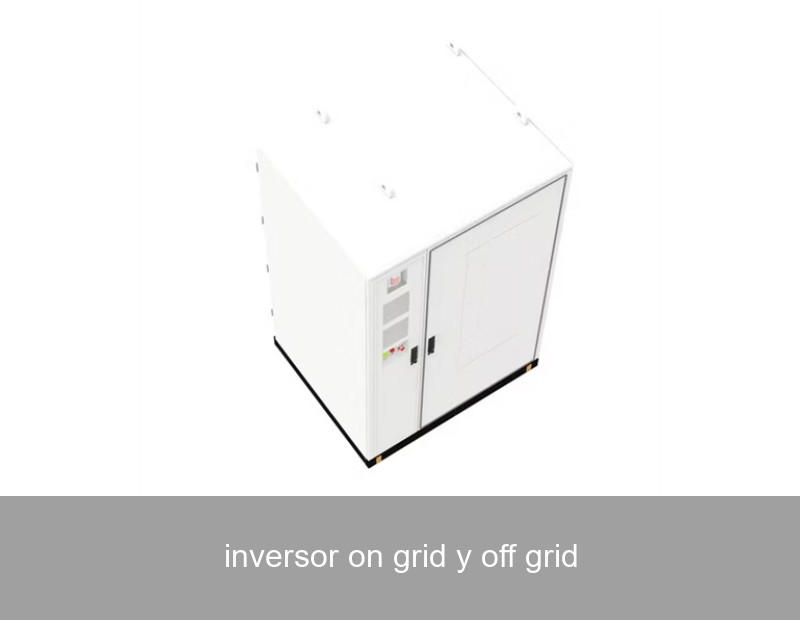
Image: A modern grid-tied inverter system. (Photo by Unsplash)
Off-Grid Inverters: The Self-Reliant Pioneer
An off-grid inverter is designed for complete independence. It operates without any connection to the public utility grid. These systems are essential for remote cabins, boats, or any location where grid access is unavailable or prohibitively expensive. They must be paired with a battery bank to store solar energy for use when the sun isn't shining. Off-grid inverters are robust and include a battery charger, but they require careful sizing of both solar array and battery storage to meet energy demands year-round.
Key Differences: On-Grid vs. Off-Grid Inverters
| Feature | On-Grid Inverter | Off-Grid Inverter |
|---|---|---|
| Grid Connection | Mandatory | None |
| Battery Requirement | Not required (unless added for backup) | Mandatory |
| Power During Grid Outage | No (shuts down) | Yes |
| System Complexity & Cost | Lower | Higher |
| Best For | Reducing electricity bills in grid-connected areas. | Total energy independence in remote locations. |
The Best of Both Worlds: Hybrid Inverters
What if you want bill savings and blackout protection? This is where the market is rapidly heading, and for good reason. A hybrid inverter (or multi-mode inverter) combines the functionalities of both on-grid and off-grid systems into a single, intelligent unit. It can:
- Feed excess solar power to the grid.
- Charge a battery storage system with solar or cheap off-peak grid electricity.
- Provide seamless backup power from the batteries during a grid failure.
- Optimize self-consumption, maximizing the use of your own solar generation.
According to data from the International Energy Agency (IEA), global battery storage capacity is set to multiply dramatically, driven largely by residential and commercial hybrid systems seeking resilience and cost control.
Case Study: A German Bakery's Recipe for Resilience
Let's look at a real-world application in our European market. A family-owned bakery in Bavaria, Germany, was facing two major challenges: volatile energy costs eating into profits and the risk of spoilage during even short grid outages. Their existing on-grid solar system helped, but didn't solve the outage problem.
The Solution: They retrofitted their system with a Highjoule HPS Series Hybrid Power System. This included a high-efficiency hybrid inverter and a modular lithium-ion battery bank. The system was programmed for intelligent energy management.
The Data-Driven Outcome (12 months post-installation):
- Grid Independence: Achieved 85% self-consumption of solar energy, up from 35%.
- Cost Savings: Reduced grid electricity purchases by 78%, paying back the investment in under 5 years.
- Resilience: The bakery can now operate critical cooling and ovens for over 8 hours during a blackout.
- Carbon Footprint: Reduced their operational CO2 emissions by an estimated 12 tonnes annually.
This case illustrates the tangible business value of moving beyond a simple inversor on grid to an intelligent hybrid solution.

Image: A commercial hybrid storage installation similar to a bakery case study. (Photo by Unsplash)
How to Choose the Right Inverter for Your Needs
So, how do you decide? Ask yourself these key questions:
- What is your primary goal? (Maximize ROI, achieve backup power, or complete off-grid independence?)
- What is your grid reliability like? (Frequent outages make a hybrid or off-grid system more attractive.)
- What are your local regulations and net metering policies? (Some utilities have specific requirements for grid-tied equipment.)
- What is your future energy outlook? (Planning an EV charger or expanding your home? Choose a scalable system.)
For most homeowners and businesses in Europe and the US with grid access, a hybrid inverter system is increasingly becoming the most future-proof and valuable choice. It locks in energy costs, provides peace of mind, and supports the broader grid stability. You can learn more about grid interconnection standards from the U.S. Department of Energy.
Highjoule's Smart Solutions for Every Scenario
At Highjoule, with nearly two decades of experience since 2005, we understand that the choice between inversor on grid y off grid is not one-size-fits-all. That's why our product portfolio is designed to meet the precise needs of residential, commercial, and microgrid applications.
For the homeowner seeking security and savings, our Residential HEMS (Home Energy Management System) features an integrated hybrid inverter that learns your consumption patterns, intelligently manages battery storage, and can keep your lights on during storms. For businesses like the German bakery, our Commercial HPS Series offers scalable, high-power hybrid solutions with advanced monitoring to track ROI in real-time.
Our true expertise lies in designing systems that are not just hardware, but intelligent energy ecosystems. We provide end-to-end support, from initial consultation and system design using proprietary simulation software to installation and long-term performance monitoring. Whether you need a simple grid-tied system, a robust off-grid setup for a remote farm, or a sophisticated microgrid for a community, Highjoule delivers smart, efficient, and sustainable power solutions built to last.

Image: A modern home integrated with a solar and storage system. (Photo by Unsplash)
Your energy journey is unique. Are you ready to explore which inverter strategy—on-grid, off-grid, or hybrid—can best transform your relationship with power, not just for today, but for the energy landscape of tomorrow? What would energy independence look like for your home or business?
 Inquiry
 Online Chat