


Your Guide to Top Hybrid Inverter Suppliers: Powering the Modern Energy Ecosystem
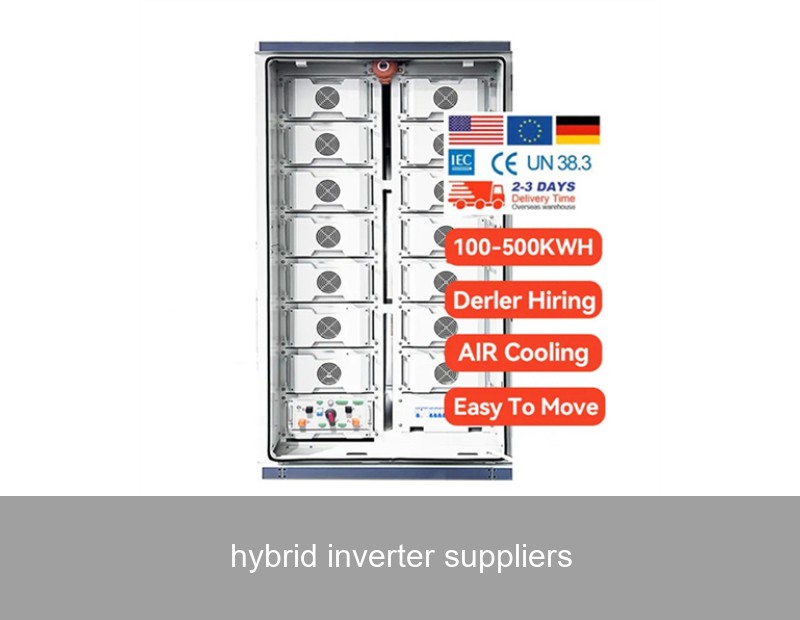
In the quest for energy independence and sustainability, a critical piece of technology often sits quietly in a garage or utility room: the hybrid inverter. Unlike traditional inverters, a hybrid inverter is the intelligent brain of a modern energy system, capable of managing power from solar panels, battery storage, and the utility grid simultaneously. Choosing the right hybrid inverter suppliers is therefore not just a purchase; it's a strategic decision that defines the efficiency, resilience, and return on investment of your entire power setup. This guide will help you navigate the key considerations and highlight what sets leading providers like Highjoule apart in this dynamic market.
Table of Contents
- The Hybrid Inverter: More Than Just Conversion
- Key Criteria for Evaluating Hybrid Inverter Suppliers
- A Data-Driven Case: Commercial Resilience in Southern Europe
- Beyond the Hardware: The Highjoule Integrated Approach
- Future-Proofing Your Energy Investment
The Hybrid Inverter: More Than Just Conversion
Let's start with a simple phenomenon. You have solar panels, and they produce abundant power on a sunny afternoon. A standard inverter sends that to your home or the grid. But what happens when the sun sets, or during a grid outage? The lights go out, and your solar investment sits idle until sunrise. This is the gap the hybrid inverter fills. It's a multi-talented device that performs three core functions: converting DC solar power to usable AC, charging a battery bank with excess solar or grid power, and intelligently inverting battery-stored DC power back to AC when needed.

The data underscores their growing importance. According to the International Energy Agency (IEA), global renewable capacity is set to expand by 2.5 times by 2030, with solar PV leading the charge. This boom is intrinsically linked to energy storage, and by extension, to hybrid inverters, which enable this synergy. They are the cornerstone for creating a flexible, dispatchable renewable energy asset, whether for a home, business, or community microgrid.
Key Criteria for Evaluating Hybrid Inverter Suppliers
Not all hybrid inverter suppliers are created equal. When you're evaluating potential partners, look beyond the basic specs sheet. Here’s a logical framework to guide your assessment:
1. Technical Performance and Scalability
- Efficiency: Look for peak and weighted efficiency (e.g., Euro, CEC) above 97%. Every percentage point lost is money and energy wasted.
- Power Stacking & Scalability: Can the system handle multiple units in parallel for increased power? Can you easily add more batteries later? Future-proofing is key.
- Grid Services & Compliance: For commercial projects, ensure the inverter can provide grid-support functions like frequency response and has all necessary certifications (UL, IEC, VDE).
2. Software Intelligence and Ecosystem
The hardware is just the beginning. The real value lies in the software that controls it. A superior hybrid inverter comes with an energy management system (EMS) that learns your consumption patterns, optimizes for time-of-use tariffs, and can even participate in virtual power plants (VPPs). The user interface, whether a local display or a cloud-based app, should provide clear insights and control.
3. Reliability, Warranty, and Local Support
This is where established suppliers truly differentiate themselves. A 10-year warranty is becoming standard, but the depth of support matters. Do they have local technicians? What is their mean time to repair (MTTR)? For mission-critical industrial applications, this support network is non-negotiable.
| Evaluation Factor | Basic Supplier | Advanced Supplier (e.g., Highjoule) |
|---|---|---|
| System Efficiency | 95-96% | >97.5% (weighted) |
| Software Platform | Basic monitoring app | AI-driven EMS with grid-service capabilities |
| Warranty & Support | 10-year product warranty | 10+ year warranty with 24/7 monitoring and regional service hubs |
A Data-Driven Case: Commercial Resilience in Southern Europe
Let's look at a real-world application. A mid-sized winery in the Andalusia region of Spain faced two major challenges: volatile and rising electricity costs that impacted their energy-intensive cooling processes, and an unreliable local grid that risked spoiling inventory during outages.
They partnered with a leading hybrid inverter supplier to deploy a 250 kW solar array coupled with a 500 kWh lithium-ion battery storage system, all managed by a suite of Highjoule H-Series Hybrid Inverters. The results, monitored over 18 months, were compelling:
- Energy Cost Reduction: By maximizing self-consumption of solar and strategically discharging batteries during peak tariff periods, the winery reduced its electricity bill by 68%.
- Resilience Achieved: The system seamlessly handled 14 grid outages, the longest lasting 9 hours, maintaining critical cooling operations without interruption.
- ROI Timeline: The projected payback period, factoring in local incentives, was calculated at just under 5 years.

This case, documented in a IRENA case study library on renewable integration, illustrates the tangible value proposition of a well-engineered hybrid system from a capable supplier. It's not just about backup; it's about economic optimization and operational certainty.
Beyond the Hardware: The Highjoule Integrated Approach
At Highjoule, our perspective as a hybrid inverter supplier is rooted in our 19 years of experience as a complete system provider. We understand that the inverter must be perfectly harmonized with the battery chemistry, the solar profile, and the site's load characteristics. That's why we offer integrated solutions.
Our flagship H-Series Hybrid Inverter is engineered for commercial and industrial scalability. With peak efficiency of 98.6% and the ability to power-stack up to 1 MW, it's built for demanding applications. But its true intelligence comes from the Highjoule EnergyOS platform. This cloud-based EMS uses predictive algorithms to optimize energy flows based on weather forecasts, electricity prices, and consumption history. For a factory manager in Germany or a hospital administrator in California, this translates to automated savings and robust resilience.
Our service model complements this. With regional technical hubs in both the EU and North America, we provide proactive monitoring and rapid on-ground support, ensuring your energy infrastructure is an asset, not a concern.
Future-Proofing Your Energy Investment
The energy landscape is evolving rapidly. We're moving towards two-way grids, dynamic tariffs, and energy communities. The hybrid inverter you choose today should be a gateway to these future opportunities. Can it participate in demand response programs? Is it firmware-upgradable to support new grid codes? Does the supplier have a roadmap for vehicle-to-grid (V2G) integration?
As you engage with potential hybrid inverter suppliers, ask them not just about today's specifications, but about their vision for the next decade. How are they preparing their technology and their clients for a decentralized, digital, and decarbonized energy future?
What specific energy challenge—be it peak shaving, backup power assurance, or simply maximizing solar self-consumption—is driving your search for a hybrid solution today, and how can we help you model its potential impact?
 Inquiry
 Online Chat