


How Much Does a Solar Battery Cost? A Realistic Breakdown for 2024
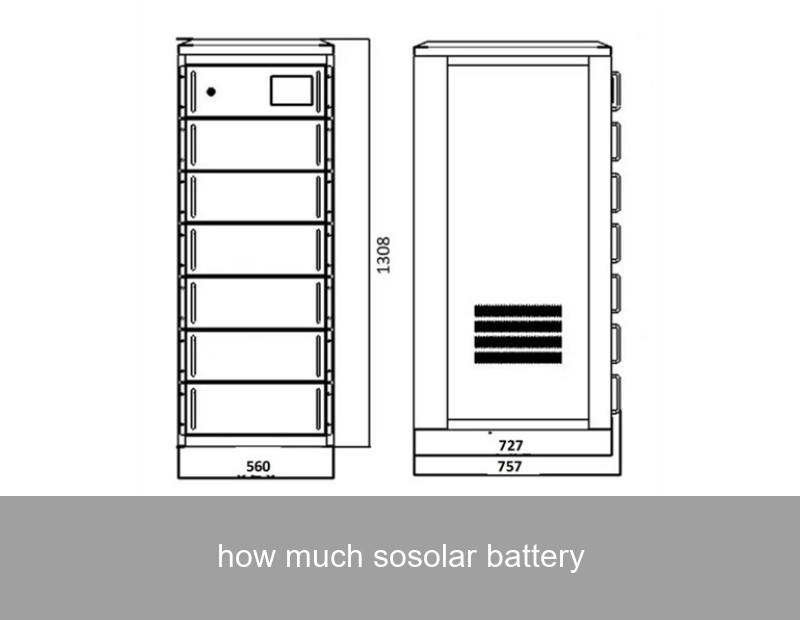
You've decided to take the next step in energy independence. Your solar panels are generating clean power, but you're tired of sending excess energy back to the grid for pennies and then buying it back at night for dollars. The logical solution? A solar battery. But the immediate question that pops up is: how much does a solar battery cost? The answer isn't a single number—it's an investment equation involving technology, capacity, installation, and long-term value. Let's demystify the true cost of storing your sunshine.
Table of Contents
- The Price Puzzle: More Than Just a Sticker Price
- Key Cost Factors: What You're Really Paying For
- Solar Battery Cost Breakdown by Capacity
- The Total Installation Picture: Hardware, Labor, and More
- A Real-World Case Study: The Smith Family in California
- Looking Beyond the Sticker: Incentives and ROI
- Choosing the Right System for Your Home
- The Highjoule Solution: Smart, Integrated Storage
The Price Puzzle: More Than Just a Sticker Price
Asking "how much does a solar battery cost?" is like asking "how much does a car cost?" A compact sedan and a luxury SUV serve the same basic function but at vastly different price points and capabilities. In 2024, the upfront cost for a quality home solar battery system typically ranges from $8,000 to $15,000+ before incentives, depending heavily on its usable capacity (measured in kilowatt-hours, or kWh) and power output (measured in kilowatts, or kW). This wide range exists because you're not just buying a box; you're investing in a complete energy security and management system.
Key Cost Factors: What You're Really Paying For
To understand the quote you'll receive, let's break down the components:
- Battery Chemistry & Brand: Lithium-ion phosphate (LFP) batteries, like those used by Highjoule, are now the industry standard for safety and longevity. They may have a slightly higher upfront cost than older NMC chemistries but offer a much longer lifespan and better thermal stability.
- Usable Capacity (kWh): This is the amount of electricity the battery can store. A 10 kWh battery can theoretically power a 1 kW load for 10 hours. Most homes start with systems between 10-15 kWh to cover essential loads overnight.
- Continuous Power Rating (kW): This determines how many appliances you can run simultaneously from the battery. A 5 kW system might run your fridge, lights, and Wi-Fi, but struggle if your air conditioner (which can draw 3-4 kW alone) kicks on.
- Inverter Compatibility: Does the battery need a dedicated inverter (AC-coupled) or is it integrated (DC-coupled)? DC-coupled systems, like Highjoule's Helix series, are often more efficient as they avoid multiple energy conversions.
- Installation Complexity: Electrical panel upgrades, mounting location, and local permitting fees can add significant cost.
Solar Battery Cost Breakdown by Capacity
| System Size (Usable Capacity) | Estimated Equipment Cost Range* | Typical Home Coverage |
|---|---|---|
| 5 - 8 kWh | $4,500 - $7,500 | Critical loads (lights, outlets, fridge) for 6-12 hours. |
| 10 - 13 kWh | $8,000 - $12,000 | Most essential loads for overnight backup; good for daily self-consumption. |
| 15 - 20+ kWh | $13,000 - $20,000+ | Near-full home backup, including high-draw appliances for extended periods. |
*Equipment cost only. Installation, permitting, and supporting hardware are additional.

Image: A modern, wall-mounted home battery system. Source: Unsplash
The Total Installation Picture: Hardware, Labor, and More
The final installed cost is what matters. On average, total installation adds 20-40% on top of equipment costs. A complete 13 kWh system installation might land between $14,000 and $18,000 before incentives. This includes the battery unit, energy management system, labor, permitting, and any necessary electrical work. It's crucial to get a detailed, all-inclusive quote. Companies like Highjoule provide transparent, turnkey proposals that encompass design, certified installation, and commissioning, so there are no surprise costs.
A Real-World Case Study: The Smith Family in California
Let's move from theory to practice. The Smith family in Sacramento, CA, installed a 12.8 kWh Highjoule Helix battery system alongside a new solar array in early 2023. Their goal was to avoid peak electricity rates (which reached $0.55/kWh) and gain backup power during Public Safety Power Shutoffs (PSPS).
- Total Installed Cost (before incentives): $16,200
- Federal Investment Tax Credit (ITC): -$4,860 (30% of total cost)
- California SGIP Rebate (Equity Resilience): -$4,800
- Net Cost After Incentives: $6,540
In its first year, the system saved them an estimated $1,850 in avoided peak grid purchases and provided 42 hours of uninterrupted backup during three separate grid outages. At this rate, their net investment payback period is under 4 years. The data from their Highjoule PowerSync monitoring app showed a 92% increase in self-consumption of their solar energy.
Looking Beyond the Sticker: Incentives and ROI
The Smith's case highlights the game-changer: incentives. In the U.S., the federal Residential Clean Energy Credit covers 30% of the total installed cost through 2032. Many states and utilities add further rebates. In Europe, countries like Germany, Italy, and the UK offer VAT reductions, grants, or favorable feed-in-tariff structures for stored energy. The real question shifts from "how much does it cost?" to "what is the net cost after incentives, and what is the long-term value?" Value includes bill savings, protection from rising rates, and the intangible benefit of resilience during storms or blackouts.
Choosing the Right System for Your Home
So, how do you determine what size and type of battery you need? Ask yourself:
- What are my goals? (Maximize solar self-consumption, backup essential circuits, or achieve full home off-grid capability?)
- What are my home's critical loads? (An energy audit can pinpoint this.)
- What is my local climate and utility rate structure? (Time-of-use rates make batteries more valuable.)
A professional assessment is key. Highjoule's design process begins with a detailed energy analysis of your past consumption and solar production to model the optimal system size for your goals and budget.
The Highjoule Solution: Smart, Integrated Storage
At Highjoule, we believe a solar battery should be an intelligent investment, not just an expense. Our Helix residential battery systems are built with safe, long-life LFP cells and feature a modular design. You can start with a 10 kWh unit and easily expand capacity as your needs grow. The integrated PowerSync Energy Manager is the brain of the system, constantly learning your usage patterns and automatically optimizing when to store solar energy, power your home, or export to the grid to maximize your financial return.
For commercial and industrial clients, our GridMax series provides scalable, containerized solutions that manage demand charges, provide uninterrupted power for critical operations, and enable participation in grid services. Since 2005, our focus has been on delivering not just hardware, but complete, smart, and sustainable power solutions that stand the test of time.

Image: A large-scale solar plus storage installation. Source: Unsplash
Final Thoughts: An Investment in Energy Autonomy
The conversation about how much a solar battery costs is ultimately a conversation about value. With the right system tailored to your needs and leveraged with available incentives, the net cost can be surprisingly manageable, and the return—in savings, security, and sustainability—is substantial. The technology is proven, and the economic case grows stronger every year as grid electricity prices fluctuate.
What specific energy goal—be it slashing your next utility bill, ensuring your home stays safe during a storm, or simply maximizing your green investment—is motivating you to explore solar battery storage today?
 Inquiry
 Online Chat