


How Much Does a Solar Collector Really Cost? A 2024 Breakdown for Homeowners & Businesses
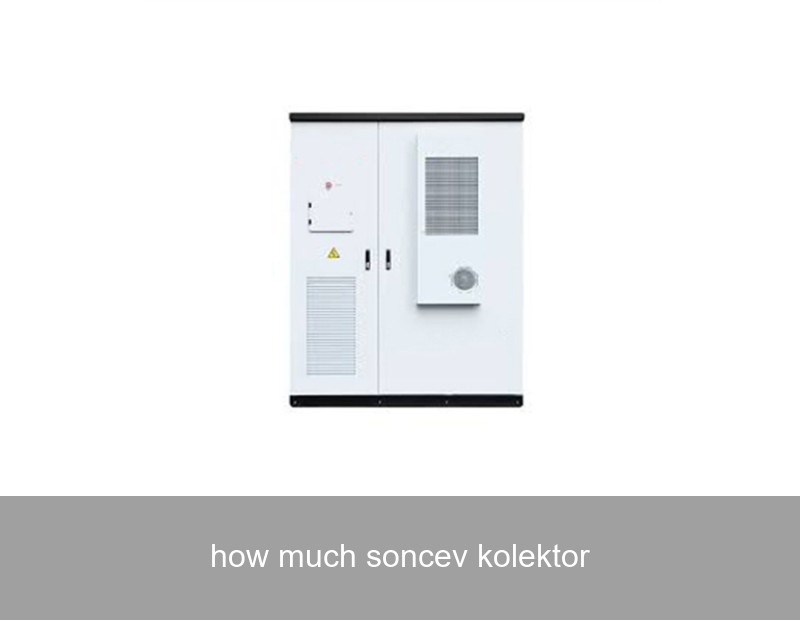
If you're looking to harness the sun's power for heating, the question "how much does a solar collector cost?" is likely top of mind. It's a smart question, but the answer isn't a single number. Think of it like asking "how much does a car cost?"—the final price depends on the type, size, technology, and the complexity of the installation. In the realm of renewable heating, a solar thermal collector system can be a transformative investment, slashing your reliance on fossil fuels for hot water and space heating. But to understand the true cost, we need to move beyond the sticker price of the panels themselves and consider the entire ecosystem, including a critical modern component: intelligent energy storage and management.
Key Cost Components of a Solar Collector System
To get a clear picture, let's break down the typical costs involved in a solar thermal installation. Prices can vary significantly between the US and Europe due to market maturity, labor rates, and available incentives.
- The Collectors Themselves: These are the panels you see on the roof. Flat-plate collectors are generally more affordable, while evacuated tube collectors are more efficient, especially in colder or cloudier climates, but come at a higher price point. Expect a range of $2,500 to $6,000 for the collector units alone for a typical residential system.
- Storage Tank & Hydronics: Solar heat isn't always needed when the sun is shining. A well-insulated storage tank (solar buffer tank) is crucial. This cost can add $1,500 to $3,000.
- Piping, Pump, Controls, & Installation: This is often where the bulk of the cost lies. Professional installation involving plumbing, electrical work, mounting, and system integration is labor-intensive. This "balance of system" and labor can range from $4,000 to $8,000.
Therefore, a complete residential solar thermal system for domestic hot water and space heating support in 2024 can have a total installed cost between $8,000 and $18,000 before incentives. For commercial or industrial applications requiring large-scale process heat, costs scale accordingly but benefit from economies of scale.
Financial Incentives: The Game Changer
This is where the calculation gets interesting. Both the US and EU offer substantial incentives. In the US, the federal Investment Tax Credit (ITC) covers 30% of the total installed cost. Many states have additional rebates. In Europe, countries like Germany, Austria, and France offer generous grants and low-interest loans for solar thermal installations. These incentives can easily reduce your net cost by 30-50%, dramatically improving the return on investment.

Image: A modern evacuated tube solar thermal collector system. Source: Unsplash
Real-World Case Study: A German Dairy Farm
Let's move from theory to practice. Consider a mid-sized dairy farm in Bavaria, Germany. Their primary challenge was the high cost of heating vast quantities of water for cleaning and sanitation using an old oil boiler.
The Solution & Data: In 2022, they installed a 100-square-meter high-performance flat-plate collector array, coupled with a 10,000-liter stratified storage tank. The total installed cost was approximately €55,000. However, with a German federal grant (Bundesförderung für effiziente Gebäude - BEG) covering 30% and a regional agricultural efficiency bonus of 10%, the net investment was reduced to €33,000.
The Result: The system now provides over 65% of their annual process heat demand. They have displaced 18,000 liters of heating oil annually, saving over €15,000 per year at current energy prices and reducing their CO2 emissions by 50 tons. This translates to a simple payback period of just over 2 years—an exceptional return for a capital improvement project.
Solar Thermal vs. Photovoltaic (PV): A Cost & Use Case Comparison
Many homeowners now ask: "Should I install solar thermal collectors or solar PV panels?" It's not always an either/or question; they can be complementary. Here’s a quick comparison:
| Factor | Solar Thermal Collector | Solar PV Panels |
|---|---|---|
| Primary Function | Directly heats water or a heat-transfer fluid. | Generates electricity. |
| Efficiency for Task | Very high (60-70%) for heating water. | Lower (15-22%) for electricity generation, but electricity is versatile. |
| System Cost Trend | Relatively stable; mature technology. | Has dropped dramatically over the past decade. |
| Best For | Homes/businesses with high, consistent hot water demand (large families, hotels, dairies, laundries). | Offsetting general electricity consumption, powering appliances, and especially for charging electric vehicles. |
The most forward-thinking approach? Combining both. Use PV to power your home and an electric heat pump for space heating, and use solar thermal for ultra-efficient domestic hot water production. This is where the conversation evolves from simple collection to intelligent storage and management.
Maximizing Your Investment: The Role of Smart Energy Management
Whether you choose solar thermal, PV, or both, the sun is an intermittent resource. The true value of your renewable investment is unlocked not just by collection, but by storage and smart dispatch. This is the core of modern energy resilience.
Imagine your solar thermal tank is full on a sunny afternoon, but your heating demand won't come until the evening. Or your PV panels are producing excess electricity that you sell back to the grid at a low rate, only to buy it back later at a premium. This is the problem smart storage solves.
At Highjoule, we see solar collectors as a vital component in a broader energy ecosystem. Our expertise lies in integrating these generation sources with advanced battery energy storage systems (BESS) and AI-driven energy management platforms. For a business with both solar thermal and PV, a Highjoule system can:
- Store excess PV electricity in batteries for use at night, further reducing grid dependence.
- Use that stored electricity to power the pumps and controls of the solar thermal system, making it entirely self-powered.
- Intelligently decide when to draw heat from the solar buffer tank, when to activate a backup heat source, and when to store or discharge electricity based on weather forecasts and usage patterns.
This holistic approach, championed by providers like Highjoule, transforms a capital expense into a strategic asset that maximizes self-consumption, protects against energy price volatility, and provides backup power during outages.

Image: Diagram of an integrated home energy system with solar and storage. Source: Unsplash
Making the Right Choice for Your Needs
So, "how much does a solar collector cost?" The initial investment is just the starting point. The more pertinent questions are: What is the total cost of ownership over 20 years? and How does it integrate into my overall energy strategy?
For a family in Arizona with a pool, a simple solar thermal pool heater has a low cost and fast payback. For a brewery in Belgium needing constant 80°C water, a large-scale evacuated tube system is a perfect fit. For a new net-zero home in California, a combination of PV, a heat pump, and a small solar thermal unit for premium hot water efficiency, all managed by a system like Highjoule's, might be the optimal path.
Your Next Step
We encourage you to look at reputable sources for current incentive programs, like the DSIRE database in the US or the European Commission's energy policy pages. But more importantly, we urge you to think systemically. When you request quotes for a solar collector, ask the installer: "How can this system be future-proofed or integrated with battery storage and smart controls to give me complete energy independence and resilience?"
What is the one energy cost on your utility bill that feels most volatile and uncontrollable, and how could rethinking your energy collection, storage, and management address it?
 Inquiry
 Online Chat