


How Much Sky Wind Energy Can We Really Harness? The Untapped Potential
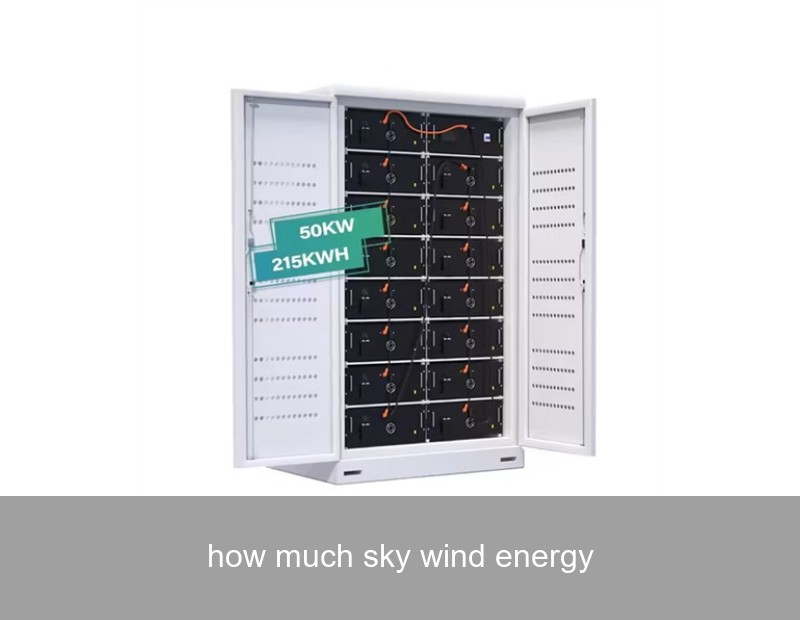
Look up on a windy day. The sky isn't just empty space; it's a vast, flowing river of kinetic energy. For centuries, we've tapped ground-level breezes with traditional wind turbines. But today, a compelling question is pushing the boundaries of renewable energy: how much sky wind energy remains untapped above us? The answer isn't just about taller towers; it's about reimagining our relationship with the atmosphere's immense power. As a global leader in advanced energy storage, Highjoule is deeply invested in this frontier, because capturing more of this sky-high potential requires equally intelligent systems to store and deliver it reliably.
Table of Contents
- The Phenomenon: Energy Flowing Overhead
- The Data: Quantifying the Sky's Energy Reservoir
- Case Study: Taming Offshore Winds in the North Sea
- The Core Challenge: Intermittency and the Storage Imperative
- How Highjoule Enables the High-Altitude Wind Revolution
- The Future of Sky Wind: What's on the Horizon?
The Phenomenon: Energy Flowing Overhead
Wind speeds increase significantly with altitude due to reduced surface friction. While a ground turbine might catch steady 15 mph winds, a few hundred meters up, those winds can consistently exceed 25-30 mph. Since the energy content of wind is proportional to the cube of its speed, doubling the wind speed means eight times the energy. This isn't minor; it's a game-changer. The "sky wind" concept encompasses both pushing traditional turbine heights to new limits and exploring novel technologies like airborne wind energy systems (AWE) — essentially, high-tech kites or drones generating power from winds well over 500 meters high.
The Data: Quantifying the Sky's Energy Reservoir
So, how much sky wind energy are we talking about? Studies suggest the potential is orders of magnitude greater than global electricity demand. A seminal study published in PNAS estimated that surface winds could supply over 400 terawatts (TW), but the total kinetic energy in the atmosphere is around 870 TW. While we can't capture it all, even a tiny fraction is transformative. For context, the European Union's total installed power capacity is just under 1 TW. The U.S. Department of Energy's "Wind Vision" report highlights that wind could be a source for 35% of the nation's electricity by 2050, a target heavily reliant on accessing stronger, more consistent winds at higher altitudes, both onshore and offshore.
| Altitude | Average Wind Speed (Typical) | Relative Energy Potential (vs. Ground) | Technology Access |
|---|---|---|---|
| 80m (Standard Turbine) | 7.5 m/s | 1x (Baseline) | Traditional Turbines |
| 150m (Next-Gen Hub) | 8.5-9.0 m/s | ~1.7x | Tall-Tower Turbines |
| 300m+ (Sky Wind) | 10-12+ m/s | 3x - 4x+ | Advanced Towers, AWE Systems |
Case Study: Taming Offshore Winds in the North Sea
Let's ground this in reality. The North Sea, a powerhouse for European wind, provides a perfect example. The Hollandse Kust Zuid wind farm, one of the world's largest, uses turbines with a tip height of over 250 meters to capture higher-speed winds. In 2023, it achieved a staggering capacity factor of over 60% in certain periods—nearly double the onshore average. This means it generated close to its maximum potential output for more than half the time. This performance is a direct result of accessing more powerful "sky wind." However, this bounty creates a downstream challenge: managing massive, variable output and integrating it seamlessly into the Dutch and neighboring grids. This is where the conversation shifts from pure generation to intelligent management.

Image: Offshore wind farms like Hollandse Kust Zuid are already tapping into higher-altitude sky wind resources. Credit: Vattenfall, via Wikimedia Commons.
The Core Challenge: Intermittency and the Storage Imperative
Here's the paradox: the more effectively we harness sky wind energy, the more we need to solve its inherent variability. The wind doesn't always blow, even aloft. This intermittency is the single largest barrier to a 100% renewable grid. You can have gigawatts of potential, but if it's not available when demand peaks, its value plummets. This is the critical nexus where energy storage becomes non-negotiable. Storage acts as a "time machine" for electrons, capturing surplus energy when the high-altitude winds are howling and releasing it during calm periods or high demand. Without large-scale, intelligent storage, a significant portion of that captured sky energy would be wasted.
How Highjoule Enables the High-Altitude Wind Revolution
This is precisely where Highjoule's expertise transforms potential into reliable power. Since 2005, we've specialized in designing battery energy storage systems (BESS) that are the perfect partner for ambitious wind projects. Our systems don't just store energy; they optimize it.
For a utility-scale wind farm tapping into sky wind energy, a Highjoule GridMax BESS provides essential services:
- Production Smoothing: Mitigating sudden gusts or lulls to provide a stable, grid-friendly output.
- Energy Time-Shifting: Storing low-cost, overnight wind energy for discharge during the expensive afternoon peak.
- Grid Frequency Regulation: Using fast-responding battery systems to maintain grid stability, a critical need as wind penetration grows.
For commercial and industrial (C&I) sites, our Commercial Peak Shaving solutions allow businesses to leverage wind power contracts more effectively, storing wind-generated power to avoid demand charges and ensure operational continuity. Even for residential communities near wind resources, our integrated Home Energy Systems can maximize the use of local wind-sourced electricity, increasing independence and resilience.
The Future of Sky Wind: What's on the Horizon?
The trajectory is clear: we are building taller, moving further offshore, and developing airborne systems to go higher. The U.S. Department of Energy is actively funding Airborne Wind Energy research, recognizing its potential for deep decarbonization. But the successful integration of these technologies will hinge on a parallel evolution in energy storage—making it denser, more efficient, and smarter.
At Highjoule, we see this as an integrated system. The question isn't just "how much sky wind energy" exists, but "how much of it can we actually use?" Our advanced storage platforms are designed to increase that usable percentage dramatically, ensuring that every kilowatt-hour harvested from the skies above powers our homes, industries, and communities below, reliably and sustainably.
As we look upward to harness the winds, what energy management challenge is your business or community facing in integrating these next-generation renewable sources?
 Inquiry
 Online Chat