


How Much of Solar Panels Can Actually Power Your World?
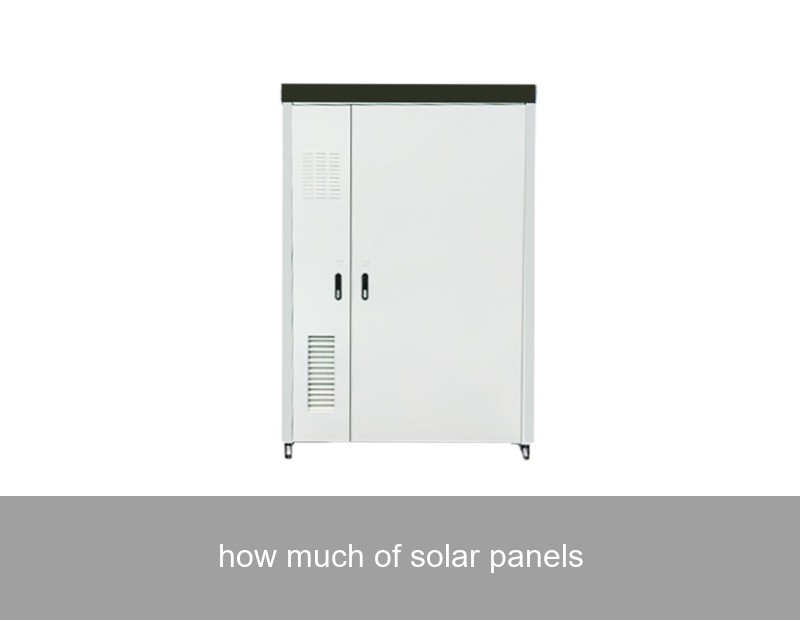
You've seen them gleaming on rooftops and sprawling across fields. You know solar panels are good for the planet and, hopefully, your wallet. But when you're considering making the switch, the most pressing question isn't just about cost—it's about how much. How much of your home's energy can solar panels realistically cover? How much roof space do they need? And perhaps most importantly, how much independence can they truly provide? The answer isn't a simple percentage; it's a journey into system design, energy habits, and smart technology. Let's demystify the factors that determine how much of solar panels you need to power your sustainable future.
Table of Contents
- The Phenomenon: From Sunbeams to System Sizing
- The Data: It's Not Just About Panel Count
- The Case Study: A German Bakery's Recipe for Energy Independence
- The Insight: Beyond Generation – The Storage Imperative
- Highjoule's Role: Tailoring Your "How Much" Equation
- Your Next Step: What's Your Energy Profile?
The Phenomenon: From Sunbeams to System Sizing
Imagine two neighbors install solar panels on the same day. One boasts about covering 110% of their energy needs, while the other struggles to reach 60%. Why the drastic difference? The question of "how much of solar panels" is sufficient is answered by a complex equation. Key variables include your geographical location (sunshine hours), roof orientation and pitch, local shading, your household's or business's energy consumption patterns, and the efficiency of the panels themselves. It's a personalized energy puzzle where generation must meet consumption.

Image: A solar technician assesses a rooftop installation. Source: Unsplash
The Data: It's Not Just About Panel Count
Let's talk numbers. A typical modern solar panel has a power rating between 350 to 450 watts. In sun-rich Southern California, one 400W panel might produce about 2 kWh per day. In cloudy Northern Germany, that same panel might yield only 0.8-1.2 kWh. So, for a home consuming 30 kWh daily in California, you'd theoretically need around 15 panels. In Germany, you might need 30+ panels for the same output.
But here's where it gets interesting: the U.S. National Renewable Energy Laboratory (NREL) found that with optimal system sizing, solar can often meet 70-90% of a home's annual electricity needs in many regions. The last 10-30% is typically drawn from the grid, often at night. This gap is the critical piece of the puzzle. It shows that answering "how much of solar panels" isn't just about the panels—it's about what you do with the energy they produce.
Consider this simple table comparing system outputs:
| Location | Average Sun Hours/Day | Output of a 5kW System (Monthly est.) | Potential Coverage for a 900 kWh/month Home |
|---|---|---|---|
| Arizona, USA | 6.5 | ~975 kWh | >100% (with surplus) |
| Germany | 2.8 | ~420 kWh | ~47% |
| UK | 2.5 | ~375 kWh | ~42% |
Data adapted from global solar irradiance maps. These figures highlight the dramatic impact of geography.
Key Factors Determining Your Solar Coverage
- Energy Consumption: Your historical kWh usage is the baseline.
- Solar Resource: Measured in peak sun hours, dictated by your GEO location.
- System Size & Efficiency: The total kW capacity of your panel array.
- Roof Characteristics: South-facing (in the Northern Hemisphere) with minimal shading is ideal.
- Energy Storage: The game-changer for maximizing self-consumption.
The Case Study: A German Bakery's Recipe for Energy Independence
Let's look at a real-world example from Bavaria. Schmidt's Family Bakery had high energy costs, with intensive use of ovens and refrigeration from 3 AM onwards—long before the sun came up. Their 50 kW rooftop solar installation alone only met about 40% of their total demand because most of the solar energy was produced in the afternoon, not during their early morning peak.
The solution wasn't adding more panels (roof space was limited), but adding a Highjoule H2 Commercial Battery Storage System. This 100 kWh battery system stores the excess solar energy generated during the midday lull and afternoon peak. Now, the bakery draws from the batteries during its critical early morning operations.
The result? Their solar coverage jumped from 40% to over 85%. Grid energy purchases dropped by 80%, and they gained critical backup power for their refrigeration. This case perfectly illustrates that the true measure of "how much of solar panels" is enough is directly tied to your ability to store and time-shift that energy. You can read more about the importance of storage for commercial solar in this report by the International Renewable Energy Agency (IRENA).

Image: Commercial bakery with high energy demand. Source: Unsplash
The Insight: Beyond Generation – The Storage Imperative
The bakery's story leads us to a fundamental insight in modern energy management: Solar panels answer 'how much energy can I generate,' but storage answers 'how much of that energy can I actually use on my terms.' Without storage, a significant portion of your solar generation might be exported to the grid at low rates, only for you to buy back expensive power at night. The U.S. Department of Energy notes that pairing storage with solar can increase the value and utility of the solar investment significantly.
This is where the concept of the solar self-consumption ratio becomes key. It's the percentage of your solar energy that you use directly. A well-designed system with storage can push this ratio from 30-50% to 70% or higher, making every panel you install work harder for you. It transforms your solar array from a partial supplement into the core of a resilient, personal energy system.
Highjoule's Role: Tailoring Your "How Much" Equation
At Highjoule, we understand that the question "how much of solar panels" is the starting point, not the end. Since 2005, we've evolved from a component provider to a global leader in integrated, intelligent storage solutions. We don't just sell batteries; we provide complete systems that ensure you capture the maximum value from every kilowatt-hour your panels produce.
For homeowners, our Residential Energy Hub seamlessly integrates with new or existing solar arrays. Its AI-driven energy management learns your habits and optimizes charging and discharging, ensuring you use your solar energy to power your home at night, charge your EV, or weather a grid outage. You tell us your goal—be it 80% independence or 100% backup for essential loads—and we engineer the system to meet it.
For businesses and microgrids, like the Schmidt Bakery, our C&I and Microgrid Solutions are about financial resilience and operational continuity. They offer advanced features like peak shaving (reducing demand charges) and grid services participation. Our systems are designed to scale, ensuring that as your business grows, your energy solution can grow with it. Learn how grid modernization is driving this need for smart storage at the U.S. Department of Energy's Grid Modernization initiative.
What Highjoule Provides
- Expert System Design: We analyze your consumption, site, and goals to calculate the optimal solar+storage size.
- High-Efficiency Battery Systems: Using leading Li-ion chemistry for safety, longevity, and performance.
- Intelligent Energy Management Software: The brain that maximizes your self-consumption and ROI.
- End-to-End Support: From permitting and installation to monitoring and maintenance.
Your Next Step: What's Your Energy Profile?
So, how much of solar panels do *you* need? The journey begins with understanding your unique energy fingerprint. We encourage you to look at your utility bill, note your daily and seasonal consumption patterns, and think about your goals: Is it lower bills, energy security, or reducing your carbon footprint?
The future of energy is not just about generating power, but about intelligently managing it. With the right partner and the right technology, you can move from wondering about coverage to enjoying control. What is the one critical load in your home or business that you would want to keep running during a power outage, and how can that priority shape your solar and storage journey?
 Inquiry
 Online Chat