


How Much Inverted Energy Does Your Solar System Really Need?
You've invested in solar panels, and you're watching your meter spin backwards on sunny days – a satisfying sight. But have you ever stopped to ask: how much inverted energy is actually beneficial, and when does it become a sign of an inefficient system? This question is at the heart of maximizing the value of your renewable investment. In this article, we'll demystify the concept of inverted energy, explore its role in modern energy management, and explain how to optimize it for true energy independence and savings.
Table of Contents
- What is Inverted Energy? Beyond the Spinning Meter
- The Phenomenon: When Your Grid Becomes a One-Way Street
- The Data Reality: Not All Inverted Energy is Created Equal
- Case Study: A German Bakery's Recipe for Energy Optimization
- The Highjoule Approach: From Inversion to Intelligent Storage
- Optimizing Your System for the Future
What is Inverted Energy? Beyond the Spinning Meter
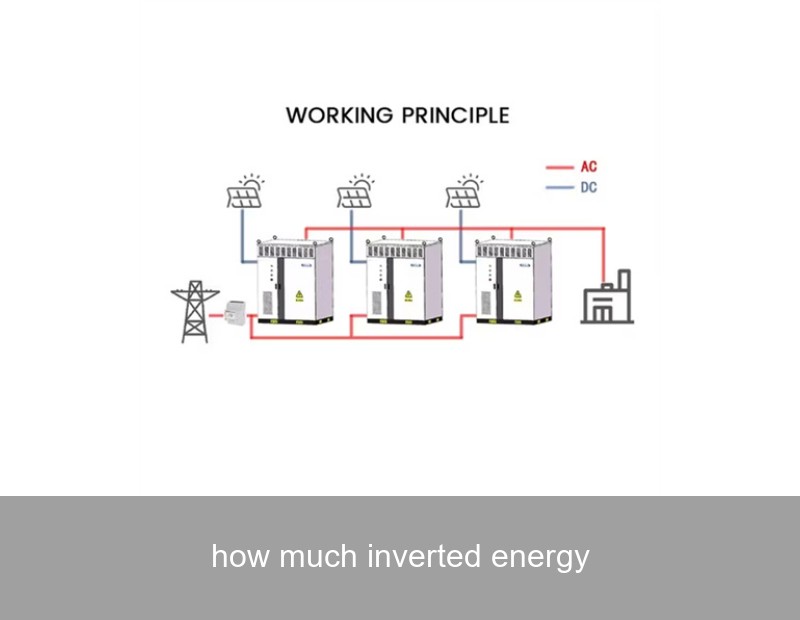
In simple terms, inverted energy is the surplus electricity generated by your solar photovoltaic (PV) system that flows back to the utility grid. This happens when your panels produce more power than your home or business is consuming at that moment. The inverter, the brain of your solar system, converts the DC power from the panels to AC power for your use and, when there's excess, "inverts" its flow direction back to the grid.
For years, net metering policies made this a straightforward benefit: you'd get a credit for every kilowatt-hour (kWh) sent back. But the energy landscape is shifting rapidly. Feed-in tariffs are decreasing, and the value of exported energy is often much lower than the cost of imported energy. This makes blindly maximizing how much inverted energy you produce a less optimal strategy.
The Phenomenon: When Your Grid Becomes a One-Way Street
The initial excitement of seeing your utility bill drop can be followed by a plateau. You might be generating massive amounts of solar power at noon, but if you're not home to use it, 70-80% of that energy might be going back to the grid for minimal compensation. Meanwhile, you're drawing expensive power from the grid in the evening when the sun is down. This mismatch between generation and consumption is the core challenge.
Think of the grid as a shared resource. During peak solar hours, an influx of inverted energy from thousands of systems can strain local grid infrastructure, sometimes leading to curtailment (where your system is told to shut off) or reduced buy-back rates. The goal is no longer just to export energy, but to use it wisely.
The Data Reality: Not All Inverted Energy is Created Equal
Let's look at some numbers. According to the U.S. Department of Energy, the average residential solar system can offset 70-90% of a household's electricity use. However, without storage, self-consumption rates – the percentage of solar energy used directly on-site – often hover between 20-50%. This means a significant portion is exported.
The financial impact is stark. In many European and U.S. markets, the retail price for electricity you buy can be $0.25-$0.40 per kWh. The compensation for exported solar energy, however, can be as low as $0.03-$0.10 per kWh. The table below illustrates this economic gap:
| Scenario | Energy Flow | Typical Cost/Value (Example) | Net Financial Impact |
|---|---|---|---|
| Daytime Solar Overproduction | Export to Grid (Inverted Energy) | Credit at $0.05/kWh | Low Value Return |
| Evening High Demand | Import from Grid | Charge at $0.35/kWh | High Cost |
The key insight is that the real value lies not in the quantity of inverted energy, but in minimizing unnecessary exports and maximizing self-use.
Case Study: A German Bakery's Recipe for Energy Optimization
Consider a real-world example from Bavaria, Germany. A family-owned bakery with a 100 kW rooftop solar system was producing substantial inverted energy during the day. Despite this, their energy bills remained high because their ovens, refrigeration, and lighting peaked in the early morning and late afternoon, relying heavily on grid power.
They partnered with Highjoule to implement a tailored solution. We installed a Highjoule Quantum BESS (Battery Energy Storage System) with a capacity of 120 kWh, coupled with our advanced energy management software. The system was programmed to:
- Store excess midday solar generation instead of exporting it.
- Discharge the battery during the morning bake cycle and evening peak hours.
- Maintain a critical reserve for refrigeration, ensuring food safety.
Image Source: Unsplash - Representative image of a commercial bakery.

The results after one year were compelling:
- Grid Import Reduction: Decreased by 82%.
- Self-Consumption of Solar: Increased from 31% to over 90%.
- Payback Period: The system is projected to pay for itself in under 6 years due to avoided demand charges and high grid prices.
- Inverted Energy Exports: Strategically limited to only when the battery was full and on-site load was low, transforming it from a default output to a managed asset.
This case shows that asking "how much inverted energy do I need?" is the wrong question. The right question is: "How can I store and use my solar energy most effectively?"
The Highjoule Approach: From Inversion to Intelligent Storage
At Highjoule, founded in 2005, we believe the future of energy is not just about generation, but about intelligent control and storage. Our products are designed to transform your solar asset from a simple exporter into a resilient, money-saving power plant.
For residential clients, our Helios Home Battery System integrates seamlessly with existing solar arrays. Its AI-driven software learns your consumption patterns and automatically optimizes charging and discharging, ensuring you use every possible kilowatt-hour of your own solar energy before relying on the grid.
For commercial and industrial applications, like the bakery, our Quantum BESS series offers scalable, containerized or modular solutions. They not only increase self-consumption but also provide critical backup power and can participate in grid services programs, creating an additional revenue stream. Our Microgrid Controller can orchestrate multiple energy sources (solar, storage, generators) to operate independently from the grid if needed, a feature gaining immense value across both Europe and the U.S. as grid resilience becomes paramount.
Image Source: Unsplash - Representative image of a solar farm.

By focusing on intelligent storage, we help you shift the narrative. The metric of success changes from "how much inverted energy did I sell?" to "how much clean, affordable, and reliable power did I provide for my own needs?"
Optimizing Your System for the Future
So, what can you do? Start by analyzing your energy data. Most smart meters and inverter portals provide graphs of your production vs. consumption. Look for the giant "belly" of exported energy in the middle of the day. That's your opportunity.
When considering storage, look beyond simple battery capacity. Evaluate:
- Round-Trip Efficiency: How much energy is lost in the store/discharge cycle? Highjoule systems exceed 96%.
- Software Intelligence: Can it adapt to weather, rate changes, and your unique load profile?
- Scalability: Can you add more storage later as your needs evolve?
The International Energy Agency highlights that energy storage is the key enabler for secure, flexible, and sustainable power systems worldwide. The transition is already underway.
Your Next Step
The journey to true energy independence isn't about generating the most solar energy possible; it's about having the most usable energy when you need it. The era of valuing inverted energy for its own sake is closing. The new era is about smart consumption, resilience, and taking control of your energy destiny.
Is your current solar system working for you, or are you working around its limitations? What would a 90% self-consumption rate do for your operational costs or household budget?
 Inquiry
 Online Chat