


How Much Does a Hexing or Livoltek Solar Battery System Cost? A Realistic Breakdown
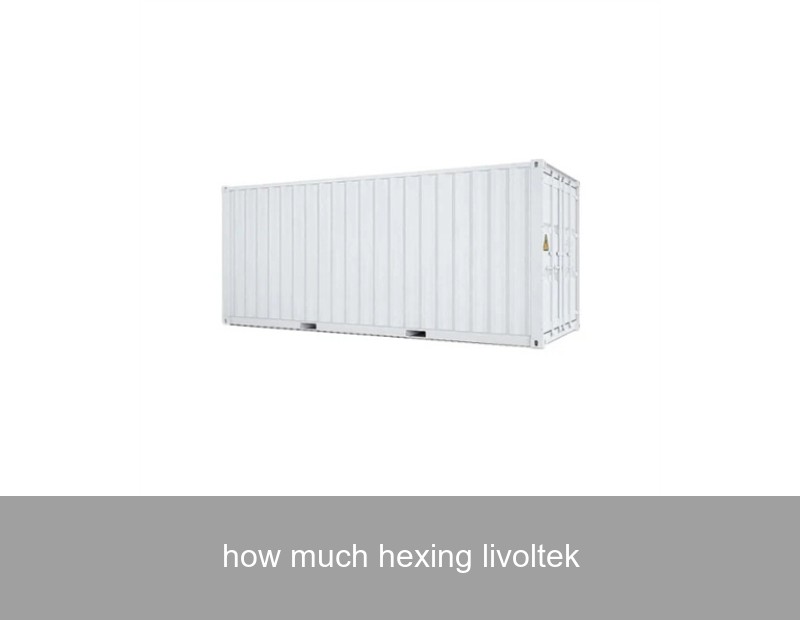
If you're researching solar battery storage, you've likely come across brands like Hexing and Livoltek. And the burning question is, of course, "how much does a Hexing or Livoltek system actually cost?" As a homeowner or business owner in Europe or the US looking to achieve energy independence, this is a crucial starting point. However, the answer is rarely a simple figure on a website. The total investment in a Battery Energy Storage System (BESS) is influenced by a tapestry of factors—from your energy consumption patterns to local grid policies. In this guide, we'll demystify the costs, explore what drives the price of quality systems, and illustrate how partnering with an experienced provider like Highjoule can transform this investment into long-term resilience and savings.
Understanding the Essentials: What is a Battery Energy Storage System (BESS)?
Before diving into costs, let's clarify what we're discussing. A modern BESS is far more than just a battery box. It's an integrated system comprising the battery modules themselves, a sophisticated inverter/charger, a critical safety management system (BMS), and often intelligent energy software. This system works in concert with your solar panels (or the grid) to store excess energy for use when the sun isn't shining, during peak tariff periods, or as a backup during outages. Brands like Hexing and Livoltek offer components within this ecosystem, but the final performance and cost are determined by the system's design and integration quality.

Image Source: Unsplash. A professionally installed home battery system is key to safety and performance.
Key Factors Influencing Your Investment
So, how much can you expect to invest? For a typical residential system in markets like Germany or California, a fully installed, high-quality BESS with a usable capacity of 10-15 kWh can range from $10,000 to $20,000+, before incentives. For commercial systems, the scale—and potential savings—are significantly larger. Let's break down the variables.
System Size & Capacity (kWh)
This is your "energy bank." How much electricity do you need to store to cover your evening usage or a short grid outage? A larger capacity (e.g., 15 kWh vs. 8 kWh) directly increases cost but also boosts your self-sufficiency.
Power Rating (kW)
This is the system's "power muscle." It determines how many large appliances (like an air conditioner or heat pump) you can run simultaneously from the battery. A higher power rating often requires a more powerful inverter, impacting the price.
Battery Chemistry
Lithium Iron Phosphate (LFP) is now the dominant chemistry for home storage, praised for its long cycle life, safety, and stability. While sometimes slightly more expensive upfront than older NMC chemistries, its longevity offers better lifetime value.
Installation & System Complexity
Is this a new build or a retrofit? Does your electrical panel need an upgrade? Installation complexity is a major cost variable. This is where expert design from a company like Highjoule proves invaluable. Our HPS Series for residential and HCS Series for commercial applications are designed for flexible, streamlined integration, keeping installation time and costs predictable.
Incentives & Long-Term Value
Never consider the sticker price alone. Incentives like the U.S. Residential Clean Energy Credit (ITC) or various European grants can reduce net cost by 30% or more. Furthermore, a quality system from a trusted provider mitigates future risks. Highjoule systems come with comprehensive warranties and are backed by our global monitoring and support platform, ensuring your investment is protected for decades.
A Real-World Case Study: The German Bakery
Let's move from theory to practice. Consider a mid-sized artisan bakery in Bavaria, Germany. Their challenge: high electricity costs, a need for uninterrupted refrigeration, and a desire to utilize their large rooftop solar array more effectively.
- Phenomenon: High grid demand charges and solar curtailment during peak production.
- Data: Average daily consumption: 250 kWh. Peak demand: 80 kW. Existing solar PV: 100 kWp.
- Solution & Cost Insight: Highjoule designed and installed a bespoke 120 kWh / 50 kW commercial BESS using our modular HCS technology. The total installed project cost was approximately €65,000. However, after leveraging a local federal state grant, the net investment fell to around €45,000.
- Result: The system now shaves the bakery's peak demand by 40%, stores excess solar for use in the early morning baking hours, and provides critical backup for cold storage. The calculated payback period is under 7 years, after which the system will deliver essentially free energy resilience for its remaining lifespan.
This case shows that the right question isn't just "how much does the hardware cost?" but "what is the net value and return on investment of a perfectly tailored system?"
The Highjoule Solution: Precision, Performance, and Partnership
At Highjoule, we believe your storage solution should be as unique as your energy profile. Rather than offering a one-size-fits-all product, we provide intelligent, integrated systems built on nearly two decades of engineering expertise. Our approach addresses the core question behind "how much" by focusing on optimized value.
For homeowners, our HPS Series offers scalable capacity from 5 kWh to 30 kWh, featuring built-in LFP batteries, hybrid inverters, and our intuitive EnergyHub OS. This AI-driven software doesn't just store energy; it learns your habits and automatically optimizes for self-consumption or time-of-use savings, maximizing your financial return.
For businesses and microgrids, the HCS Series provides utility-grade power in a containerized or modular format. These systems are engineered for the highest cycles and longest lifespan, crucial for demanding commercial applications where downtime is not an option. We manage the entire process—from initial energy audit and financial modeling to grid compliance, installation, and lifelong remote monitoring.

Image Source: Unsplash. Commercial-scale storage, like Highjoule's HCS Series, enables renewable integration for businesses and utilities.
Looking Beyond the Price Tag: The True Cost of Compromise
Choosing a system based solely on the lowest upfront cost can be a costly mistake. Inexpensive, poorly integrated systems may lack proper safety protocols, degrade faster, or fail to communicate effectively with your solar inverter, leading to lost savings and potential hazards. The National Fire Protection Association (NFPA) highlights the importance of using certified equipment installed by professionals. Highjoule's commitment to EEAT (Experience, Expertise, Authoritativeness, Trustworthiness) is embedded in our UL and IEC-certified products and our network of certified installers, ensuring your system is safe, compliant, and built to last.
Your Next Step Towards Energy Independence
The journey to understanding "how much" a Hexing, Livoltek, or any other storage system will cost for your specific situation begins with a detailed conversation about your goals. What does energy security look like for your home or business? Are you most motivated by reducing bills, achieving backup power, or contributing to a greener grid?
We invite you to use our online Energy Savings Estimator or speak directly with one of our regional energy consultants. They can provide a preliminary assessment tailored to your zip code and consumption data. What unique energy challenge could a intelligently designed storage system solve for you tomorrow?
 Inquiry
 Online Chat