


How Much Does Dynamic Solar Battery Storage Cost? A Clear Guide
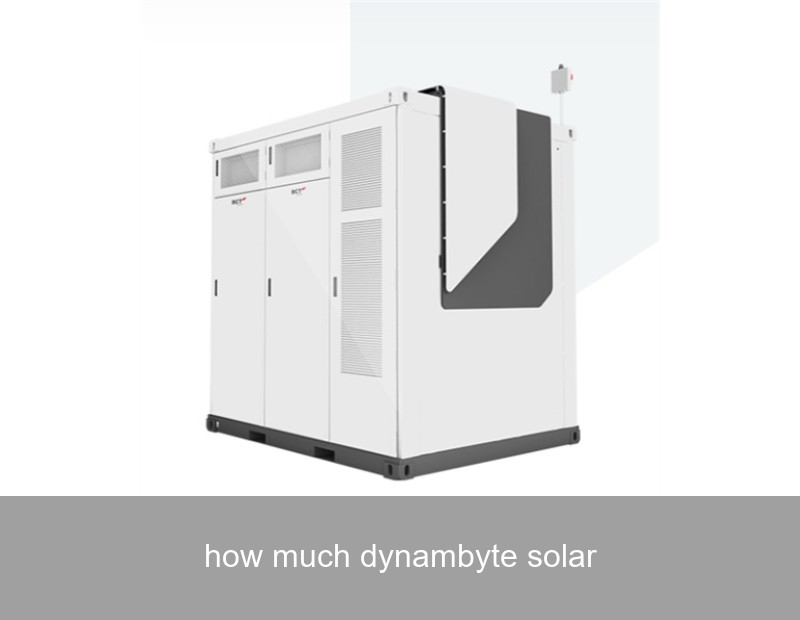
As electricity prices continue to climb and the desire for energy independence grows, a common question we hear from homeowners across Europe and the US is: "How much does dynamic solar battery storage, like a Dynambyte system, actually cost?" It's a smart question, but the answer isn't a single number. The cost of a dynamic, intelligent battery system is influenced by its capacity, power output, installation complexity, and most importantly, the smart technology that makes it "dynamic." Let's break down the factors so you can understand the investment in your energy future.
Table of Contents
- What is "Dynamic" Solar Battery Storage?
- Key Components of Solar Battery Storage Cost
- Understanding a Dynambyte System Quote
- Real-World Case Study: A German Household
- Beyond Price: The Long-Term Value of Dynamic Storage
- The Highjoule Approach: Smart, Integrated Solutions
- Is Dynamic Storage Right for Your Home?
What is "Dynamic" Solar Battery Storage?
First, let's clarify the term "dynamic." Unlike a simple battery that just stores and discharges energy, a dynamic solar battery storage system intelligently manages energy flow based on real-time data. It considers your solar production, household consumption, electricity tariffs, and even grid conditions. Think of it as the difference between a basic calculator and a smart computer. This intelligence, often powered by advanced software and AI-driven energy management systems, is a key part of the system's value—and its cost structure.

Image source: Unsplash - A modern home energy setup with solar and storage.
Key Components of Solar Battery Storage Cost
When evaluating "how much," you need to look at the total system cost. Here are the primary factors:
- Battery Capacity (kWh): This is the total amount of energy the battery can store. Prices scale with capacity. A typical residential system in 2023-2024 might range from 5 kWh to 20+ kWh.
- Power Rating (kW): How much power the battery can deliver at once. A higher rating is needed to run multiple high-power appliances simultaneously during an outage.
- Battery Chemistry & Brand: Lithium-ion phosphate (LFP) is now the dominant, safer chemistry. Premium brands with proven longevity and performance command a higher price.
- Inverter & Integration: A hybrid inverter or a dedicated battery inverter is needed. Seamless integration with existing or new solar panels is crucial and affects complexity.
- Dynamic Energy Management System (EMS): The "brain" of the system. This software enables features like time-based control, grid services participation, and self-learning algorithms.
- Installation & Labor: Costs vary by region, home electrical setup, and system complexity. Permitting and inspection fees are also part of this.
Understanding a Dynambyte System Quote
To give you a concrete framework, let's consider a Highjoule Dynambyte installation. Our systems are designed for intelligence and resilience. A typical quote for a complete, installed system in Western Europe or the US might look like this:
| Component | Description | Estimated Cost Range* |
|---|---|---|
| Dynambyte Battery Module (10 kWh) | High-safety LFP cells, modular design | $4,500 - $6,000 |
| Highjoule Hybrid Power Manager | All-in-one inverter/charger with grid-forming capability | $2,500 - $3,500 |
| Neurio Energy Management Platform | AI-driven software for dynamic optimization & monitoring | $500 - $1,000 (software license/hardware) |
| Installation, Wiring & Permits | Professional installation by certified technicians | $2,000 - $4,000 |
| Total Estimated System Cost | $9,500 - $14,500 |
*Ranges are pre-incentive estimates for a medium-sized system. Final costs depend on specific site conditions, local labor rates, and chosen configuration. Always consult a certified installer for a precise quote.
It's vital to note that government incentives can significantly reduce this net cost. In the US, the Federal Investment Tax Credit (ITC) covers 30% of the total installed cost, including storage paired with solar. Many European countries also offer grants or VAT reductions, like the UK's VAT relief on energy-saving materials.
Real-World Case Study: A German Household
Let's look at real data from a 2023 installation in Bavaria, Germany. The family home had a 8 kWp existing solar array and wanted to increase self-consumption and backup capability.
- System Installed: Highjoule Dynambyte 12 kWh battery + Power Manager + Neurio EMS.
- Total Installed Cost: €13,200 (before incentives).
- German Federal Funding (BAFA Grant): €3,300 (approx. 25% reduction).
- Net Cost after Incentive: €9,900.
- Result: The dynamic system increased their solar self-consumption from 35% to over 80%. By intelligently charging the battery with excess solar and discharging during high-price evening hours, they reduced their grid electricity purchases by an estimated €950 annually. This projects a simple payback period of roughly 10.5 years, not accounting for future electricity price increases, which would shorten it further.

Image source: Unsplash - Energy monitoring dashboard showing production and consumption.
Beyond Price: The Long-Term Value of Dynamic Storage
Focusing solely on upfront cost misses the broader financial picture. A dynamic system like Dynambyte creates value in multiple ways:
- Bill Savings: Maximizing use of your cheap solar energy and avoiding peak grid rates.
- Backup Power: Providing peace of mind and power security during outages, a value that's hard to quantify but increasingly important.
- Grid Services (Future): In some markets, dynamic batteries can earn revenue by providing grid stability services. Our Neurio platform is designed to be ready for such programs.
- Increased Property Value: Studies, like one from the U.S. Department of Energy, indicate homes with solar+storage can see increased market value.
- Future-Proofing: A modular system can often be expanded as your needs grow, protecting your initial investment.
The Highjoule Approach: Smart, Integrated Solutions
At Highjoule, with nearly two decades of experience, we believe the right question isn't just "how much does a battery cost?" but "what is the value of a resilient, intelligent energy system?" Our Dynambyte series is built on this principle. We provide more than hardware; we deliver a complete energy ecosystem:
- Modular & Scalable Design: Start with what you need and add battery modules later.
- Grid-Forming Technology: Our systems can create a stable "microgrid" in your home during blackouts, powering essential circuits seamlessly.
- Neurio AI Energy Management: This is what makes storage truly dynamic. It learns your habits, forecasts weather, and optimizes every kilowatt-hour for your economic benefit.
- Global Service & Warranty: Backed by our 10-year performance warranty and supported by our network of certified installers in Europe and North America.
We work with you and our certified installer partners to design a system that fits your specific energy profile, home layout, and financial goals, ensuring you understand both the cost and the long-term return.
Is Dynamic Storage Right for Your Home?
So, how much does dynamic solar battery storage cost? As we've seen, for a high-quality, intelligent system, you might be looking at a net investment in the range of $8,000 to $12,000 after incentives in many markets. But the more meaningful question to ask yourself is: What is the cost of not having control over your energy? With volatile energy markets and an increasing frequency of extreme weather events, the value proposition of energy independence strengthens every year.
What specific energy goals are most important for your household—is it sheer bill reduction, achieving energy self-sufficiency, or ensuring uninterrupted power for critical needs?
 Inquiry
 Online Chat