


Your Home Solar Power Inverter: The Intelligent Brain Behind Your Energy Independence
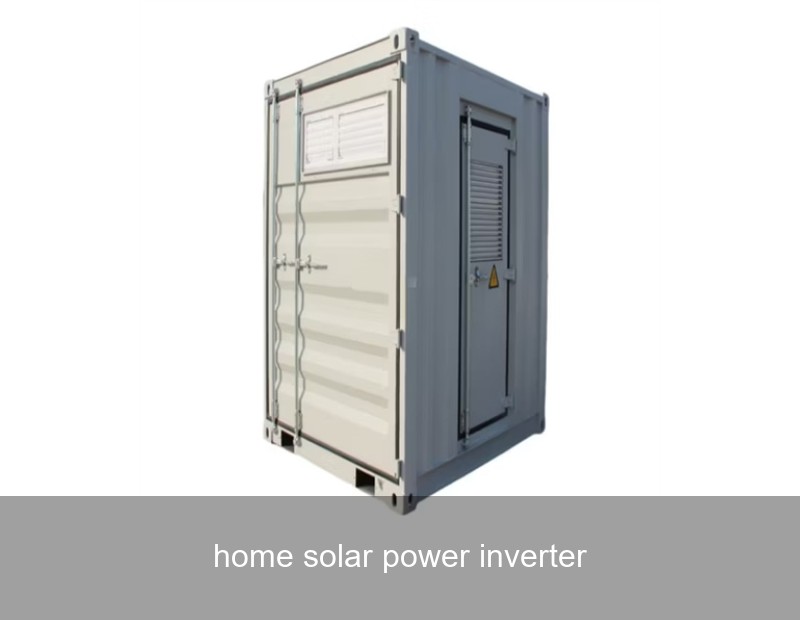
Imagine your rooftop solar panels, gleaming in the sun, are like a world-class athlete. They have immense potential, raw power. But to truly perform, to integrate seamlessly into your home, manage energy flows, and protect your appliances, they need a brilliant coach and strategist. That's precisely the role of your home solar power inverter. It's the unsung hero, the intelligent brain that converts raw solar energy into usable household electricity. As more homeowners in Europe and the U.S. seek energy security and cost savings, understanding this critical component is the first step toward a smarter, more resilient home.
Table of Contents
What is a Home Solar Power Inverter?
In simple terms, a home solar power inverter performs a fundamental conversion. Your solar panels generate Direct Current (DC) electricity. However, every appliance in your home—from your refrigerator to your laptop—runs on Alternating Current (AC). The inverter's primary job is to convert that DC into clean, stable AC power. But that's just the basics. Today's advanced inverters are gatekeepers, managers, and diagnosticians. They maximize energy harvest, communicate with the grid (where allowed), manage battery storage systems, and provide detailed insights into your energy production and consumption.

Image source: Unsplash (Representative image of a modern inverter system)
Why Your Inverter Choice Matters More Than You Think
Choosing the right inverter is not a mere technical detail; it's a decision that impacts your system's performance, safety, and long-term value. Let's break down the key reasons:
- Efficiency is Money: Inverter efficiency (often 97-99% for premium models) determines how much of your precious solar energy is actually usable. A 2% difference can translate to significant wasted energy over a system's 20+ year lifespan.
- System Reliability & Safety: The inverter is the most complex component and a common point of failure. A high-quality inverter from a reputable provider includes robust safety features like anti-islanding (protecting utility workers during outages) and comprehensive surge protection.
- Enabling Storage & Resilience: If you plan to add a battery now or in the future, your inverter must be compatible. Hybrid or battery-ready inverters are essential for creating a home that can power through grid outages.
- Monitoring & Insights: A smart inverter provides a window into your system's health. You can see daily production, identify issues (like a shaded panel), and understand your consumption patterns, empowering you to use energy more wisely.
Types of Solar Inverters for Modern Homes
The technology has evolved significantly. Here’s a clear overview of the main options available to homeowners today.
| Type | How It Works | Best For | Considerations |
|---|---|---|---|
| String Inverter | Connects a series ("string") of panels to a single central inverter. | Simple, unshaded roof layouts; most cost-effective upfront. | Shade on one panel can reduce the output of the entire string. |
| Microinverter | A small inverter attached to each individual solar panel. | Roofs with complex shapes, partial shading, or multiple orientations. | Higher initial cost but offers panel-level optimization and monitoring. |
| Hybrid Inverter | A multi-tasking unit that manages solar, battery storage, and the grid simultaneously. | Homes planning or already using battery storage for backup power. | The central hub for an integrated, resilient energy system. |
This is where companies like Highjoule excel. We don't believe in a one-size-fits-all solution. Our approach involves analyzing your home's specific architecture, energy profile, and goals to recommend the optimal inverter technology. For instance, our Highjoule H-Energy Hub is a state-of-the-art hybrid inverter designed for the European and North American markets. It seamlessly integrates solar, battery storage, and grid power, offering homeowners unparalleled control and the ability to island their home from the grid during an outage, all managed through an intuitive app.
Case Study: From Bill Shock to Energy Independence in Leipzig, Germany
Let's look at a real-world example that underscores the transformative power of a well-designed system with the right inverter. The Schmidt family in Leipzig, Germany, faced rising electricity costs and wanted to prepare for increasing grid instability. Their south-west facing roof had partial afternoon shading from a large tree.
- Phenomenon: High energy bills and desire for backup power, complicated by partial shading.
- Data & Solution: A Highjoule system was installed in 2022: 8.2 kWp solar array using panel-level power optimizers paired with a Highjoule H-Energy Hub hybrid inverter and a 13.5 kWh lithium-ion battery.
- Outcome: The system's intelligent design mitigated shading losses. In its first year, it achieved 92% self-consumption of solar energy. Their annual electricity bill was reduced by €1,850, and they've safely ridden through four grid outages without interruption. The inverter's analytics helped them shift high-load activities to peak production times, maximizing savings.
This case, mirrored by many of our customers in California facing Public Safety Power Shutoffs (PSPS), shows that the inverter is the command center making such sophisticated energy management possible. For more on the importance of system resilience, see this report by the National Renewable Energy Laboratory (NREL).

Image source: Unsplash (Representative image of family energy monitoring)
The Future is Intelligent: Selecting Your Inverter Partner
The next generation of home solar power inverters is moving beyond conversion to become true home energy managers. They will automatically decide when to charge batteries, sell back to the grid, or power your home based on weather forecasts, electricity tariffs, and your personal usage patterns. This requires robust software and grid-service capabilities, areas where established providers invest heavily.
When evaluating your options, ask these critical questions:
- Is the inverter compatible with a wide range of batteries (for future-proofing)?
- What is the depth of the monitoring platform? Can it provide appliance-level insights?
- Does the manufacturer have a proven track record and strong local service & warranty support in your region?
- Can the inverter participate in grid-support services or virtual power plants (VPPs), potentially generating additional income?
At Highjoule, with nearly two decades of experience, our services extend far beyond supplying hardware. We provide comprehensive energy assessments, system design, professional installation partnerships, and 24/7 system monitoring and support. Our inverters are built with the rigorous standards demanded by both European and U.S. markets, ensuring safety, reliability, and smart grid readiness. Learn about grid interconnection policies from a trusted source like the U.S. Department of Energy.
 Inquiry
 Online Chat