


Understanding Hanwha Solar Panels Price: A Smart Investment for Your Energy Future
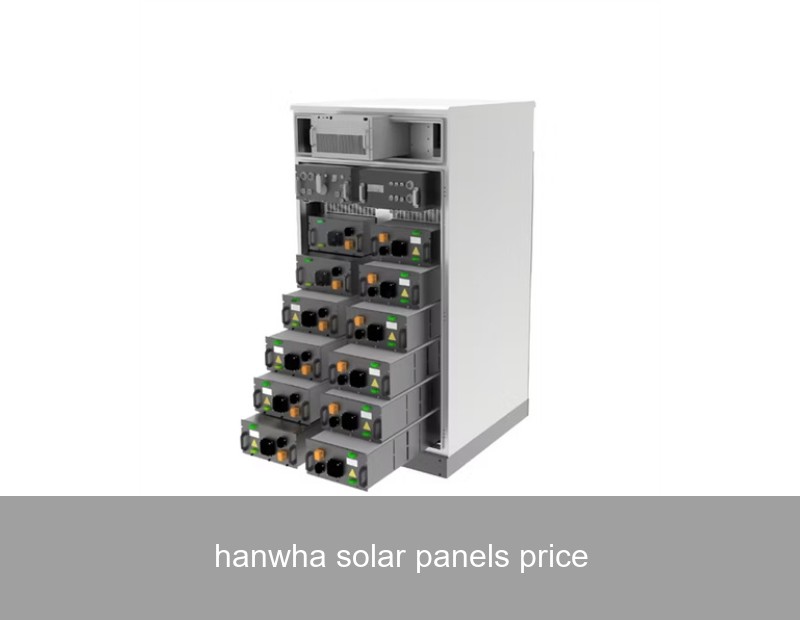
When you start researching a solar energy system, one of the first questions that comes to mind is, "What is the price of Hanwha solar panels?" It's a logical starting point. Hanwha Qcells has established itself as a global leader in solar technology, renowned for high efficiency and durability. However, focusing solely on the module's sticker price is like buying a car based only on the cost of the seats. The true value—and the final cost—of your solar investment is determined by the complete system's performance, longevity, and the intelligence that manages it. In this article, we'll unpack what influences the price of Hanwha solar panels and why pairing them with a sophisticated energy storage system from a provider like Highjoule is the key to maximizing your return.
Table of Contents
- Key Factors Influencing Hanwha Solar Panels Price
- Looking Beyond Module Price: The System Cost Equation
- The Highjoule Advantage: Synergy Between Solar and Storage
- Real-World Savings: A Case Study from Germany
- Calculating Long-Term Value Over Initial Cost
- Is Your Home or Business Ready for Intelligent Energy?
Key Factors Influencing Hanwha Solar Panels Price
Hanwha Qcells offers a range of panels, from the value-oriented Q.PEAK series to the ultra-high-efficiency Q.TRON models. The price per panel or per watt can vary significantly based on several technical and market-driven factors.
- Panel Efficiency and Technology: Premium panels using Qcells' patented Q.ANTUM technology with PERC (Passivated Emitter and Rear Cell) or Q.TRON's heterojunction cells command a higher price. They convert more sunlight into electricity in the same roof space, which is crucial if your area is limited.
- Power Output (Wattage): A 400-watt panel will naturally cost more than a 350-watt panel from the same series, but it also provides more energy per panel, potentially reducing the number of panels and balance-of-system costs.
- Market Dynamics and Supply Chain: Raw material costs (like polysilicon), trade policies, and local demand can cause fluctuations. Notably, with increased manufacturing capacity in the U.S., prices and availability in the American market are becoming more stable.
- Installation Scale: A residential 6kW system will have a higher per-watt cost than a 500kW commercial installation due to economies of scale in procurement and labor.

Image: High-efficiency solar panels, similar to Hanwha Qcells models, on a residential roof. Source: Unsplash
Looking Beyond Module Price: The System Cost Equation
Let's be clear: the panels themselves typically account for only about 15-25% of a total installed solar system's cost. A myopic focus on the Hanwha solar panels price overlooks the bulk of your investment. The complete picture includes:
| Cost Component | Description | Impact on Value |
|---|---|---|
| Inverters | Converts DC solar power to usable AC power. | High-quality inverters (string, micro, or hybrid) ensure maximum energy harvest and system reliability. |
| Mounting & Racking | The hardware that secures panels to your roof or ground. | Durable, weather-adapted racking protects your investment for 25+ years. |
| Labor & Permitting | Professional installation and navigating local regulations. | Expert installation is critical for safety, performance, and warranty validity. |
| Energy Storage System (ESS) | Batteries that store excess solar energy. | This is the game-changer. Storage unlocks energy independence, bill savings, and backup power. |
This is where the conversation shifts from simple solar to a comprehensive energy resilience solution. A high-quality panel like Hanwha's deserves an equally capable storage partner to realize its full potential.
The Highjoule Advantage: Synergy Between Solar and Storage
Founded in 2005, Highjoule is a global leader in advanced energy storage systems. We don't sell solar panels, but we make them infinitely more valuable. Think of it this way: Hanwha Qcells panels are exceptional energy producers, and Highjoule's intelligent battery systems are the world-class savers and managers of that energy.
Our integrated solutions for residential, commercial, and microgrid applications ensure that every kilowatt-hour your Hanwha panels produce is used optimally:
- Maximized Self-Consumption: Store daytime solar excess to power your home or business at night, drastically reducing grid dependence.
- Intelligent Energy Management: Our systems use smart software to learn your consumption patterns, manage grid import/export based on time-of-use rates, and even provide grid services.
- Uninterrupted Backup Power: During grid outages, Highjoule systems seamlessly keep critical loads running—a feature standalone solar cannot offer.
- Future-Proof Design: Our modular battery systems, like the Highjoule H-Series for commercial use, can be easily expanded as your energy needs grow.
When evaluating the Hanwha solar panels price, ask your installer about integrating a Highjoule storage system. The combined solution delivers a ROI that far surpasses solar alone, especially in regions with high electricity rates or volatile grids.
Real-World Savings: A Case Study from Germany
Let's move from theory to hard data. Consider a mid-sized manufacturing SME in Bavaria, Germany. The facility operated with a 200 kW rooftop solar array (using Hanwha Q.PEAK DUO panels) but was still subject to high grid electricity prices, especially during evening production hours.
Phenomenon: High grid costs and limited use of self-generated solar power.
Data & Action: In 2022, they installed a Highjoule C&I Stack battery storage system with a capacity of 240 kWh. The system was programmed to store excess midday solar energy and discharge it during peak price periods (4 PM - 9 PM).
- Increase in Solar Self-Consumption: From 35% to 82%.
- Reduction in Grid Electricity Costs: 68% decrease during peak hours.
- Payback Period: The combined solar + storage system is projected to pay for itself in under 7 years, thanks in large part to the intelligent arbitrage enabled by the Highjoule ESS.
This case, documented in a Fraunhofer ISE study on energy costs, illustrates the transformative impact of adding smart storage. The initial investment in the Hanwha panels was fully leveraged, turning a cost center into a strategic asset.

Image: An industrial-scale battery energy storage system similar to Highjoule's C&I solutions. Source: Unsplash
Calculating Long-Term Value Over Initial Cost
So, how should you assess the true cost? Shift your mindset from price to levelized cost of energy (LCOE)—the average net present cost of electricity generation over the system's lifetime.
High-efficiency Hanwha panels have a lower LCOE than cheaper, less efficient panels because they generate more electricity in the same footprint over 25+ years. When you add a Highjoule battery, you further lower your effective LCOE by:
- Avoiding purchasing expensive grid power.
- Potentially earning revenue through grid services (in some markets).
- Protecting your operations from costly outages.
Furthermore, policies like the U.S. Investment Tax Credit (ITC), which you can learn more about on the Department of Energy's official guide, now apply to standalone storage and combined systems, improving the financial outlook significantly.
Choosing Highjoule as your storage partner means investing in a system engineered for safety, longevity, and intelligent control—qualities that perfectly complement the reliability of Hanwha Qcells.
Is Your Home or Business Ready for Intelligent Energy?
The question of Hanwha solar panels price is your entry point into a much more important discussion about energy independence and financial prudence. The most savvy energy consumers are those who see solar and storage as a single, integrated solution.
What specific energy challenge—be it unpredictable bills, grid reliability concerns, or sustainability goals—could a tailored Highjoule storage system solve for you, in perfect harmony with your solar panels?
 Inquiry
 Online Chat