


Unlocking Energy Independence: The Smart Guide to the Haier Solar Energy Storage Cabinet
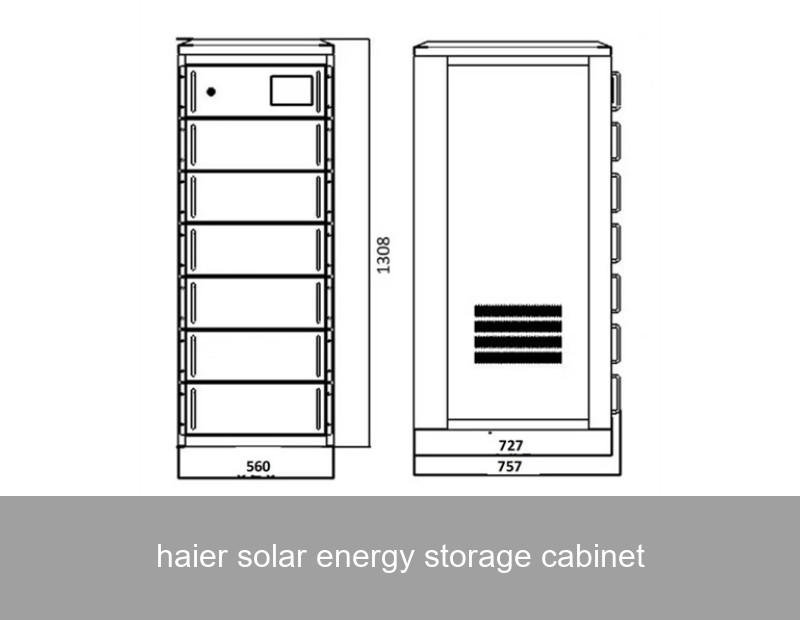
You've made the excellent decision to install solar panels. You're generating clean power, reducing your carbon footprint, and watching your meter spin backwards on sunny days. But what happens when the sun sets, or during a grid outage? This is where the true game-changer enters the scene: the solar energy storage cabinet. More than just a battery box, a modern solution like the Haier solar energy storage cabinet represents the brains of your personal energy ecosystem, intelligently managing power to maximize savings, security, and sustainability. Let's explore how this technology is reshaping energy use for homes and businesses across Europe and the U.S.
The Grid Challenge: A Modern Phenomenon
Our reliance on the traditional power grid is facing unprecedented pressures. From increasing frequency of extreme weather events causing outages in California and Texas, to volatile energy prices impacting household budgets across Europe, the need for a more resilient and cost-effective solution is clear. Renewable energy, particularly solar, offers a path forward, but its intermittent nature creates a mismatch between when energy is produced and when it's most needed.
This phenomenon leaves many solar owners with a frustrating reality: exporting excess power to the grid at low rates during the day, only to buy it back at peak prices in the evening. The missing link is storage.

Image Source: Unsplash - A modern solar-powered home.
The Data: Power Behind the Cabinet
The economic and practical case for adding storage is compelling. According to the U.S. Department of Energy, pairing solar with storage can increase a homeowner's consumption of self-generated electricity from 30-50% to over 80%. In Germany, a study by the Fraunhofer Institute for Solar Energy Systems (ISE) showed that for commercial operations with high daytime energy use, adding storage could improve self-consumption by up to 35%, significantly shielding businesses from price spikes.
This isn't just about kilowatt-hours; it's about control. A sophisticated solar energy storage cabinet integrates several key components:
- Battery Modules: The core energy reservoir, typically using Lithium Iron Phosphate (LFP) chemistry for safety and long life.
- Battery Management System (BMS): The guardian, ensuring each cell operates safely and efficiently.
- Hybrid Inverter: The intelligent translator, managing power flow between solar panels, batteries, the grid, and your home's circuits.
- Thermal Management & Enclosure: The protective shell, ensuring optimal operating temperature and safety.
| Scenario | Without Storage | With Intelligent Storage Cabinet |
|---|---|---|
| Evening Energy Use | Purchased from grid at peak rates | Supplied from stored solar, avoiding peak costs |
| Grid Outage | Complete power loss (unless fossil fuel generator) | Seamless backup power for critical loads |
| Solar Self-Consumption | Typically 30-50% | 80% or higher |
| Carbon Footprint | Reduced, but still grid-dependent at night | Maximized, minimizing reliance on grid generation |
Case Study: A Bavarian Dairy Farm's Resilience
Consider the real-world example of a mid-sized dairy farm in Bavaria, Germany. With refrigeration, milking systems, and processing equipment, their energy demand was constant and costly. They installed a 50 kWp solar array, but a significant portion of the daytime generation was exported while they paid high tariffs for overnight operation.
By integrating a Highjoule H-Cube 40 commercial energy storage system—a premium, cabinet-style solution—they transformed their energy profile. The system, featuring 40 kWh of LFP storage and advanced energy management, was configured to prioritize critical cooling loads. The results within the first year were striking:
- Self-consumption rate increased from 48% to 89%.
- Annual grid electricity purchases reduced by over 60%.
- Payback period projected at under 7 years, factoring in rising energy costs.
- Critical refrigeration maintained during two brief grid disturbances, preventing spoilage.
This case underscores that for commercial and agricultural operations, a robust solar energy storage cabinet is not just an expense; it's a strategic asset for financial and operational resilience.
Key Components of a Smart Storage System
When evaluating a solution like the Haier solar energy storage cabinet, it's crucial to look beyond brand names to the underlying engineering principles that ensure performance, safety, and longevity.
1. Battery Chemistry: The Heart of the Matter
Lithium Iron Phosphate (LFP) has become the industry benchmark for stationary storage. Unlike older chemistries, LFP offers superior thermal stability, meaning a much lower risk of fire. It also provides a longer cycle life (often 6,000+ cycles to 80% capacity), making it ideal for the daily charge-discharge cycles of a solar home.
2. Integrated Energy Management: The Brain
The true intelligence lies in the software. Can the system learn your consumption patterns? Can it be programmed to charge from the grid during ultra-low off-peak rates (in certain markets) to discharge during peak times? This "arbitrage" capability adds another layer of savings. Systems like those developed by Highjoule incorporate AI-driven algorithms to optimize for either maximum self-consumption or maximum financial return, depending on the user's goals and local utility structures.

Image Source: Unsplash - A technician monitoring advanced energy storage controls.
3. Scalability and Design
A well-designed cabinet should be modular. Starting with a base capacity that can be expanded later as needs grow or budgets allow is a key advantage. Furthermore, the physical design—noise levels, footprint, ingress protection (IP) rating for outdoor installation—are critical for practical integration into your property.
Highjoule's Integrated Approach: Beyond the Cabinet
As a global leader in advanced energy storage since 2005, Highjoule understands that a solar energy storage cabinet is one component of a holistic energy solution. Our philosophy centers on creating intelligent, efficient, and sustainable ecosystems tailored for commercial, industrial, residential, and microgrid applications.
For the residential and small commercial market, our H-Power Series of integrated storage systems embodies this principle. These all-in-one cabinets combine Highjoule's ultra-safe LFP batteries, a high-efficiency hybrid inverter, and our proprietary EnergyOS management platform in a single, sleek, IP55-rated enclosure. This means easy installation indoors or outdoors and the ability to intelligently:
- Seamlessly switch to backup power during grid failures in under 20 milliseconds.
- Optimize time-of-use billing, automatically storing energy when it's cheap and using it when it's expensive.
- Integrate with future technologies, like EV chargers, creating a unified home energy network.
For larger-scale needs, our H-Cube Commercial systems provide containerized or cabinet-based megawatt-scale solutions that enable factories, office parks, and microgrids to manage demand charges, participate in grid services, and ensure business continuity. Our role extends beyond hardware; we provide comprehensive feasibility analysis, system design, and long-term performance monitoring to ensure every installation delivers on its promise.
The Future of Energy Independence
The evolution of the solar energy storage cabinet is moving towards becoming the central hub of a fully electrified and digital home. Imagine a system that not only manages your solar and backup power but also coordinates your heat pump, electric vehicle charging, and smart appliances to operate at the optimal time for both your wallet and the stability of the wider grid. This vision of a collaborative, decentralized grid is fast becoming a reality.
With policies like the EU's Green Deal and the U.S. Inflation Reduction Act incentivizing storage adoption, the question is shifting from "why should I get a battery?" to "which system will provide the most reliable, intelligent, and future-proof foundation for my energy independence?"
What specific energy challenge—be it unpredictable bills, frequent outages, or simply a desire to maximize your green investment—is motivating you to explore the potential of a smart solar storage system for your home or business today?
 Inquiry
 Online Chat