


Maximizing Energy Independence: A Deep Dive into the Growatt 10 kW Hybrid BESS
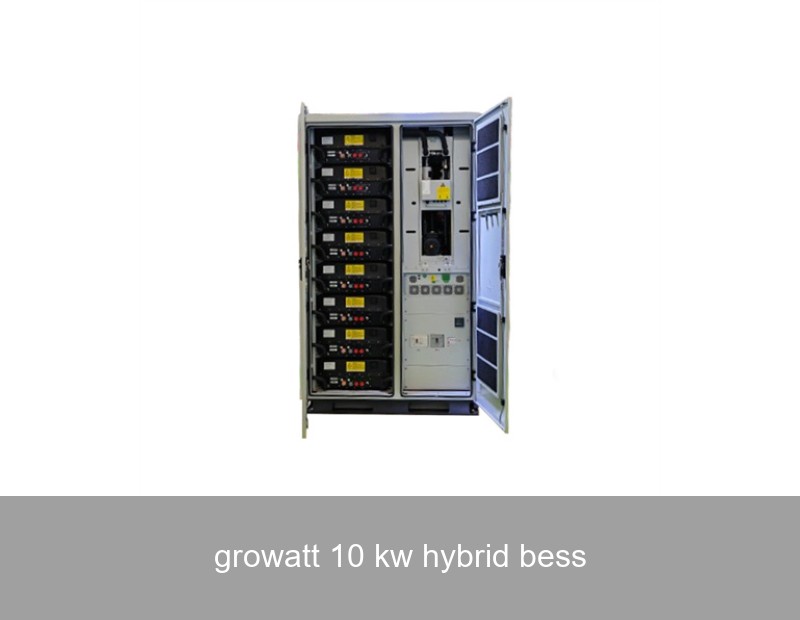
You've likely heard the buzz around solar batteries and hybrid systems. Perhaps you already have solar panels and are wondering how to capture every drop of sunshine they produce. Or, you're planning a new system and want true energy resilience from day one. The conversation increasingly centers on a specific powerhouse: systems like the Growatt 10 kW hybrid BESS. But what does this technical specification truly mean for your home or business? Let's peel back the layers and explore how a 10-kilowatt hybrid battery energy storage system isn't just a product—it's a strategic step towards energy autonomy.
The Energy Independence Phenomenon: From Grid Reliance to Self-Sufficiency
Across Europe and the U.S., a quiet revolution is underway. Homeowners and business operators are no longer passive consumers of grid electricity. Volatile energy prices, increasing grid instability, and a growing environmental consciousness are driving a massive shift. The phenomenon is simple: people want control. They see sunlight hitting their roofs as an untapped resource, and they question why they're exporting valuable power back to the grid only to buy it back at a premium at night.
This is where the hybrid system shines. Unlike a simple solar setup, a hybrid system like the Growatt 10 kW hybrid BESS integrates solar generation, battery storage, and grid connection into one intelligent unit. Think of it as the conductor of your personal energy orchestra. It decides in real-time: should solar power charge the battery, run your appliances, or be exported? Should the battery power your home during peak tariff hours, or should it hold reserve for a potential outage? This intelligent management is the key to unlocking real savings and resilience.

Image: A modern home equipped with solar panels and a wall-mounted battery storage system. Source: Unsplash
Power & Data: Decoding the 10kW Hybrid
Let's break down the "10 kW hybrid BESS" specification. The "10 kW" typically refers to the inverter's continuous power output. This is the system's muscle—it determines how much power can flow from the solar panels and battery to your home at any one moment. A 10kW inverter can simultaneously power a significant load: think air conditioning, an electric vehicle charger, kitchen appliances, and more, all while potentially charging the battery.
The "hybrid" designation means it combines a solar inverter and a battery inverter in one device. The "BESS" (Battery Energy Storage System) encompasses the battery modules themselves, which store the energy. The capacity (e.g., 10 kWh, 15 kWh) is the system's endurance—how long it can deliver that power.
Key Capabilities of a 10kW-Class Hybrid System:
- Whole-Home Backup: With proper configuration, it can keep essential and non-essential circuits running during a grid outage.
- Peak Shaving: Automatically uses stored battery power to avoid drawing expensive electricity during utility peak rate periods.
- Maximized Self-Consumption: Can increase the use of your own solar energy from 30-50% to 70% or more, drastically reducing bills.
- Grid Services: In some markets, advanced systems can participate in grid support programs for additional revenue.
For context, according to the U.S. Department of Energy, the average American home uses about 30 kWh per day. A well-sized 10kW hybrid system with sufficient battery capacity can cover a massive portion of this daily load.
Case Study: Energy Resilience in Practice - A Bavarian Farmstead
Let's move from theory to a real-world example. Consider a family-run agricultural business in Bavaria, Germany. They had a 12 kWp solar array installed in 2018, but were frustrated by their low self-consumption, especially in the winter months. Their goals were clear: reduce grid dependence, secure power for critical refrigeration and milking systems, and stabilize operational costs.
In early 2023, they installed a 10 kW hybrid inverter system coupled with 20 kWh of lithium iron phosphate (LFP) battery storage. The results, monitored over one year, were compelling:
| Metric | Before Hybrid System | After Hybrid System | Change |
|---|---|---|---|
| Solar Self-Consumption | 41% | 89% | +117% |
| Grid Electricity Purchased | 8,200 kWh/year | 1,150 kWh/year | -86% |
| Estimated Annual Cost Saving | — | — | €2,850+ |
| Grid Outage Protection | None | Full critical load backup for 18+ hours | Complete Resilience |
This case, reflective of many across Europe, illustrates the transformative impact. The system paid for itself in under seven years, but the value of uninterrupted operation for the farm business was immeasurable. As noted by the Fraunhofer Institute for Solar Energy Systems, increasing self-consumption is the primary economic driver for residential and commercial storage in Germany.
Beyond the Inverter: Choosing Your System Wisely
While the inverter (like a Growatt 10 kW model) is the brain and brawn, the battery chemistry, system design, and software intelligence are the heart and nervous system. Not all 10kW systems are created equal. Here’s what to consider:
- Battery Chemistry: LFP (Lithium Iron Phosphate) batteries are now the industry standard for safety, longevity (6,000+ cycles), and performance across a wide temperature range.
- Scalability: Can you easily add more battery modules later if your needs change? A modular design is crucial.
- Software & Monitoring: Can you easily control modes (e.g., self-consumption, backup, time-of-use), see real-time flows, and receive updates? The user experience is paramount.
- Integration: Does the system work seamlessly with your existing solar panels, or is it designed for a new turnkey installation?

Image: A user monitoring their home energy system via a smart tablet dashboard. Source: Unsplash
Highjoule: Your Partner in Intelligent Power Management
At Highjoule, with nearly two decades of experience since 2005, we understand that selecting a system is about more than just specs. It's about a solution tailored to your unique energy profile, climate, and goals. While we offer and support a range of premium technologies, our expertise lies in designing, integrating, and optimizing complete systems.
For a homeowner or business considering a 10 kW hybrid BESS scale of solution, our approach is consultative. We analyze your past energy bills, assess your site, model solar production, and design a system that balances performance with budget. Our smart energy management platforms go beyond basic monitoring, offering AI-driven recommendations to optimize for weather forecasts and real-time tariff changes, ensuring you get the maximum financial and operational return from your investment.
Whether it's a residential installation, a commercial facility looking to cap demand charges, or a critical microgrid application, Highjoule's solutions are built on the pillars of intelligence, efficiency, and sustainability—transforming advanced storage technology into reliable, everyday power.
The Future of Your Power: A Question for You
As you contemplate your next step towards energy independence, ask yourself this: What does true power resilience look like for your home or business? Is it the peace of mind that comes with lights staying on during a storm, the satisfaction of watching your grid imports plummet to near zero, or the strategic advantage of locking in a long-term, predictable energy cost? The technology, as we've seen, is ready and proven. The question now is not if you should take control, but how and when.
What's the first load you would want to secure with your own personal energy reserve?
 Inquiry
 Online Chat