


Grid-Tie Solar with Generator Backup: Your Ultimate Guide to Uninterrupted Power
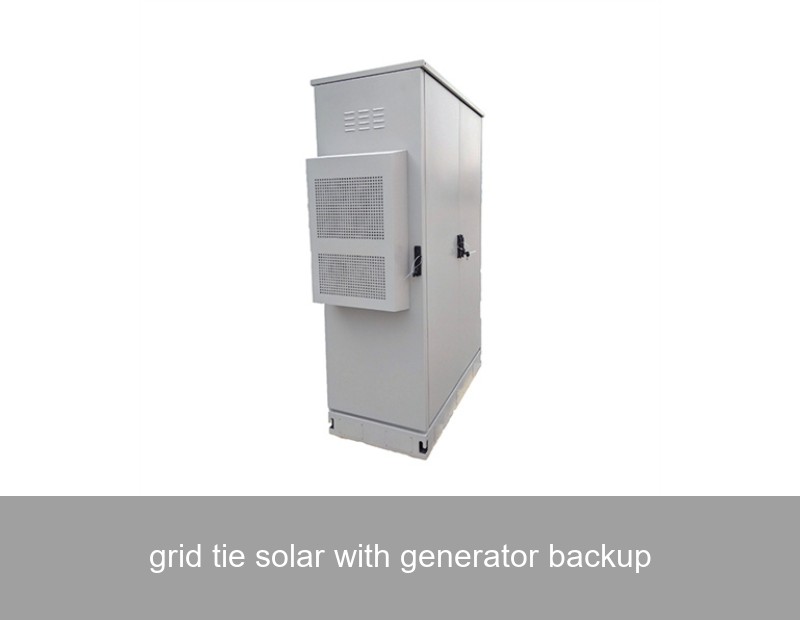
Imagine your solar panels are humming along, powering your home and feeding clean energy back to the grid. Suddenly, the grid goes down. Your grid-tied system, for safety reasons, shuts off entirely. You're left in the dark, despite the sun shining. This common frustration is precisely where the powerful combination of grid-tie solar with generator backup comes in. It's the robust solution for homeowners and businesses who want the economic and environmental benefits of solar, but absolutely cannot afford downtime. In this guide, we'll demystify how these systems work together, why they're becoming essential, and how companies like Highjoule are engineering seamless integration for true energy independence.
Table of Contents
- The Problem: Solar's Achilles' Heel During Outages
- The Solution: Integrating Solar, Storage, and Generators
- How Does a Grid-Tie Solar with Generator Backup System Work?
- Key Components of a Hybrid System
- A Real-World Case Study: Reliability in Rural California
- Highjoule's Role: Intelligent Energy Orchestration
The Problem: Solar's Achilles' Heel During Outages
It's a counterintuitive reality for many solar owners. Standard grid-tied photovoltaic (PV) systems are designed to automatically shut down during a power outage. This is a critical safety feature called "anti-islanding," which prevents your solar panels from sending electricity back to the grid and potentially endangering utility workers repairing the lines. So, when you need power the most—during a storm, heatwave, or rolling blackout—your solar array sits idle.
The reliance on the traditional grid is showing its vulnerabilities. From 2019 to 2021, the average duration of a power outage in the U.S. increased dramatically, with major events caused by weather often leading to multi-day interruptions (U.S. Energy Information Administration). For a homeowner running medical equipment, a business preserving refrigerated inventory, or simply a family wanting comfort and safety, this unreliability is no longer acceptable.
The Solution: Integrating Solar, Storage, and Generators
The answer lies in a hybrid system. Think of it as a dream team for your energy security:
- Grid-Tie Solar: Your primary source of clean, low-cost energy.
- Battery Energy Storage System (BESS): Your immediate backup buffer, storing solar energy for use at night or during short outages.
- Generator Backup: Your long-duration, high-power safety net for extended cloudy periods or prolonged grid failures.
This trio works in concert. The solar reduces your energy bills and carbon footprint. The battery handles quick transitions and daily cycling. The generator stands ready for those rare but critical times when both solar and battery capacity are exhausted. The magic isn't just in the hardware, but in the intelligent controller that manages them all seamlessly.

Image: A modern hybrid energy system combining solar, storage, and backup. (Source: Unsplash, representative image)
How Does a Grid-Tie Solar with Generator Backup System Work?
Let's walk through a typical scenario using the PAS (Problem-Agitate-Solution) framework to illustrate the system logic.
| Stage | System Status | Power Source | Controller Action |
|---|---|---|---|
| Normal Operation | Grid is stable | Solar powers home, excess to grid/battery | Optimizes self-consumption, manages grid export. |
| Grid Outage (Daytime) | Grid fails | Solar + Battery (Generator off) | Isolates home from grid (forms "microgrid"). Solar powers home and charges battery. Generator remains off to save fuel. |
| Grid Outage (Night/Bad Weather) | Grid fails, battery depleting | Battery > Generator | When battery reaches a preset low level (e.g., 20%), it signals the generator to auto-start. Generator powers home and recharges battery. |
| Generator Run Cycle | Generator running | Generator + Solar (if available) | Generator runs efficiently at optimal load. Once battery is sufficiently recharged, controller shuts generator off, returning to battery/solar power. |
This "set-and-forget" operation is the gold standard. You're not manually switching fuel valves or starting engines in a storm. The system intelligently prioritizes your silent, clean solar and battery power, only engaging the generator when absolutely necessary.
Key Components of a Hybrid System
Building a reliable system requires more than just wiring parts together.
- Advanced Hybrid Inverter/Controller: The brain of the operation. It must manage multiple DC (solar, battery) and AC (grid, generator, home loads) power sources, synchronize them, and ensure safe transitions. Not all inverters can integrate a generator signal.
- Automatic Transfer Switch (ATS): A critical safety device that physically switches the home's electrical load from the grid to the backup power source (the generator/battery system).
- Generator with Two-Way Communication: A modern standby generator that can accept start/stop signals from the system controller, not just a simple manual unit.
- Battery System: Lithium-ion batteries, like Lithium Iron Phosphate (LiFePO4), are preferred for their long cycle life, safety, and depth of discharge. They act as the daily workhorse and the bridge during generator start-up.
A Real-World Case Study: Reliability in Rural California
Consider the Johnson family winery in Sonoma County, California. Facing frequent Public Safety Power Shutoffs (PSPS) during fire season, a standard solar system left their fermentation temperature control and security systems vulnerable.
Their Solution: A grid-tie solar with generator backup system was installed in 2022.
- Solar Array: 50kW rooftop system.
- Battery Storage: A 40kWh Highjoule HES-G2 battery bank.
- Backup Generator: A 25kW natural gas standby unit.
- Brain: Highjoule's Energy Management System (EMS).
The Data-Driven Result: During a 60-hour grid outage in October 2023, the system performed flawlessly. The solar and battery provided power for the first 45 daylight/night cycles. When the battery state-of-charge dropped to 25%, the EMS automatically started the generator. The generator ran for just 5 hours at high efficiency, recharging the battery and carrying the critical loads, before the EMS shut it off as solar production resumed. Total generator runtime: 5 hours vs. a potential 60 hours without solar/battery. This resulted in over 90% fuel savings and maintained silent, emission-free operation for most of the outage.

Image: A modern Battery Energy Storage System (BESS) like Highjoule's HES series, crucial for hybrid setups. (Source: Unsplash, representative image)
Highjoule's Role: Intelligent Energy Orchestration
As a global leader in advanced energy storage since 2005, Highjoule doesn't just sell batteries; we deliver integrated resilience. Our expertise is in making complex systems simple and reliable. For grid-tie solar with generator backup applications, our HES-G2 series residential/commercial storage systems are engineered with this exact purpose in mind.
Our systems feature built-in generator control ports and sophisticated logic within our EMS. This means our system can directly communicate with most major standby generator brands, managing the start/stop sequences to optimize fuel use and minimize wear. Furthermore, Highjoule's Smart MicroGrid Controller can island an entire property, seamlessly blending solar, battery, and generator power to support both essential and non-essential loads—something many basic systems cannot do. We provide the peace of mind that comes from a single, intelligently controlled ecosystem, not a collection of disparate parts.
Making the Decision: Is This System Right for You?
Ask yourself these questions:
- How critical is uninterrupted power for my home or business (medical needs, home offices, security, perishable goods)?
- What is the typical frequency and duration of grid outages in my area?
- Do I have space and permitting ability for a standby generator (considering fuel source and noise)?
- Is my goal to maximize self-sufficiency and minimize generator runtime, not just to have backup?
If you answered "yes" or "high" to these, a hybrid system is likely your best investment. The initial cost is higher than any single component alone, but the value in resilience, long-term fuel savings, and optimized clean energy use is unparalleled.
Looking Forward: The Future of Home Energy
The evolution is clear: the future home is not just solar-powered or generator-backed; it's intelligently managed. With technologies like vehicle-to-home (V2H) integration on the horizon, could your electric vehicle become the next backup source in this orchestrated system? How will AI-driven energy predictions further optimize when to store, use, or generate power?
What's the first step you would take to move from being vulnerable during an outage to being fully in control of your energy destiny?
 Inquiry
 Online Chat