


Understanding Grid Battery Storage Cost: A Deep Dive for Energy Decision-Makers
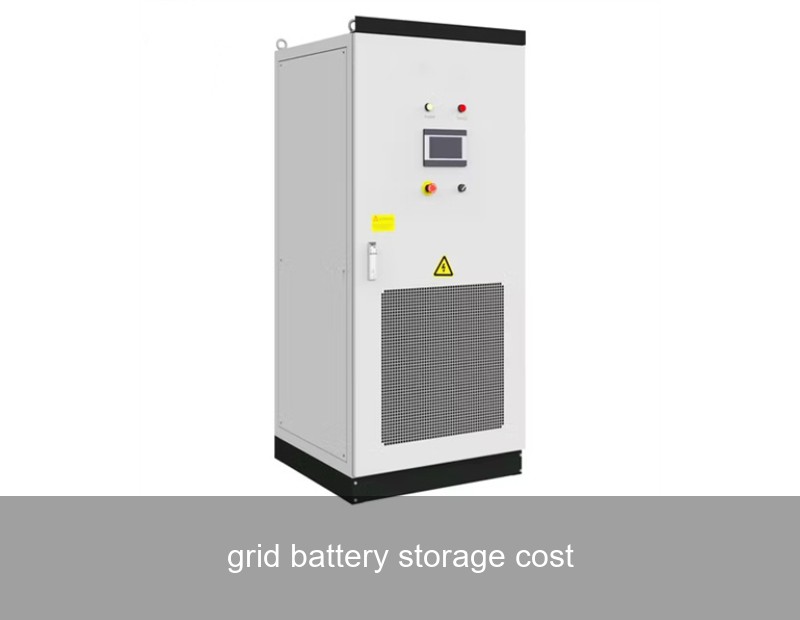
If you're involved in managing energy for a business, municipality, or large-scale project, you've likely heard the buzz: grid-scale battery storage is revolutionizing how we think about electricity. But beyond the headlines, a critical question remains—what drives the grid battery storage cost, and what does that investment truly buy? The initial price tag is just the beginning. The real story is about long-term value, grid resilience, and enabling a cleaner energy future. As a leader in this space since 2005, Highjoule has seen the cost trajectory evolve and understands the nuanced factors that determine the true economic and operational return on your energy storage investment.
Table of Contents
- The Price Puzzle: More Than Just Dollars per kWh
- Breaking Down Grid Battery Storage Cost Components
- From Cost to Value: The Revenue Stack Advantage
- Real-World Impact: A Case Study from California
- The Highjoule Approach: Engineering for Total Cost of Ownership
- The Future of Costs: What to Expect Next
The Price Puzzle: More Than Just Dollars per kWh
When first evaluating grid battery storage cost, many look at a single metric: the dollar amount per kilowatt-hour (kWh) of energy capacity. While useful, this is akin to buying a car based solely on the size of its fuel tank. It doesn't tell you about the engine's efficiency, the maintenance schedule, or the vehicle's performance under different road conditions. The true cost is a function of hardware (the battery cells, inverters, thermal management), software (the brain that controls charging and discharging), integration, and long-term performance. According to a report by the U.S. Department of Energy, the installed cost for utility-scale battery storage fell by nearly 70% between 2015 and 2020, a trend driven by innovation and scale. However, as the market matures, the focus is shifting from upfront capital expenditure (CAPEX) to lifetime levelized cost of storage (LCOS), which accounts for efficiency losses, cycle life, and operational expenses over decades.

Image Source: Unsplash - Representative image of a grid-scale BESS installation.
Breaking Down Grid Battery Storage Cost Components
Let's deconstruct the main elements that contribute to the total system cost:
- Battery Cells & Modules (~40-50%): This is the core energy storage medium, typically lithium-ion. Costs vary based on chemistry (e.g., LFP, NMC), with Lithium Iron Phosphate (LFP) gaining dominance for grid applications due to its longer lifespan, superior safety, and reduced reliance on cobalt.
- Power Conversion System (PCS) & Balance of Plant (~20-30%): This includes inverters, transformers, switchgear, and the physical infrastructure (containers, climate control, fire suppression). A high-efficiency inverter is crucial for minimizing energy losses during each charge-discharge cycle.
- Software, Controls, & Integration (~15-20%): Often the most underestimated component. Advanced energy management software (EMS) and system integration are what transform a simple battery into a smart grid asset. This "digital brain" enables participation in multiple revenue streams.
- Installation, Grid Connection, & Soft Costs (~10-20%): Permitting, engineering, procurement, construction (EPC) fees, and interconnection studies can be significant and vary greatly by region and project complexity.
| Cost Component | Percentage of Total | Key Drivers & Considerations |
|---|---|---|
| Battery Pack (Cells, BMS, Packing) | ~45% | Chemistry choice, cycle life warranty, supply chain stability. |
| Power Conversion & Balance of Plant | ~25% | Inverter efficiency, grid compliance standards, site preparation. |
| Software, Integration, & Controls | ~18% | EMS capabilities, cybersecurity, SCADA integration. |
| Installation & Interconnection | ~12% | Local labor rates, utility interconnection queue, permitting timeline. |
From Cost to Value: The Revenue Stack Advantage
This is where the narrative on grid battery storage cost fundamentally changes. A sophisticated battery energy storage system (BESS) isn't an expense; it's a revenue-generating asset. By providing multiple services—a concept known as "value stacking"—the system can create several income streams to offset and surpass its initial cost. For commercial and industrial clients, as well as utility operators, these services include:
- Energy Arbitrage: Buying and storing electricity when prices are low (often during peak renewable generation) and selling it when prices are high.
- Frequency Regulation: Providing near-instantaneous adjustments to maintain grid stability, a highly valued service paid for by grid operators.
- Capacity & Resource Adequacy: Earning payments for being available as a guaranteed source of power during periods of peak demand or emergency.
- Deferring Grid Upgrades: For utilities, strategically placed storage can delay costly investments in new transmission and distribution lines.
- Backup Power & Resilience: For critical facilities, the value of avoided downtime can be immense, though harder to quantify upfront.
Real-World Impact: A Case Study from California
Let's look at concrete data from the California Energy Commission. The state, a global leader in renewables, has aggressively deployed storage to manage its famous "duck curve"—the period in the evening when solar generation drops and demand spikes. One notable project is the 300 MW / 1,200 MWh Moss Landing energy storage facility (Phase III). While not a Highjoule project, its public data is instructive. Analysts estimate the system's capital cost at approximately $1-1.2 billion. On the value side, it's contracted to provide resource adequacy to Pacific Gas & Electric (PG&E). More importantly, by charging from excess solar during the day and discharging during the evening peak, it helps avoid the use of expensive and polluting "peaker" plants. The California Independent System Operator (CAISO) reported that in summer 2023, battery storage discharged a record 5.6 GWh to the grid in a single evening, critically supporting grid reliability during a heatwave and directly reducing wholesale energy costs for consumers. This demonstrates how the grid battery storage cost is offset by tangible system-wide benefits and market revenues.

Image Source: Unsplash - Professionals monitoring energy system operations.
The Highjoule Approach: Engineering for Total Cost of Ownership
At Highjoule, our philosophy is to design systems that minimize the Levelized Cost of Storage (LCOS) for our clients, not just the upfront price. Our H-Joule GridMax series for utility and large commercial applications exemplifies this. We utilize LFP battery chemistry for its 10,000+ cycle life and inherent safety, directly reducing long-term degradation costs. Our proprietary Adaptive Grid AI software is the cornerstone of value stacking. It continuously analyzes market prices, grid signals, and weather forecasts to autonomously optimize dispatch, ensuring the battery captures the highest possible revenue from energy markets and grid services. For instance, for an industrial client in Germany, we integrated their on-site wind generation with a GridMax system. The software dynamically chooses between maximizing self-consumption, participating in the European grid frequency regulation market, or selling to the spot market—all within the same day. This intelligent orchestration turns the grid battery storage cost into a strategic investment with a compelling ROI, typically between 5-7 years in many deregulated markets.
The Future of Costs: What to Expect Next
While battery cell costs may see incremental decreases, the next frontier for cost reduction lies in system integration, software intelligence, and streamlined deployment. Innovations like Highjoule's Modular Power Skid design reduce on-site installation time by up to 40%, slashing soft costs. Furthermore, as grid codes evolve and require more advanced functionality (like grid-forming inverters), the premium for future-proof technology will pay dividends in market access. The International Energy Agency (IEA) projects global grid-scale storage capacity to multiply 15-fold by 2030, driving further standardization and cost optimization. The conversation is moving beyond simple grid battery storage cost to one of value assurance and energy independence.
Given the complexity of revenue stacking and evolving market rules, how will you ensure your storage project is designed not just for today's costs, but for tomorrow's opportunities?
 Inquiry
 Online Chat