


What Makes a Good Energy Storage Cabinet Battery? Your Guide to Smart, Safe Power
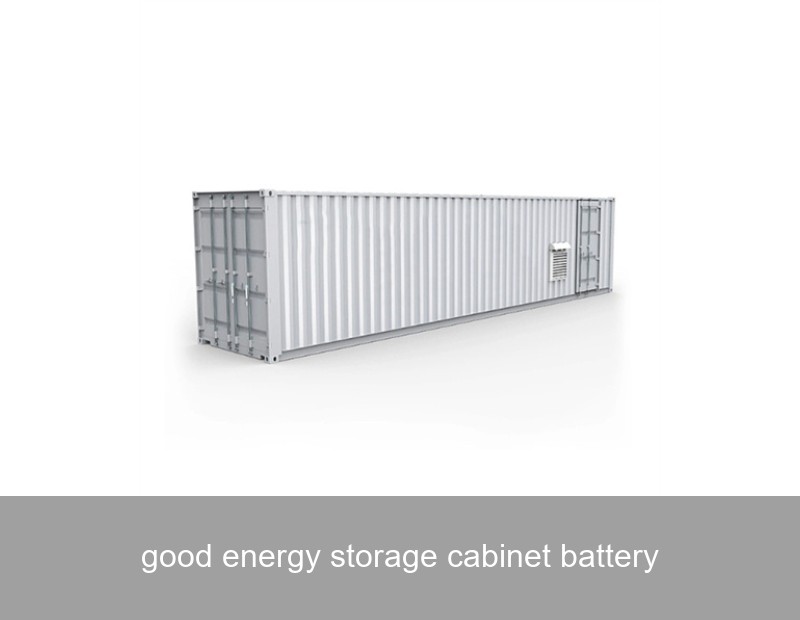
You’ve likely seen the headlines: energy prices are volatile, grid reliability is a growing concern, and the transition to renewables is accelerating. For businesses, communities, and homeowners, this creates a pressing question—how do we secure stable, affordable, and clean power? The answer increasingly lies in a single, pivotal piece of technology: a good energy storage cabinet battery. But what exactly separates a "good" system from a mediocre one? It's not just about the battery cells inside; it's about the integrated cabinet—the brain, the safety system, and the interface that transforms raw storage into reliable, intelligent power. As a leader in this field, Highjoule has been engineering these sophisticated systems since 2005. Let's explore the key pillars that define excellence in energy storage cabinets and why getting it right is critical for your energy independence.
Table of Contents
- The Phenomenon: From Simple Batteries to Intelligent Energy Hubs
- The Data: Safety, Performance, and ROI Are Non-Negotiable
- A Case Study: Stabilizing a Microgrid in Southern Europe
- The Highjoule Difference: Engineering the Complete Ecosystem
- The Future of Your Energy: Questions to Consider
The Phenomenon: From Simple Batteries to Intelligent Energy Hubs
Think of the earliest mobile phones—bulky, single-purpose devices. Today's smartphone is a compact computer, camera, and communication hub. A similar evolution has happened in energy storage. A decade ago, "battery storage" often meant a collection of loose cells with basic controls. Today, a modern, good energy storage cabinet battery is a fully integrated, weatherproof, and smart energy appliance. It's designed not just to store electricity but to manage it intelligently, communicate with solar panels, the grid, and your building's loads, and make autonomous decisions to optimize costs and resilience. The cabinet itself is the unsung hero, housing not just batteries, but advanced power electronics, thermal management, fire suppression, and software intelligence. This shift from component to integrated solution is what enables true energy security and efficiency.
The Core Components of Excellence
So, what should you look for inside that cabinet? Here are the non-negotiables:
- Cell Chemistry & Quality: While lithium-ion phosphate (LFP) is now the dominant standard for safety and longevity in stationary storage, the quality and grading of cells from manufacturers matter immensely.
- Thermal Management: A passive cooling system simply won't cut it for demanding cycles. An active liquid or precision air-cooling system is essential for maintaining optimal temperature, maximizing lifespan, and preventing thermal runaway.
- Battery Management System (BMS): This is the "brain" of the unit. A top-tier BMS monitors every cell for voltage, temperature, and state of charge, ensuring balance and preventing damage.
- Power Conversion System (PCS): This inverter/rectifier is the muscle, efficiently converting DC battery power to AC for your building and vice-versa. Its efficiency rating directly impacts your system's overall economics.
- Grid-Forming Capabilities: For true resilience, the best systems can "black start" – meaning they can create a stable microgrid if the main grid goes down, without needing grid voltage to synchronize to.

Image: A modern, integrated energy storage cabinet system. Source: Unsplash (Representative image)
The Data: Safety, Performance, and ROI Are Non-Negotiable
Let's talk numbers. The difference between a well-engineered cabinet and a poorly integrated one shows up starkly in the data. According to a 2023 report by the National Renewable Energy Laboratory (NREL), system-level design, including thermal management and controls, can impact cycle life by up to 40%. That means a system designed for 6,000 cycles might only deliver 3,600 if its cabinet-level engineering is subpar—a massive financial loss.
On safety, the numbers are even more compelling. Integrated cabinets with multi-layer protection (cell, module, system-level fusing, and gas/heat detection) reduce fire risk to negligible levels. From a financial perspective, a good energy storage cabinet battery for commercial use isn't an expense; it's an asset. The right system can deliver a compelling return on investment (ROI) through:
| Value Stream | How It Works | Potential Impact |
|---|---|---|
| Peak Shaving | Using stored energy during periods of high, expensive grid demand. | Reduce demand charges by 20-40%. |
| Solar Self-Consumption | Storing excess solar generation for use at night. | Increase solar usage from ~30% to 70%+. |
| Backup Power | Providing seamless power during outages. | Prevent operational downtime and data loss. |
| Grid Services | Providing frequency regulation or voltage support (in some markets). | Create a new revenue stream. |
A Case Study: Stabilizing a Microgrid in Southern Europe
Let's make this real with an example from our work at Highjoule. A coastal resort community in southern Spain faced a dual challenge: an unreliable regional grid that struggled with summer tourism loads and a desire to maximize their large rooftop solar installation. Their old battery system was failing to deliver during critical peak evenings.
Highjoule's solution was to deploy our H-Cube Commercial Series energy storage cabinets. These aren't just batteries in a box. Each H-Cube cabinet is a pre-integrated unit featuring LFP batteries, liquid cooling, a high-efficiency PCS, and our proprietary Adaptive Grid AI software. We installed a 500 kWh / 750 kVA system tied to their existing 400 kW solar array.
The results after one year were transformative:
- Energy Cost Reduction: By aggressively peak shaving and optimizing solar consumption, the community reduced its annual energy bill by 68%.
- Grid Independence: During 12 recorded grid outages in the summer, the microgrid formed seamlessly, keeping critical facilities like the water desalination plant and security systems online with zero interruption.
- Performance Stability: Even with ambient temperatures reaching 40°C (104°F), the liquid cooling system kept the battery cells at a steady 25°C ±3°C, ensuring no performance degradation and maintaining 100% of rated capacity.
This case underscores that a good energy storage cabinet battery is defined by its real-world performance under stress, not just its datasheet promises.
The Highjoule Difference: Engineering the Complete Ecosystem
At Highjoule, our philosophy is that true reliability comes from controlling and perfecting the entire system. We don't just assemble components; we engineer them to work in perfect harmony. Our products, like the H-Cube for Commercial & Industrial applications and the H-Home for residential use, are built around this principle of integrated intelligence.
What does this mean for you? It means every Highjoule cabinet comes with:
- Unified Software Platform: A single interface to monitor and control energy flows, set cost-saving preferences, and view performance analytics from your phone or computer.
- Proactive Safety Architecture: Our multi-layered protection goes beyond standards, with isolated thermal runaway channels and early detection algorithms that can alert you and our monitoring team to potential issues before they become problems.
- Future-Proof Design: Our cabinets are built with modularity in mind. As your needs grow, capacity can often be expanded without replacing the entire power conversion or control system, protecting your initial investment.
- Global Support & Services: From initial site assessment and financial modeling to installation, commissioning, and ongoing performance optimization, Highjoule partners with you for the lifecycle of your system. We provide white-glove service for our partners across Europe and North America.

Image: An engineer monitoring a bank of energy storage cabinets. Source: Unsplash (Representative image)
Beyond the Cabinet: The Highjoule Ecosystem
Our vision extends beyond selling hardware. We provide a complete energy resilience ecosystem. This includes advanced energy management software that can aggregate multiple distributed storage systems to participate in grid-balancing programs (where markets allow), and tailored solutions for microgrids that combine solar, storage, and generator controls into a single, resilient energy network. For us, the cabinet is the physical cornerstone of a much smarter, more sustainable energy strategy.
The Future of Your Energy: Questions to Consider
The journey to energy independence starts with the right questions. As you evaluate what a good energy storage cabinet battery means for your home, business, or community, ask your potential providers:
- How does your thermal management system ensure performance and longevity in my specific climate?
- Can your system truly form a microgrid and black start without the grid, or does it only provide backup with a delay?
- What is the round-trip efficiency of the complete system (cabinet, PCS, BMS), not just the battery cells?
- How does your software actively optimize for my financial goals, not just monitor basic stats?
We at Highjoule are ready to answer these questions and demonstrate how our engineered approach can future-proof your power. What's the first energy challenge you'd like to solve—soaring demand charges, unreliable grid power, or maximizing your renewable investment?
 Inquiry
 Online Chat