


Unlocking Energy Independence: A Deep Dive into the 3000W Solar Generator
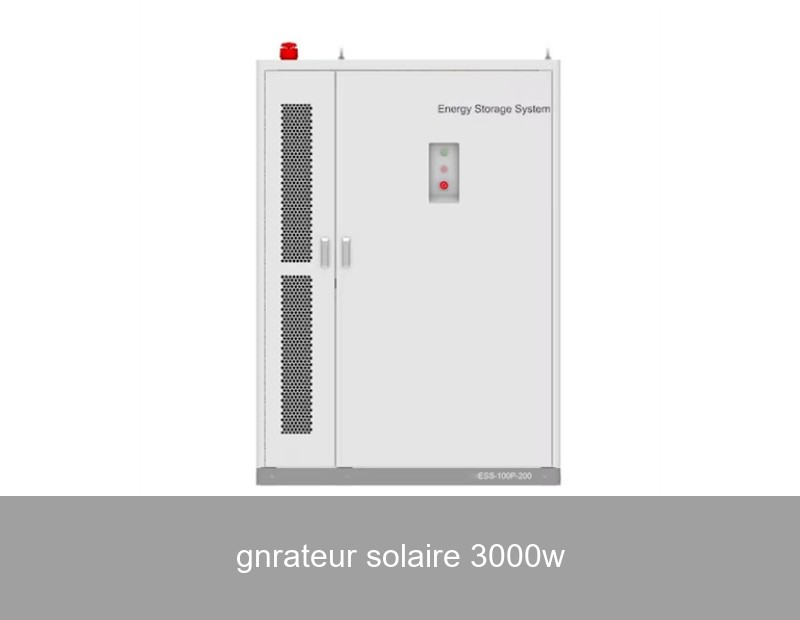
Have you ever watched a storm roll in and wondered, "What if the power goes out?" Or received a hefty electricity bill and dreamed of generating your own clean power? You're not alone. Across Europe and the US, homeowners and small business operators are increasingly seeking reliable, off-grid energy solutions. This is where the concept of a générateur solaire 3000w (3000W solar generator) becomes incredibly compelling. But what exactly is it, and is it powerful enough for your needs? Let's demystify this popular system size and explore how it can be the cornerstone of your energy resilience strategy.
Table of Contents
What is a 3000W Solar Generator? Beyond the Basic Kit
First, let's clarify terminology. A "générateur solaire 3000w" isn't a single, plug-and-play box you buy off the shelf (though compact all-in-one units exist). It's more accurately a system—a carefully engineered ensemble of components designed to capture, store, and deliver solar power. The "3000W" primarily refers to the inverter's continuous output rating, meaning it can simultaneously power appliances with a combined draw of up to 3000 watts. Think of it as the system's muscle. However, its endurance—how long it can supply that power—is determined by the battery bank's capacity (measured in kilowatt-hours, kWh).
Image: A modern solar-plus-storage installation. Credit: Unsplash
The Power Reality: What Can a 3000W System Really Run?
This is the most common question. A 3000W system sits in a powerful sweet spot—beyond basic emergency backup but not necessarily for whole-home, all-appliance usage 24/7. Here’s a practical breakdown:
- Essential Home Backup (During Outages): It can seamlessly run your refrigerator (150-400W), lights (LED, 10-50W), WiFi router (10W), a sump pump (800W intermittently), and charge phones/laptops. You could even power a well pump (500-1500W) or a window AC unit (500-1500W) for limited periods, carefully managing other loads.
- Off-Grid Cabin or Van Life: It's an ideal primary power source for efficient living, running a mini-fridge, induction cooktop (used briefly), lighting, entertainment, and water pumps.
- Small Business/Workshop: It can handle power tools like a circular saw (1200-1500W), shop lights, and computers, reducing grid dependence during peak rate hours.
Critical insight: It's about energy management, not just peak power. Running a 1500W space heater for 2 hours consumes 3kWh from your battery. If your battery bank is only 5kWh, that's a significant portion. This is where intelligent system design is paramount.
Key Components of a Robust 3000W Solar System
To understand the value, you must know the parts. A high-performance system includes:
- Solar Panels (The Fuel Source): You'll typically need 1500W to 4000W of panel capacity to effectively charge the batteries, accounting for less-than-perfect sunlight.
- MPPT Solar Charge Controller (The Brain for Panels): This maximizes the energy harvest from your panels, converting it optimally to charge the batteries. It can boost efficiency by up to 30% compared to older technologies (U.S. Department of Energy).
- Lithium-Ion Battery Bank (The Energy Tank): This is your storage. Lithium Iron Phosphate (LiFePO4) batteries, like those used by Highjoule, are the industry standard for safety, longevity (5,000+ cycles), and depth of discharge. A typical 3000W inverter system pairs well with a 5-15kWh battery for meaningful backup.
- 3000W Pure Sine Wave Inverter (The Power Interpreter): Converts stored DC battery power into clean, grid-quality AC power that won't damage sensitive electronics like medical equipment or variable-speed motors.
- Energy Management System (EMS) (The Conductor): The true differentiator. This software intelligently manages energy flow, prioritizes loads, and can integrate with the grid for features like peak shaving.
From Theory to Practice: A European Case Study
Let's look at real data. A family in southern France, tired of unpredictable grid reliability and rising tariffs, installed a 3000W solar generator system in 2022. Their goal was not full off-grid living, but resilience and self-consumption.
- System Specs: 3.2kWp solar array, a 10kWh LiFePO4 battery, a 3000W hybrid inverter, and a smart EMS.
- Results (First Year): They achieved an average of 75% self-consumption rate—meaning three-quarters of the solar energy they produced was used directly in their home, not exported at lower rates. During a planned 8-hour grid outage, the system powered all critical loads (kitchen, office, lighting) without interruption. Their annual grid electricity import was reduced by over 60%.
- Financial Insight: Combined with local incentives, their projected payback period is under 7 years. More importantly, as one family member noted, "The peace of mind during storm season is now priceless." This mirrors broader trends where solar-plus-storage is becoming a key hedge against volatility (International Energy Agency).

Image: Smart energy monitoring is crucial for system optimization. Credit: Unsplash
Beyond the Kit: The Highjoule Intelligent Ecosystem
This is where expertise matters most. At Highjoule, we understand that a générateur solaire 3000w is more than a sum of parts. It's an integrated energy solution. Our approach for residential and small commercial clients focuses on adaptability and intelligence.
Our HPS-3.0 Series modular energy storage system is designed around this very need. It features a scalable LiFePO4 battery cabinet (expandable from 5kWh to 20kWh) paired with our Hybrid-Inverter 3000, which integrates a high-efficiency MPPT charge controller. The real magic lies in the Highjoule EnergyOS platform. This AI-driven EMS doesn't just react; it learns your consumption patterns, weather forecasts, and utility rate schedules (critical in time-of-use areas in California or variable tariffs in Europe) to autonomously optimize when to store, use, or even sell back energy.
For instance, on a sunny afternoon, it will prioritize charging your battery with excess solar, then power your home in the evening peak when grid electricity is most expensive—all automatically. This transforms a simple backup system into a daily cost-saving and grid-stabilizing asset.
Is a 3000W Solar Generator Right for You? Ask These Questions
To move from interest to action, consider this checklist:
| Your Goal | Recommended System Focus | Highjoule Service Match |
|---|---|---|
| Essential backup for critical loads (fridge, lights, comms) | 3000W inverter with 5-10kWh battery | HPS-3.0 Core Package + EnergyOS monitoring |
| Significant reduction in grid bills & self-consumption | 3000W inverter with 10-15kWh battery + max solar array | Custom design consultation & full smart integration |
| Powering high-draw tools or small business equipment | Ensure inverter surge power (e.g., 6000W+) matches tool start-up loads | Commercial-grade solutions with enhanced surge capacity |
Remember, proper installation and compliance with local grid codes (like VDE-AR-N 4105 in Germany or UL 9540 in the US) are non-negotiable for safety and eligibility for incentives. This is a core part of Highjoule's service, providing certified design support and a network of accredited installers.
The Final Piece: Your Energy Profile
The most successful installations begin with data. Before recommending any system, including a générateur solaire 3000w, we advise clients to analyze at least one month of their electricity usage. Which appliances run constantly? What are your peak demands? This profile is the blueprint for a system that truly fits, rather than one that's under or over-sized.
So, as you contemplate taking control of your energy future, what is the one electrical load in your home or business that, if secured against outages or high costs, would bring you the greatest sense of security and freedom?
 Inquiry
 Online Chat