


Global Solar Solutions: How Jamnagar's Industrial Ambition is Lighting the Path Forward
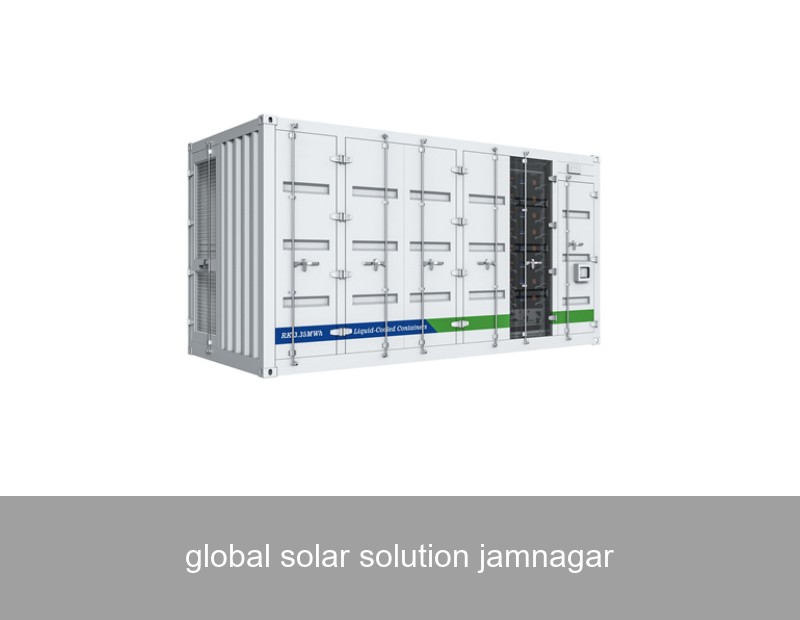
Across the globe, industrial hubs are facing a dual challenge: powering relentless growth while meeting ambitious sustainability goals. The phenomenon is particularly vivid in places like Jamnagar, India, home to one of the world's largest refinery complexes. Here, the sheer scale of energy demand makes the transition to renewables both a monumental task and a breathtaking opportunity. This quest for a reliable, large-scale global solar solution is not unique to Jamnagar; it's a blueprint for industrial regions in Europe, North America, and beyond. The core question has evolved from "Why solar?" to "How can we integrate vast amounts of solar power without compromising grid stability and 24/7 industrial operations?" The answer, increasingly, lies not just in generation, but in intelligent storage.
Table of Contents
- The Jamnagar Phenomenon: A Microcosm of Global Energy Demand
- The Storage Imperative: Beyond Panels to Power Resilience
- Battery Energy Storage Systems (BESS): The Heart of a Modern Solar Solution
- Highjoule's Role: Engineering Intelligent Storage for Global Industry
- Case Study: A European Chemical Plant's Journey to Energy Autonomy
The Jamnagar Phenomenon: A Microcosm of Global Energy Demand
Jamnagar's industrial landscape represents a powerful data point in the global energy conversation. Facilities here operate around the clock, with energy needs that dwarf those of small cities. While solar presents a clean, abundant power source, its intermittent nature—the sun doesn't shine at night, and clouds pass—creates a fundamental mismatch with the non-stop demand of a refinery or a large manufacturing plant. This is the universal challenge for any global solar solution aiming to serve heavy industry: bridging the gap between variable production and constant consumption.
The numbers are compelling. According to the International Renewable Energy Agency (IRENA), global industrial energy use accounts for nearly 38% of total final energy consumption. To decarbonize this sector, simply adding gigawatts of solar panels is insufficient. The key metric shifts to "firm, dispatchable renewable power"—guaranteed green energy available on demand. This is where advanced energy storage systems transition from a supportive technology to the central enabling pillar.

Image: Industrial-scale solar generation is the first step; storing that power for 24/7 use is the critical second.
The Storage Imperative: Beyond Panels to Power Resilience
Think of a global solar solution as a sophisticated symphony. Solar panels are the brilliant violins, producing the melody. But without the deep, steady cellos and bass—the energy storage system—the music lacks structure and can fall apart. Storage does three critical things:
- Energy Time-Shifting: Captures excess solar energy at midday and releases it during evening peaks or at night.
- Grid Stabilization: Provides instantaneous frequency regulation and voltage support, crucial for maintaining the health of the local grid, especially with high solar penetration.
- Backup Power: Ensures critical processes can continue during grid outages, preventing costly downtime.
For a business, this translates directly to cost savings, energy security, and measurable progress on ESG (Environmental, Social, and Governance) targets. The business case is now undeniable.
Battery Energy Storage Systems (BESS): The Heart of a Modern Solar Solution
Among storage technologies, Lithium-Ion Battery Energy Storage Systems (BESS) have emerged as the frontrunner for commercial and industrial applications. Why? Their combination of high energy density, rapidly declining costs, and operational flexibility is unmatched. A modern BESS is far more than a battery pack; it's an integrated ecosystem of power conversion, thermal management, and, most importantly, sophisticated software.
This intelligence layer is what separates a basic battery from a true grid asset. Advanced energy management systems can optimize every kilowatt-hour based on electricity price signals, weather forecasts, and the facility's load profile. This "brain" maximizes return on investment, sometimes stacking multiple revenue streams from energy arbitrage, grid services, and demand charge reduction.
Highjoule's Role: Engineering Intelligent Storage for Global Industry
At Highjoule, we've spent nearly two decades perfecting this intelligent storage layer. We understand that a global solar solution for a factory in Germany, a data center in Texas, or a refinery complex must be robust, safe, and seamlessly integrated. Our product suite is designed to be the cornerstone of such solutions.
Our H-Series Commercial & Industrial BESS is engineered for high-power, high-cycle applications. With a modular design, it can scale from hundreds of kilowatt-hours to multi-megawatt-hour installations, making it ideal for the massive energy demands reminiscent of Jamnagar-scale operations. Key features include:
- Advanced Lithium Iron Phosphate (LFP) chemistry for superior safety and long cycle life.
- Integrated Highjoule Energy Operating System (EOS) that uses AI-driven forecasting for optimal charge/discharge scheduling.
- Grid-forming inverter technology that can help "black start" a facility or microgrid if the main grid fails.
For broader energy independence, our Microgrid Controller acts as the central command, orchestrating solar arrays, BESS, backup generators, and the main grid into a resilient, cost-optimized network. This is the ultimate realization of a localized, reliable global solar solution.

Image: Highjoule's systems are built for industrial environments, requiring robust engineering and intelligent control.
Case Study: A European Chemical Plant's Journey to Energy Autonomy
Let's move from concept to concrete results. A major chemical manufacturer in Belgium, facing volatile energy prices and strict EU carbon reduction mandates, partnered with Highjoule to deploy a comprehensive solar-plus-storage system. Their goal was to shield operations from price spikes and reduce scope 2 emissions.
| Project Component | Specification | Outcome |
|---|---|---|
| Solar PV Capacity | 5.2 MWp rooftop and ground-mount | Primary generation source |
| Highjoule H-Series BESS | 4.8 MWh / 2.4 MW | Storage for time-shifting and grid services |
| Highjoule Microgrid Controller | Fully integrated system orchestration | Automated, optimized energy flow |
The results, after one year of operation, were transformative. The plant achieved a 42% reduction in energy costs through strategic arbitrage and demand charge management. It increased its on-site renewable consumption from ~35% to over 80%, dramatically cutting its carbon footprint. Furthermore, by participating in the Belgian grid's frequency regulation market through Highjoule's EOS platform, the system generated additional revenue, accelerating payback. This case, documented in part by the International Energy Agency (IEA) in reports on industrial decarbonization, exemplifies the multi-faceted value of pairing solar with smart storage.
The Future Grid: Decentralized, Digital, and Resilient
The lesson from Jamnagar's ambition and the success in Belgium is clear. The future of industrial energy is not a single, monolithic grid, but a network of interconnected, self-optimizing microgrids. In this future, every major industrial facility can become a proactive node of stability and green generation. A true global solar solution empowers this transition, turning energy from a volatile cost center into a predictable, strategic asset.
This shift requires a partner with deep technological expertise and a proven track record. Highjoule's systems are deployed across three continents, providing the hardware and software backbone for this new energy paradigm. We don't just sell batteries; we deliver energy resilience and economic advantage.

Image: The nerve center of modern energy management: data-driven control for optimal performance.
The journey toward a fully sustainable industrial base is complex, but the technology to begin is here and proven. If your organization is evaluating a global solar solution to achieve energy independence, cost control, and sustainability leadership, what is the first operational hurdle you need to overcome—is it managing peak demand charges, ensuring power quality for sensitive processes, or achieving a specific carbon reduction target by a certain date?
 Inquiry
 Online Chat