


Generadores Solares Precio: Decoding the True Cost and Value of Your Solar Power System
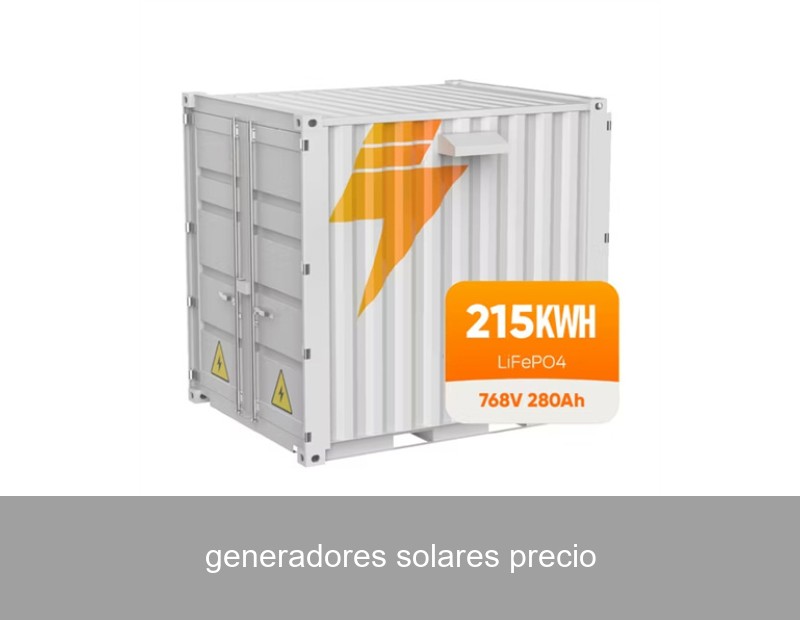
If you've started researching solar power, you've undoubtedly encountered the term "generadores solares precio" (solar generator price). A quick online search can be overwhelming, with prices ranging from a few hundred dollars for a portable unit to tens of thousands for a whole-home system. But here's the crucial insight: the sticker price is just the beginning of the story. The true "price" of a solar generator is a combination of upfront cost, long-term performance, durability, and the value of energy independence it provides. As a global leader in advanced energy storage since 2005, Highjoule understands that an intelligent system isn't just about the lowest initial cost—it's about maximizing your investment over 20+ years.
Let's demystify the factors that influence generadores solares precio and equip you with the knowledge to evaluate not just cost, but lasting value.
Key Cost Components of a Solar Generator System
Think of a solar generator not as a single appliance, but as an integrated power ecosystem. Each component plays a vital role, and its quality directly impacts system performance, lifespan, and ultimately, your total cost of ownership.
Solar Panels (PV Modules)
Panels convert sunlight into electricity. Prices vary by efficiency, brand, and technology (monocrystalline, polycrystalline). Higher efficiency panels cost more but produce more power in limited space, a key consideration for residential rooftops.
- Cost Factor: Typically quoted per watt ($/W).
- Consideration: Don't just compare panel price; compare performance warranties (often 25+ years).

Image Source: Unsplash (Representative image of solar panels)
Battery Storage: The Heart of Your System
This is where the "generator" functionality truly comes to life. Batteries store excess solar energy for use at night or during grid outages. The technology choice is the most significant driver of cost and capability.
| Battery Type | Typical Cost (per kWh usable) | Key Characteristics |
|---|---|---|
| Lead-Acid | $100 - $250 | Lower upfront cost, shorter lifespan (3-7 years), requires maintenance, lower depth of discharge. |
| Lithium-Ion (NMC) | $400 - $700 | Maintenance-free, longer lifespan (10-15 years), higher depth of discharge, compact. |
| Lithium Iron Phosphate (LFP) | $500 - $800 | Superior safety, exceptional cycle life (15+ years, 6000+ cycles), excellent thermal stability, true long-term value. |
This is where Highjoule's expertise shines. We specialize in LFP-based battery energy storage systems (BESS) for a reason. While the initial generadores solares precio for an LFP system may be higher than for lead-acid, the total cost over the system's life is often lower. You'll replace lead-acid batteries 3-4 times over the life of a single Highjoule LFP unit. Our EverSafe™ LFP Series is engineered for daily, deep cycling with minimal degradation, ensuring you get the promised capacity year after year.
Inverter & Charge Controller
The inverter converts DC electricity from panels and batteries to AC for your home. The charge controller manages the flow of power to the batteries. An all-in-one hybrid inverter simplifies installation.
- Cost Factor: Inverter capacity (kW) and features (grid-tie, off-grid, backup power).
- Highjoule's Approach: Our integrated systems feature smart, programmable inverters that optimize energy flow—solar to home, solar to battery, or grid to battery during off-peak rates—automatically maximizing your savings.
Balance of System & Installation
This includes wiring, mounting hardware, electrical panels, and most importantly, professional design and installation. Skilled installation ensures safety, compliance with local codes, and optimal system performance. This is a fixed cost that benefits from scale and expertise.
Case Study: Real Numbers from a California Winery
Let's move beyond theory. A mid-sized winery in Sonoma County, California, faced unreliable grid power during fire-prevention shutoffs and high demand charges from their utility. Their goal was to ensure refrigeration continuity and reduce operational costs.
- System Size: 150 kW solar array + 300 kWh battery storage.
- Challenge: Initial quotes for standard lithium systems were high, and payback was marginal.
- Highjoule Solution: A customized Highjoule Industrial Microgrid Solution using our high-cycle-life LFP batteries and advanced energy management software (EMS).
- Results (Year 1):
- Eliminated 95% of demand charges, saving over $18,000 annually.
- Provided 48+ hours of critical backup power for refrigeration during outages.
- Increased on-site renewable consumption from 40% to over 85%.
- Calculated Payback Period: Reduced from an estimated 9 years to 6.2 years due to higher efficiency and software-driven optimization.
This case shows how the right technology and intelligence can dramatically improve the financial equation, making the generadores solares precio a strategic investment rather than just an expense. The U.S. Department of Energy highlights the role of solar+storage in business resiliency.
How Highjoule Delivers Intelligent Value Beyond the Initial Price
For nearly two decades, Highjoule has moved beyond simply selling components. We provide integrated, smart power solutions. Our value proposition is embedded in our system design:
- Predictive Energy Management: Our AI-driven EMS doesn't just react; it learns your consumption patterns and weather forecasts to optimize charging and discharging schedules, squeezing every cent of value from your system.
- Scalable & Modular Design: Start with what you need. Our residential HomePower Hub series allows you to add battery modules as your needs or budget grow, protecting your initial investment.
- Global Standards & Safety: All Highjoule systems are built to meet stringent international certifications (UL, IEC, CE). Our LFP chemistry is inherently non-combustible, giving you peace of mind—a priceless feature.

Image Source: Unsplash (Representative image of a home battery installation)
Calculating Long-Term Value: ROI and Payback Period
So, how do you assess true value? Look at these metrics alongside the initial generadores solares precio:
- Levelized Cost of Energy (LCOE): The total cost of the system divided by the total energy it will produce over its lifetime. A high-quality, long-life system like Highjoule's often has a lower LCOE than a cheaper, shorter-lived alternative.
- Return on Investment (ROI): Factor in:
- Savings on your electricity bill (offsetting consumption and demand charges).
- Potential revenue from grid services (in some markets).
- Increased property value.
- Avoided cost of outages (spoiled food, business interruption, generator fuel). The U.S. Energy Information Administration tracks rising electricity prices, which improves solar ROI.
- Payback Period: The time it takes for your cumulative savings to equal the net system cost. With incentives like the U.S. federal Investment Tax Credit (ITC) or European subsidies, this period can be significantly shortened.
Making Your Informed Decision
The journey to energy independence isn't a simple commodity purchase. It's a long-term partnership with technology. When you evaluate generadores solares precio, ask yourself and potential providers: Is this system designed to maximize my savings for decades, or just to be the cheapest today? Does the software actively manage my energy, or is it a passive component? How does the battery technology ensure safety and longevity for my family or business?
Highjoule invites you to think bigger than the price tag. What specific energy challenge—be it rising bills, unreliable power, or a commitment to sustainability—are you aiming to solve with your solar generator system?
 Inquiry
 Online Chat