


Unlocking Energy Freedom: A Close Look at Freedom Won 5kW Battery Specs
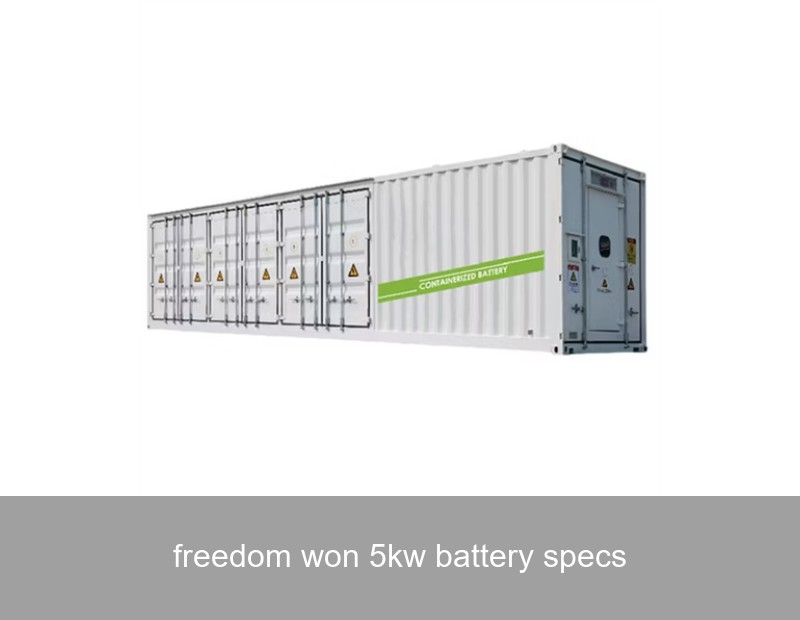
Imagine a stormy evening. The grid goes down in your neighborhood, but inside your home, the lights stay on, the Wi-Fi hums, and the refrigerator keeps your food safe. This isn't just backup power; it's energy independence. For homeowners across Europe and the US, this vision is increasingly powered by sophisticated home battery systems. A name that frequently surfaces in conversations about premium home energy storage is Freedom Won, with its 5kW battery models often at the center of discussion. But what do the Freedom Won 5kW battery specs actually mean for your daily life and long-term savings? More importantly, how do these specifications translate into reliable, seamless power for your family? As a leader in advanced energy storage, Highjoule understands that specs on a datasheet are just the beginning. The real magic happens in intelligent integration and sustainable design.
Freedom Won 5kW Battery: A Deep Dive into the Specs
Let's break down the key specifications you'll find for a typical Freedom Won 5kW battery system and explain why they matter. It's crucial to note that "5kW" primarily refers to the power rating—how much electricity the battery can deliver at one moment. The capacity (how much total energy it can store) is often a separate figure, measured in kilowatt-hours (kWh).
| Specification | Typical Value | What It Means For You |
|---|---|---|
| Continuous Power Output | 5 kW | Can simultaneously run essential loads like fridge, lights, TV, and a few more appliances. Enough for most homes during an outage. |
| Usable Capacity | Typically 10-15 kWh (configurable) | Determines how long your power lasts. 10 kWh could run 1kW of appliances for 10 hours. |
| Battery Chemistry | Lithium Iron Phosphate (LFP) | Safer, longer-lasting, and more stable than other lithium types. Offers a superior cycle life. |
| Cycle Life | 6,000+ cycles (to 80% capacity) | Translates to over 16 years of daily use. A key indicator of long-term value and durability. |
| Depth of Discharge (DoD) | 100% | You can use all the usable energy without damaging the battery, maximizing your investment. |
| Operating Temperature | Wide range (e.g., -20°C to 50°C) | Reliable performance in both chilly European winters and hot American summers. |
As you can see, the Freedom Won 5kW battery specs highlight a focus on longevity and safety, thanks to LFP chemistry. The high cycle life and 100% DoD are particularly attractive for homeowners who want to maximize self-consumption of solar energy day after day, for years to come. However, a battery is only one part of a high-performing energy ecosystem. This is where expert system design from a provider like Highjoule becomes critical. Our role is to ensure that a high-spec battery is paired with an equally intelligent inverter, smart energy management software, and a design tailored to your home's unique energy fingerprint.
Beyond the Numbers: What Specs Really Mean for Your Home
Specifications tell a story of potential, but real-world performance is about integration. Think of it like a high-performance engine: it needs the right chassis, transmission, and driver to win the race.
- The 5kW Power Rating: Is it enough? For most households, a 5kW output is sufficient to cover critical loads during a grid outage. However, if you wish to run high-power appliances like an air conditioner or an electric vehicle charger off-grid, system scaling becomes essential. Highjoule's design process involves a detailed load analysis to ensure your system's power capabilities match your lifestyle, not just the brochure.
- The Capacity (kWh): This is your "energy budget." A key strategy is load shifting: using cheap solar energy stored during the day to power your home in the expensive evening peak. A larger capacity, often achieved by linking multiple battery modules, allows for greater independence from the grid. We help you calculate the ideal capacity based on your historical consumption and solar production data.
- The Software Brain: The most overlooked "spec" is the system's intelligence. How does it decide when to charge, discharge, or hold? Highjoule's smart energy management systems use real-time data and even weather forecasts to optimize every kilowatt-hour, protecting your battery's health and maximizing your financial return.

Image Source: Unsplash (Photographer: Vivint Solar)
Real-World Power: A Case Study from Southern Europe
Let's move from theory to practice. Consider the case of the Müller family home in Andalusia, Spain. This region enjoys abundant sunshine but also faces high electricity prices and occasional grid instability. Their goal was to achieve 80% energy self-sufficiency.
The Challenge: High air conditioning use in summer, an electric water heater, and a desire for complete backup power during frequent short grid outages.
The Solution: A Highjoule-engineered system featuring:
- A 8 kWp solar array
- A Freedom Won battery system configured to provide 5kW of continuous power with a 14.4 kWh usable capacity
- A Highjoule hybrid inverter with integrated grid management
- Highjoule's Horizon EMS software for intelligent control
The Data-Driven Outcome: After 12 months of operation, the system's performance was analyzed:
- Self-Consumption Rate: Increased from 35% (solar only) to 92% (solar + storage).
- Grid Import Reduction: Reduced by 86% during peak tariff hours (6-10 PM).
- Outage Protection: Seamlessly powered critical loads through 14 grid outages, the longest lasting 9 hours.
- Financial Return: Projected payback period reduced to under 7 years, factoring in rising energy costs.
This case illustrates that the Freedom Won 5kW battery specs provided the robust hardware foundation, but it was the holistic Highjoule system design and software intelligence that unlocked these exceptional results. For more on the importance of system integration, see this report by the National Renewable Energy Laboratory (NREL).
Choosing the Right System: Integration is Everything
So, you're impressed by the specs of the Freedom Won battery. What's next? The most critical step is planning the entire system. A premium battery connected to a poorly matched inverter or controlled by basic software is like putting a Formula 1 engine in a car with bicycle tires.
This is the core of Highjoule's service. We don't just supply components; we provide turnkey, intelligent power solutions. Our process includes:
- Energy Consultation & Audit: We analyze your past utility bills, roof space, and appliance usage to model your energy profile.
- Custom System Design: We engineer a system where the solar array, battery (be it Freedom Won or another top-tier brand we partner with), inverter, and software are perfectly harmonized.
- Professional Installation & Commissioning: Our certified technicians ensure a safe, compliant, and optimized installation.
- Ongoing Monitoring & Support: Our platform gives you visibility into your energy flows, savings, and system health, with proactive support.
We believe in the right technology for the right application. Whether for a robust residential setup, a business looking to cut operational costs and ensure continuity, or a remote microgrid, Highjoule's expertise bridges the gap between impressive battery specs and real-world energy freedom. The technology landscape is evolving rapidly, as noted by research from IRENA.

Image Source: Unsplash (Photographer: Andreas Gücklhorn)
Your Energy Future: Where Do We Go From Here?
The journey toward energy independence is exciting, but it starts with asking the right questions. You now understand what the Freedom Won 5kW battery specs represent—a high-quality, durable storage component. But the larger question remains: How will you build a complete, intelligent energy system that adapts to your life and the grid of the future?
Are you ready to move beyond just comparing datasheets and start a conversation about designing a resilient, efficient, and sustainable power ecosystem for your home? What would true energy freedom look like for your household?
 Inquiry
 Online Chat