


Navigating the Landscape of Flow Battery Suppliers for Long-Duration Energy Storage
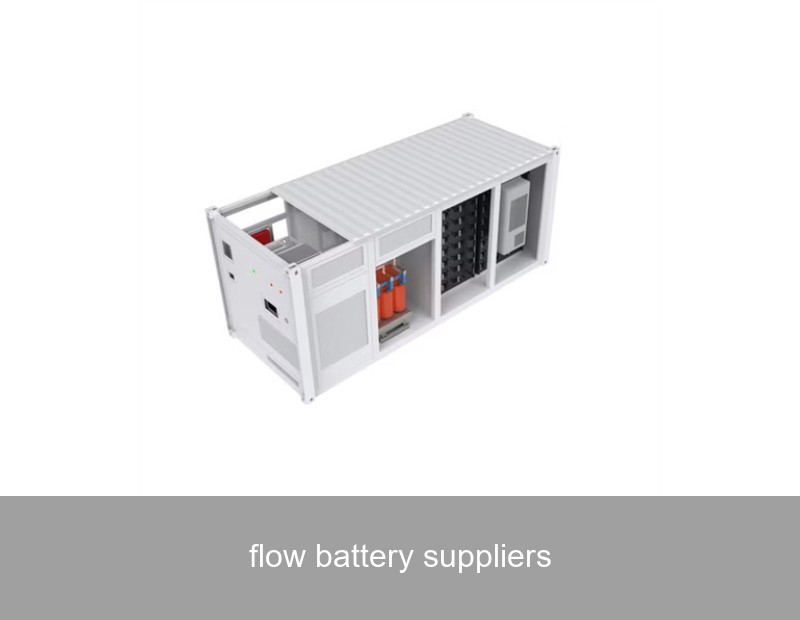
You're likely here because you've heard the buzz. As the global push for renewable energy intensifies, a critical challenge has moved to the forefront: how do we store solar power for use at night, or wind energy for a calm day? For many commercial, industrial, and utility-scale projects, the answer is increasingly pointing towards long-duration energy storage (LDES). And when we talk about LDES, one technology stands out for its unique combination of longevity, safety, and scalability: the flow battery. This brings us to a pivotal question for project developers and energy managers: how do you identify and select among the leading flow battery suppliers to ensure your investment delivers for decades?
The phenomenon is clear. Grids are becoming more volatile with intermittent renewables, and the need for storage that lasts 4, 8, even 12 hours or more is no longer a niche requirement—it's a grid-stability imperative. The data is compelling. According to the U.S. Department of Energy's Long Duration Storage Shot initiative, the goal is to reduce the cost of grid-scale energy storage by 90% for systems that deliver 10+ hours of duration within a decade. This isn't just about lithium-ion scaling up; it's about technologies fundamentally suited for long discharge times. This is the arena where flow batteries, with their decoupled power and energy ratings, truly shine.

Image Source: Unsplash - Representative image of grid-scale energy storage infrastructure.
Key Advantages of Flow Battery Technology
Before diving into supplier selection, let's clarify why flow batteries are a serious contender. Unlike conventional batteries that store energy in solid electrode materials, flow batteries store energy in liquid electrolyte solutions housed in external tanks. This fundamental architecture offers distinct benefits crucial for large-scale applications:
- Unparalleled Cycle Life & Longevity: Flow batteries can typically undergo tens of thousands of charge/discharge cycles with minimal degradation. While lithium-ion may offer 5,000-10,000 cycles, high-quality flow battery systems are designed for 20,000+ cycles, translating to 20-30 years of service life.
- Inherent Safety: The electrolytes, often based on vanadium or organic molecules, are non-flammable and operate at ambient conditions, drastically reducing fire risk compared to some other chemistries—a major consideration for densely populated areas or sensitive industrial sites.
- True Scalability of Energy: Need more storage capacity (kWh)? Simply increase the size of the electrolyte tanks. The power output (kW) is scaled separately via the cell stack. This modularity offers incredible flexibility for tailoring a system to specific discharge duration needs.
- Deep Discharge Capability: They can be discharged to 100% depth-of-discharge (DOD) regularly without harming the battery, maximizing usable energy.
Choosing the Right Flow Battery Supplier: A Critical Decision
Selecting a flow battery supplier is not like procuring commodity goods. You are entering a strategic, long-term partnership. The technology's operational lifespan exceeds that of most IT systems and even rivals building infrastructure. Therefore, due diligence must extend beyond upfront cost per kWh. Here’s a framework for evaluation:
| Evaluation Criteria | Key Questions to Ask Suppliers |
|---|---|
| Technology & Chemistry | Is it vanadium, zinc-bromine, iron, or organic? What are the trade-offs in cost, abundance, and performance for my application? |
| Proven Track Record | Can you provide operational data from existing installations with 5+ years of service? What is the demonstrated cycle life? |
| System Efficiency & O&M | What is the round-trip AC-AC efficiency? What are the ongoing maintenance requirements and costs? Is remote monitoring standard? |
| Manufacturing & Supply Chain | Do you have vertical control over core components? How resilient is your electrolyte supply chain? |
| Financial Stability & Warranty | Can the company support a 20-year performance warranty? What are the bankability credentials? |
The Highjoule Approach: Engineering for the Long Haul
At Highjoule, with nearly two decades of experience since 2005 in advanced energy storage, we've built our flow battery solutions around these very principles of longevity and reliability. We understand that for our commercial and industrial clients, energy storage is a capital asset that must perform predictably. Our H-Joule Flux Series of vanadium flow batteries is engineered from the ground up for minimal lifetime cost of ownership.
What does this mean in practice? It means our systems feature a proprietary cell stack design that maximizes efficiency and durability. It means our intelligent energy management system (EMS) doesn't just control charge/discharge; it continuously optimizes electrolyte health and system performance. And critically, it means we offer a comprehensive service model that includes electrolyte leasing options to reduce upfront capital outlay, backed by our long-term performance guarantee. For microgrid and utility-scale projects, this translates into a bankable, low-risk pathway to integrating massive amounts of renewable energy.

Image Source: Unsplash - Professional monitoring advanced energy systems.
Real-World Impact: A Case Study from California
Let's move from theory to tangible results. Consider the challenge faced by a large winery in California's Napa Valley. Their goals were threefold: reduce demand charges from the grid, ensure uninterrupted power for critical refrigeration processes, and increase the use of their on-site solar PV. Lithium-ion provided short-duration peak shaving, but for the long, overnight cooling loads and backup during potential multi-day public safety power shutoffs (PSPS), they needed a different solution.
They partnered with Highjoule to deploy a 500 kW / 3000 kWh (6-hour duration) H-Joule Flux system integrated with their existing solar array. The results over the first 24 months have been telling:
- Demand Charge Reduction: Achieved an average reduction of 40% in monthly peak demand charges by flattening the load profile.
- Solar Self-Consumption: Increased on-site consumption of solar generation from ~60% to over 90%, drastically reducing energy imports during high-rate periods.
- Reliability: The system has provided seamless backup power during several brief grid outages, maintaining precise temperature control in fermentation tanks.
- Performance Stability: Data logs show zero capacity fade and consistent round-trip efficiency of 72% (AC-AC) since commissioning, validating the longevity promise of the technology.
This case exemplifies the ideal application for flow batteries: daily, deep-cycle operation where long-duration discharge and a multi-decade lifespan are paramount to the economics. For further reading on the importance of long-duration storage for grid resilience, see this report from the National Renewable Energy Laboratory (NREL).
The Future Outlook for Flow Batteries
The market for flow battery suppliers is dynamic, with innovations focusing on reducing electrolyte costs (e.g., novel organic molecules) and improving power density. Government policies, like investment tax credits for standalone storage in the U.S., are also accelerating adoption. The trajectory is clear: as renewable penetration targets of 50%, 70%, or even 100% become policy, the value of storage that can bridge not just hours but seasons will skyrocket. Flow batteries are uniquely positioned to meet this long-duration challenge.
So, as you evaluate your long-duration energy storage strategy, ask yourself this: Is your primary metric the lowest upfront cost, or the lowest total cost over a 25-year asset life? The answer to that question will naturally guide you towards the right technology—and the right partner. What specific duration and duty-cycle requirement is your next project facing, and how might a truly long-life storage solution change its financial model?
 Inquiry
 Online Chat