


Flexible Solar Panels You Can Walk On: The Ultimate Guide to Durable, Integrated Energy
Imagine a world where your patio, balcony, or even your warehouse roof isn't just a surface, but a silent, efficient power generator. This is no longer a futuristic dream. The advent of flexible solar panels you can walk on is revolutionizing how we think about space, architecture, and energy independence. These rugged, integrated photovoltaic (PV) solutions are turning underutilized surfaces into clean energy assets without the bulk and mounting needs of traditional rigid panels. For homeowners, businesses, and urban planners, this technology offers a seamless path to sustainability. But how do they work, and are they truly a viable energy solution? Let's explore the data, see real-world applications, and understand how innovators like Highjoule are integrating this technology into comprehensive energy systems.
Table of Contents
- What Are Walkable Flexible Solar Panels?
- Why Choose Walkable Solar Surfaces? The Data Speaks
- A Real-World Case Study: The Amsterdam Rooftop Revolution
- Beyond the Panel: The Critical Role of Smart Energy Storage
- Highjoule's Integrated Approach: From Surface to System
- Future Trends & Key Considerations
What Are Walkable Flexible Solar Panels?
Unlike conventional glass-and-aluminum framed panels, walkable flexible solar panels are engineered for durability and direct integration. They are typically built using high-efficiency monocrystalline or thin-film cells encapsulated in a robust, polymer-based composite material. This gives them key characteristics:
- Extreme Flexibility: They can conform to curved or uneven surfaces, expanding design possibilities.
- High Impact & Load Resistance: With a tempered glass or specialized polymer top layer, they can withstand foot traffic, light vehicle weight, and hail impacts.
- Lightweight & Low-Profile: They add minimal weight and height, making them ideal for structures where load or aesthetics are a concern.
- Weatherproof & Slip-Resistant: Designed for outdoor, all-weather exposure with textured surfaces for safety.

Image Source: Unsplash - Example of modern solar-integrated surfaces.
Why Choose Walkable Solar Surfaces? The Data Speaks
The appeal goes beyond novelty. Let's break down the compelling advantages using a PAS (Problem-Agitate-Solution) framework.
The Problem: Wasted Space and Complex Installations
Traditional solar requires dedicated, unobstructed roof space with optimal orientation. Many urban buildings, historic homes, or commercial properties have limited, shaded, or architecturally sensitive roofs. Balconies, terraces, and walkways are energy-generation dead zones.
The Agitation: The Energy Density Challenge
While efficiency is improving, a walkable panel's output per square meter is typically 10-20% lower than a premium rigid panel due to the protective top layer and potential sub-optimal angles. This can lead to skepticism about their real-world value.
The Solution: Holistic Energy Harvest & Aesthetic Integration
Here's where the perspective shifts. The value isn't in competing with a south-facing rooftop array, but in adding incremental, otherwise impossible generation. Data from a U.S. Department of Energy study shows that distributed, multi-surface PV systems can increase a property's total solar contribution by 30-50% compared to a single roof array alone. You're utilizing every available square meter.
A Real-World Case Study: The Amsterdam Rooftop Revolution
Consider a practical application in Europe. A mid-sized logistics company in Amsterdam wanted to achieve energy neutrality for its warehouse operations. The primary roof was used for HVAC systems, leaving only the vast, flat pedestrian and light truck access areas on the ground and first-floor roof.
| Project Parameter | Details |
|---|---|
| Location | Amsterdam, Netherlands |
| Surface Used | 800 sqm of access pathways and loading bay canopy |
| Technology | Walkable, flexible solar tiles |
| Installed Capacity | 42 kWp |
| Annual Generation | Approx. 35,000 kWh |
| Key Result | Covers ~40% of warehouse lighting & small power load, reducing grid dependence significantly. |
This case highlights a critical insight: the success wasn't just about the panels. The generated power needed to be stored and managed intelligently to offset consumption throughout the day and night, maximizing self-consumption and ROI.
Beyond the Panel: The Critical Role of Smart Energy Storage
This is the most crucial part of the conversation. Flexible solar panels you can walk on are a fantastic energy source, but their true potential is unlocked only when paired with advanced energy storage. Solar generation is intermittent. Without storage, excess midday power is exported to the grid at low rates, and you draw expensive power in the evening.
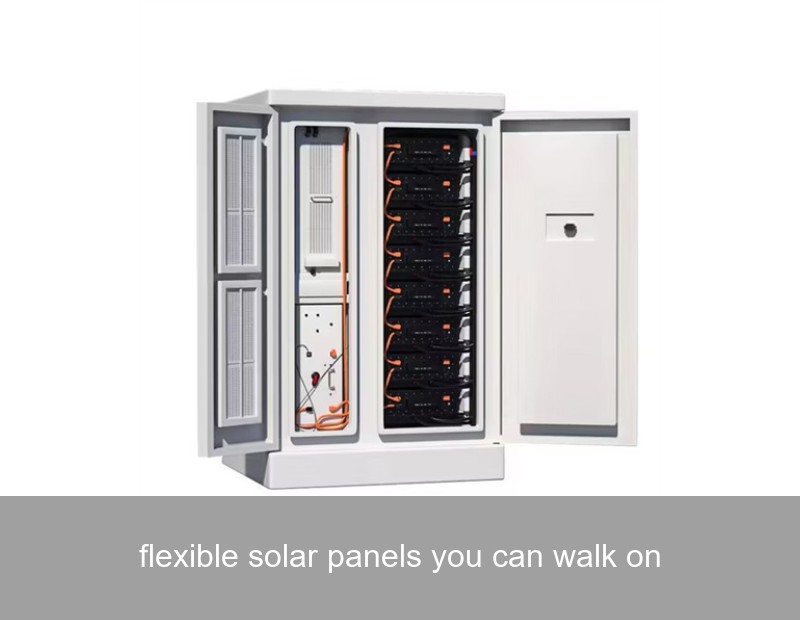
An intelligent Battery Energy Storage System (BESS) acts as the heart of your modern energy setup. It stores surplus solar energy for use when the sun isn't shining, provides backup power, and can even participate in grid services in some regions. This transforms your walkable solar surface from a simple generator into a cornerstone of a resilient, cost-saving energy ecosystem.
Highjoule's Integrated Approach: From Surface to System
At Highjoule, we view walkable solar as a powerful component within a broader energy intelligence strategy. Since 2005, we've specialized not just in storage, but in seamlessly integrating diverse generation sources—including these innovative PV surfaces—into reliable, smart power systems for homes, businesses, and microgrids.
Our product suite is designed to complement and maximize investments in technologies like walkable solar:
- Highjoule HOMES Series: Scalable residential battery systems (5-30 kWh) with integrated energy management. Our inverter technology is optimized to handle the unique output characteristics of flexible PV, ensuring every possible kilowatt-hour is harvested and stored efficiently.
- Highjoule COMMERCIAL & INDUSTRIAL (C&I) Solutions: Modular, containerized BESS from 100 kWh to multi-MWh scales. For projects like the Amsterdam warehouse, our system would store the 35,000 kWh annually, allowing the business to shift load, reduce peak demand charges, and secure backup power. Our platform can aggregate power from multiple sources, including traditional rooftop PV, walkable surfaces, and even wind.
- Highjoule Energy Management System (EMS): The brain behind the hardware. This AI-driven software forecasts generation (from your walkable panels and other sources), learns consumption patterns, and autonomously optimizes storage and discharge cycles to maximize financial return and energy independence.

Image Source: Unsplash - Modern home energy system with storage.
Future Trends & Key Considerations
As the technology matures, we expect efficiency gains and cost reductions. The convergence of building-integrated photovoltaics (BIPV) with smart storage and AI-driven management represents the future of sustainable construction. However, when considering walkable solar, ask these questions:
- Total System Cost vs. Lifetime Value: Include installation, specialized framing, and crucially, the storage system in your ROI calculation.
- Installation Expertise: Requires specialized knowledge—ensure your installer has certified experience.
- Warranty & Durability: Look for robust product warranties (often 20+ years for power output) and proven load-testing data.
For deeper technical specifications on PV durability, the National Renewable Energy Laboratory (NREL) provides invaluable resources.
Your Energy Ecosystem Awaits
The journey to energy independence is no longer a one-size-fits-all path of panels on a roof. It's about creating a synergistic network: harvesting energy from every viable surface, storing it intelligently, and managing it with precision. Flexible solar panels you can walk on are a bold step in that journey, turning passive infrastructure into active power contributors.
What underutilized surface around your home or business could be transformed into your next clean energy source, and how would an intelligent storage system amplify its impact?
 Inquiry
 Online Chat