


Fabrication Panneau Solaire: A Deep Dive into How Solar Panels Are Made and Optimized
You've likely seen them gleaming on rooftops and sprawling across fields: solar panels, the iconic symbols of the clean energy transition. But have you ever stopped to wonder what goes into the fabrication panneau solaire? The journey from raw sand to a power-generating module is a fascinating feat of engineering. More importantly, understanding this process reveals a crucial, often overlooked truth: the quality of a solar panel's fabrication directly determines its long-term performance and return on investment. For businesses and homeowners in Europe and the US, this isn't just about going green—it's about making a smart, durable financial asset. Let's pull back the curtain.
Table of Contents
The Core Ingredient: From Quartz to Crystalline Silicon
At the heart of most solar panels is silicon, derived from quartz sand. The fabrication panneau solaire begins with purifying this sand into metallurgical-grade silicon, and then further into ultra-pure polysilicon. This polysilicon is melted and crystallized into either single-crystal (monocrystalline) or multi-crystal (polycrystalline) ingots, which are then sliced into paper-thin wafers. Monocrystalline cells, with their uniform dark look and higher efficiency, are often the premium choice for space-constrained installations in residential and commercial settings across Europe and North America.

Image Source: Unsplash (Photographer: American Public Power Association)
The Assembly Line: Key Steps in Solar Panel Fabrication
The transformation of wafers into a robust panel involves a precise sequence. Here’s a simplified breakdown:
- Cell Processing: Wafers are treated to form a conductive layer, printed with ultra-fine metal grids to collect electricity, and coated to reduce reflection.
- Stringing and Tabbing: Individual cells are connected in series using copper ribbons to form strings, increasing voltage.
- Layering (Laminate): The cell strings are sandwiched between a durable glass frontsheet and a polymer backsheet. Below them, a crucial encapsulant material (like EVA) is added to protect against moisture and physical shock.
- Lamination: This stack is heated under vacuum, sealing the cells in a protective, waterproof laminate. This step is critical for panel longevity.
- Framing and Junction Box: An aluminum frame is added for rigidity and mounting. The junction box is installed on the back, housing the diodes that manage current flow and providing the output cables.
Each step in this fabrication chain impacts durability. For instance, inferior encapsulant can lead to "delamination" and power loss over time, a risk in humid climates or areas with wide temperature swings.
Beyond the Panel: Why Quality Fabrication Demands Smart Storage
Excellent fabrication panneau solaire ensures you capture maximum solar energy. But what happens to that energy? The sun doesn't shine on a utility's schedule. This is where the conversation must evolve from generation to optimization. A high-quality panel is only one component of a truly intelligent and resilient energy system.
This is precisely where Highjoule's expertise becomes indispensable. As a leader in advanced energy storage since 2005, we understand that the value of pristine solar energy is unlocked through smart storage and management. Our integrated solutions ensure that every kilowatt-hour generated by your meticulously fabricated panels is used efficiently, stored safely, and leveraged for maximum financial and operational benefit.
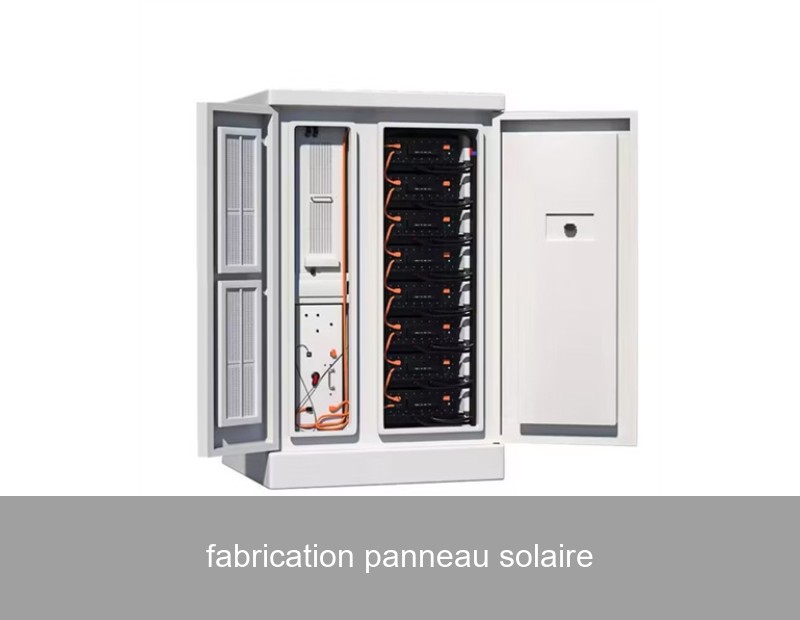
For commercial and industrial clients, our Highjoule C&I Energy Storage Systems are engineered to handle high-power demands. They feature advanced lithium-ion battery racks with integrated thermal management and safety systems, all controlled by our proprietary HJ-EnergyOS™ platform. This AI-driven software doesn't just store energy; it learns your consumption patterns, weather forecasts, and utility rate structures to autonomously dispatch stored energy when it's most valuable—slicing through peak demand charges and providing backup power during outages.
Case in Point: A German Industrial Park's Solar-Plus-Storage Solution
Let's look at real data from a manufacturing facility in Bavaria, Germany. The site installed a 500 kW rooftop solar array with high-efficiency monocrystalline panels. However, they faced two issues: their production peaked at midday, often exceeding their immediate load, and they were subject to steep Netzgebühren (grid fees) based on their highest 15-minute power draw each month.
The Solution: They partnered with Highjoule to integrate a 250 kW / 550 kWh battery storage system alongside their existing solar installation.
| Metric | Before Highjoule Storage | After Highjoule Storage |
|---|---|---|
| Solar Self-Consumption | ~35% | ~85% |
| Peak Grid Demand (Monthly) | 480 kW | 310 kW |
| Annual Grid Fee Savings | Baseline | €18,200 |
| Backup Power During Grid Drops | None | Critical loads for 4+ hours |
The HJ-EnergyOS™ automatically charges the batteries with excess solar, then discharges them to "shave" peak operational loads from the grid. This turned their quality solar investment into a far more powerful tool for cost control and resilience. You can explore more on the importance of storage for grid stability from the U.S. Department of Energy.

Image Source: Unsplash (Photographer: Karsten Wurth)
Choosing the Right Partner for Your Energy System
So, you're considering solar. Your due diligence on fabrication panneau solaire—cell type, manufacturer warranties, degradation rates—is essential. But the next question is even more critical: How will you maximize the value of that energy 24/7?
Whether for a residential property in California, a farm in Italy, or a factory in the Midwest, a holistic approach is key. Highjoule provides tailored residential storage systems for energy independence and microgrid solutions that can island entire communities or facilities. Our technology acts as the brain and battery for your solar investment, ensuring it performs optimally for decades.
For deeper insights into solar technology pathways, research institutions like the National Renewable Energy Laboratory (NREL) provide invaluable resources.
Your Energy, Your Future
The journey of a solar panel, from sophisticated fabrication to installation on your roof, is a story of human ingenuity. Yet, that story is incomplete without a chapter on intelligent utilization. As you contemplate harnessing the sun's power, we invite you to think bigger: What specific energy challenge—be it rising utility costs, reliability concerns, or sustainability goals—could a perfectly synchronized solar-and-storage system solve for you?
 Inquiry
 Online Chat