


Powering Our World: A Deep Dive into Every Type of Renewable Energy
Imagine a world where our lights, factories, and homes are powered not by finite, polluting resources, but by the abundant, natural forces that surround us. This isn't a distant dream; it's the direction our global energy system is rapidly moving. The transition to a sustainable future hinges on our ability to understand and deploy every type of renewable energy effectively. From the sun blazing overhead to the wind sweeping across plains and the water flowing in our rivers, each source plays a unique and vital role in the clean energy mosaic. But here's the catch you might not hear about in every headline: the true potential of these diverse sources is only unlocked when they work in harmony, supported by one critical technology—intelligent energy storage. Let's explore this interconnected system.
Harnessing the Sun: Solar Photovoltaic (PV) Power
When most people think of renewables, solar panels likely come to mind first. And for good reason! Solar PV technology converts sunlight directly into electricity using semiconductor materials. It's modular, scalable from a rooftop to a utility-scale farm, and has seen costs plummet by over 80% in the last decade.
The Phenomenon & The Data: The sun delivers more energy to Earth in one hour than humanity uses in an entire year. Tapping into this, the global solar PV market is booming. In 2023, the U.S. alone added a record 32.4 gigawatts (GW) of solar capacity, while Europe continues its strong push, led by countries like Germany, Spain, and the Netherlands.
The Insight: Solar's strength is its peak production during daytime, often aligning with high energy demand. Its primary challenge is its intermittency—no power at night and reduced output on cloudy days. This inherent variability is the first clue why a diverse renewable mix, backed by storage, is non-negotiable.

Image Source: Unsplash - A utility-scale solar farm, a cornerstone of modern renewable energy.
Catching the Breeze: Onshore & Offshore Wind Energy
Wind energy harnesses the kinetic energy of moving air using massive turbines. We have two main fronts: onshore wind (turbines on land) and offshore wind (turbines in bodies of water).
- Onshore Wind: The more established and cost-effective option. Ideal for open plains, coastal areas, and hilltops.
- Offshore Wind: The rising star. Winds at sea are stronger and more consistent, leading to higher capacity factors and less visual impact on land.
The Phenomenon & The Data: The EU is a world leader in offshore wind, with a current capacity of over 30 GW. The UK's Dogger Bank Wind Farm, currently under construction, will be the world's largest upon completion, capable of powering 6 million homes. In the U.S., ambitious federal and state goals are fueling a new offshore wind industry along the Atlantic coast.
The Insight: Wind patterns often complement solar cycles—wind can blow strongly at night or during storms when solar output is low. This complementary nature is a strategic advantage for grid stability.
The Power of Flow: Hydropower's Steady Force
Often called the "grandfather" of renewables, hydropower uses flowing water—from dams or rivers—to spin turbines. It remains the largest source of renewable electricity globally.
| Type | Description | Role in the Grid |
|---|---|---|
| Reservoir Hydropower | Uses stored water in dams. | Provides dispatchable, on-demand power and crucial grid services. |
| Run-of-River Hydropower | Channels a portion of a river's flow. | Provides more continuous baseload power with less environmental impact. |
| Pumped Storage Hydydro (PSH) | The original "giant battery." Pumps water uphill to store energy, releases it to generate. | Remains the largest-capacity form of energy storage worldwide. |
The Insight: While growth is limited by geography, hydropower's ability to provide stable, flexible power makes it the backbone that supports the integration of more variable sources like wind and solar.
Beyond the Basics: Emerging & Niche Renewable Sources
A truly resilient system leverages every type of renewable energy available. This includes:
- Biomass & Biogas: Converting organic matter (wood, agricultural waste, landfill gas) into energy. It's dispatchable but requires sustainable sourcing.
- Geothermal: Tapping into the Earth's internal heat for constant, baseload power and heating. Geographically limited but incredibly reliable.
- Tidal & Wave: Harnessing the predictable energy of oceans. Still largely in the pre-commercial stage but holds immense future potential for coastal regions.
The Critical Link: Why Storage is Key for Every Type of Renewable Energy
Here lies the central challenge of the renewable revolution. Solar isn't shining at night. The wind isn't always blowing. Even river flows can vary. This intermittency can strain electrical grids designed for constant, predictable power. The solution isn't to choose one "best" source, but to intelligently integrate them all, with advanced energy storage as the linchpin.
Storage acts as a buffer, absorbing excess energy when production is high (e.g., a sunny, windy afternoon) and releasing it when demand peaks or generation drops. This transforms variable renewable resources into reliable, dispatchable power assets. Without it, we risk wasting clean energy and failing to achieve true energy independence.
From Theory to Reality: A German Case Study in Integration
Let's look at a real-world example. Germany's "Energiewende" (energy transition) aggressively pushed solar and wind, making renewables its leading power source. However, grid operators faced the classic variability problem.
The Data & The Solution: In 2023, renewables provided over 50% of Germany's public net electricity consumption. To manage this, the country has become a global laboratory for integration. A key strategy has been deploying large-scale battery energy storage systems (BESS) alongside wind and solar farms. For instance, a project in Schleswig-Holstein, a region with high wind penetration, uses a 20 MW / 40 MWh BESS to perform critical services: stabilizing grid frequency, absorbing local wind surplus, and time-shifting energy to periods of high demand. This concrete application prevents curtailment (wasting renewable energy) and defers costly grid upgrades, proving the technical and economic value of storage. (Source: Fraunhofer ISE).

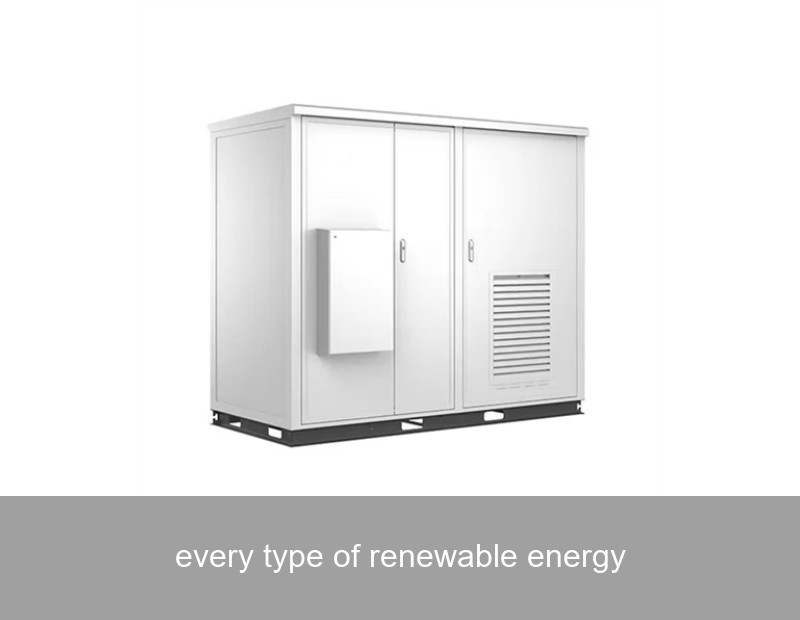
Image Source: Unsplash - A modern Battery Energy Storage System (BESS), crucial for grid stability.
Highjoule's Role: Enabling a Cohesive Renewable Future
This is where Highjoule's expertise becomes pivotal. Since 2005, we've moved beyond simply providing batteries. We design intelligent, integrated storage solutions that make every type of renewable energy more valuable and reliable.
For our commercial and industrial partners, our H-Series C&I Battery Systems do more than just backup power. They enable sophisticated energy arbitrage—storing cheap solar power generated at noon to use during expensive evening peak rates. For utility-scale solar or wind farms, our Grid-Scale Integrator Platform provides the grid-forming capabilities and massive storage capacity needed to smooth output and meet grid connection requirements, much like the German case study.
For communities and microgrids, especially in remote areas, Highjoule's systems allow for the creation of resilient energy networks that combine solar, wind, and even small-scale hydro. Our technology acts as the brain and battery of the operation, dynamically balancing supply from multiple renewable sources with local demand, ensuring lights stay on reliably 24/7.
How Highjoule Solutions Adapt to Different Renewables
- Solar PV Pairing: Our systems are optimized for daily cycling, capturing midday solar surplus for evening use.
- Wind Integration: We provide fast-ramping storage to buffer sudden changes in wind output and store energy during low-demand, high-wind periods.
- Microgrid Foundation: Our controllers can seamlessly manage a mix of solar, wind, diesel generators, and storage to ensure constant power quality and supply.
Your Energy Future: A Question of Balance
The journey to a 100% renewable future isn't a race to find a single winner. It's a symphony where solar, wind, hydro, and other sources each play their part, conducted by smart policy and enabled by advanced storage technology. As you consider your role in this transition—whether you're a homeowner, a factory manager, or a community planner—ask yourself: How can we design our energy systems not just to use renewable sources, but to intelligently harmonize them for unwavering reliability and maximum economic return?
 Inquiry
 Online Chat